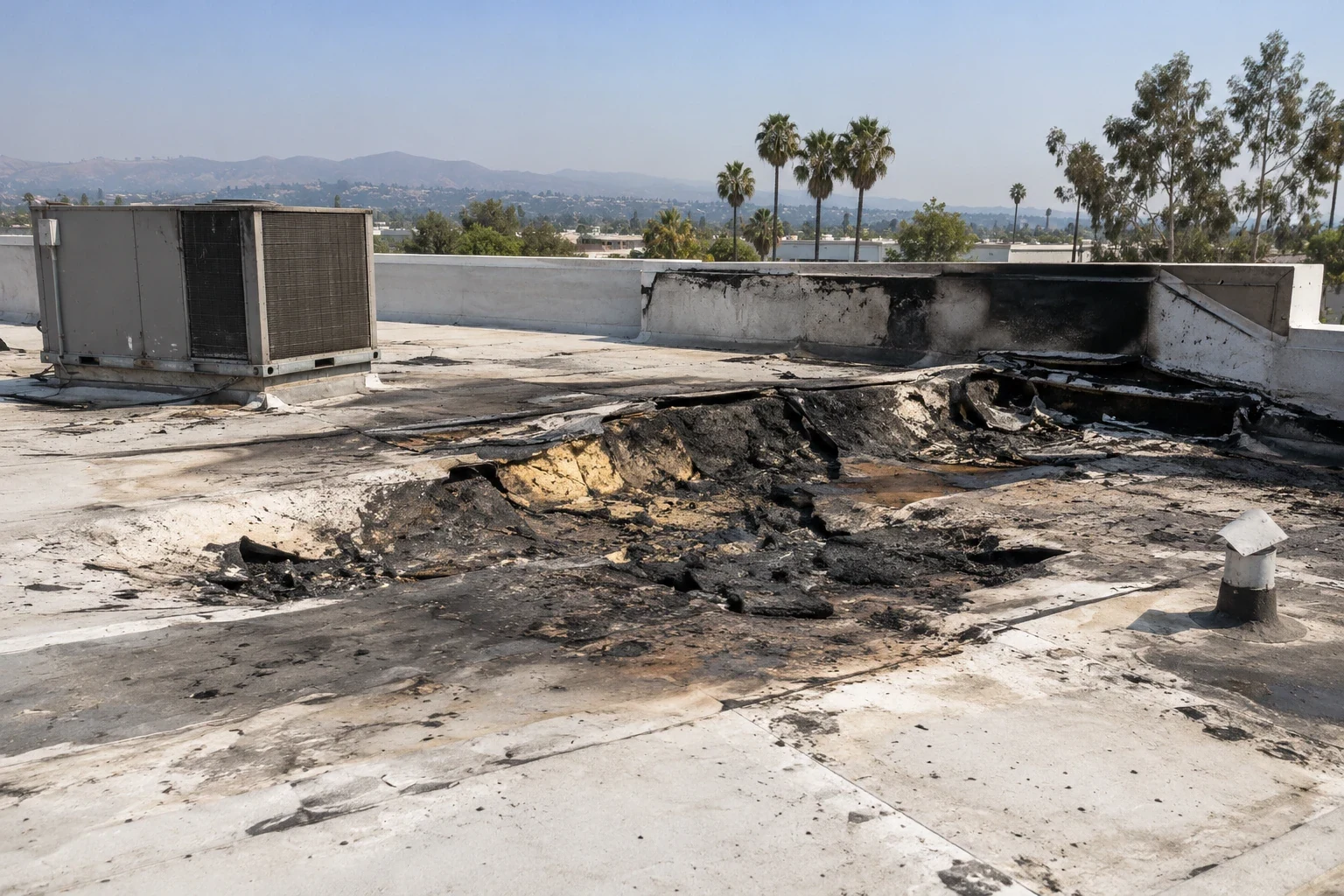

A fire-damaged roof cannot be priced from the visible surface alone when the affected support and equipment remain under assessment. We repair commercial fire damage in Fairfield, CA, by defining the roofing work that can proceed after the necessary safety and construction decisions are established. The general contractor needs a clear division between released roofing areas, concealed conditions requiring investigation and tasks assigned to structural, mechanical or other specialists. That division controls both the repair allowance and the sequence.
The LNU Lightning Complex began on August 17, 2020, with Solano among the affected counties. The incident provides regional fire history for planning, while the current building examination establishes the actual damage and the work required. We coordinate that examination with the authorized project team, then identify the retained construction and connections that can receive a permanent roof repair. Historical exposure does not replace the individual construction assessment.
The released area defines the start
A roof visit requires access that the responsible project team has established as suitable for the proposed examination. Damaged support, electrical exposure or unstable equipment can prevent ordinary roofing access. We identify the roof information needed while the qualified disciplines assess those conditions. The general contractor can then coordinate access and work release without treating an exterior photograph as authorization to load or open the assembly.
A record of the accessible roof condition identifies the areas examined and limitations affecting the findings. We separate visible membrane damage from support questions outside the roofing examination. The resulting scope should identify where another discipline's direction is still required. That lets the contractor schedule the dependency before the roofing repair is committed or materials are delivered to an area not yet released.
Damage establishes the removal boundary
Heat-affected covering can require examination beyond the apparent burned area. We assess exposed membrane, adjoining details and concealed layers where their condition affects retention. The surface may look cleaner after debris removal without establishing that insulation or supporting material is usable. Investigation needs an authorized boundary and a suitable closure method, so the contractor can carry it as defined work rather than assume a single surface patch will complete the repair.
A permanent local roof correction must connect to sound construction appropriate for the identified system. We explain where removal reaches that construction and which quantity remains provisional pending examination. If damage extends farther than the initial area, the pricing discussion needs a stated method for recording and approving the change. The bid can then distinguish the observed boundary from an allowance for a defined concealed condition.
The cleaned surface still needs assessment
Residue and damaged temporary material can interfere with a compatible roof connection. We assess the receiving surface and the preparation required by the selected repair method before choosing the permanent detail. Cleaning alone does not establish the suitability of material that has lost strength or attachment. The general contractor needs the preparation and removal described together, because their labor differs from applying a covering over an otherwise sound surface.
For an affected TPO membrane area, the tie-in needs identified material and suitable surrounding construction. Other systems require their own preparation and joining methods. We explain that distinction with the proposed scope and identify where the assembly information remains incomplete. Procurement should follow the repair decision, including the required details, so a readily available field material does not determine an unsuitable connection.
Equipment decisions affect closure
A damaged unit, curb or adjacent service connection can prevent permanent flashing from being completed. We identify the roof interface and working clearance needed, while the responsible equipment discipline establishes its own corrective task. The general contractor can place removal, lifting or replacement ahead of the roofing closure where required. A roof completion date should retain those dependencies instead of assuming the equipment will be available in its final position.
Work at roof curbs and equipment supports also needs a clear temporary condition while outside-trade tasks proceed. We define the holding measure separately from the finished detail and explain any further examination below it. The project team can then assign responsibility for maintaining protection through the interval without confusing reduced exposure with completion of the permanent repair.
Operating instructions stay with the building
For an occupied healthcare project near NorthBay Health Medical Center in Fairfield, the relevant facility contact must establish affected-space protection before roof work begins. We explain the proposed overhead task and material route so those instructions can be coordinated with the repair boundary. The roofing sequence follows the released construction area and the operator's actual requirements, including any interval needed for investigation.
Office work near the Solano County Government Center in Downtown Fairfield needs its own arrangements for staging and occupied entrances. A repair assignment in central Fairfield should identify the exact property and authorized access route with the scope. We retain these requirements in pricing, so different operating settings remain distinct even when the selected roof repair materials are similar.
The final scope includes its connections
A replacement option may need comparison when the affected assembly cannot support a reliable limited correction. Removal and reconstruction of the identified roof area adds preparation, protection and transition tasks beyond the field covering. We explain the findings supporting that larger intervention and identify the decisions still needed from the project team. The contractor can then present an option with a defined endpoint rather than a general recommendation based solely on the fire event.
Closeout records should preserve the installed repair boundary and any authorized scope changes. We retain photographs and material information needed for later compatible work, along with concerns still outside the completed task. The general contractor can distinguish finished roofing from unresolved specialist or interior work. That distinction helps the owner understand the expenditure while giving the next roof examination an accurate construction record.
Commercial Roofing Questions
What information is needed before the roof repair can be priced?
Provide the released work area, available assembly records and the project team's direction on damaged support or equipment. We identify the roofing examination needed to establish preparation and removal. Unresolved specialist decisions should remain visible in the scope, because they can change the connection and the start sequence.
Can a clean-looking membrane remain after fire exposure?
Examine its condition and the adjoining construction before selecting retention. We assess whether the identified material can receive a compatible detail and whether concealed damage requires investigation. Cleaning can prepare a suitable surface, but it cannot restore material whose condition prevents a dependable connection.
How should additional concealed damage be treated in the bid?
Define the investigation and the basis for changed work before opening the area. We recommend documenting the exposed condition and identifying who approves additional removal. An allowance or unit-price approach needs its included tasks stated, so the contractor can reconcile the actual repair quantity with the initial scope.
What happens when equipment work precedes the flashing repair?
Coordinate the equipment release and final position with the roof connection. We explain the preparation, clearance and temporary protection needed while that task proceeds. The schedule can then place permanent closure after the required outside-trade work rather than leave its roofing dependency unassigned.
Does a finished roof repair close every fire-related task?
Keep the completed roofing boundary separate from interior, equipment and specialist work. We record the installed connections and any deferred roof concern with their locations. The general contractor can use those records to identify what the roofing scope achieved and which project responsibilities remain outside it.
Related Roofing Work
Send the released area and the available assembly information
Share the roof drawings, reported damage and project-team directions for access and equipment. We will identify the roofing examination and scope decisions needed before permanent repair is priced.