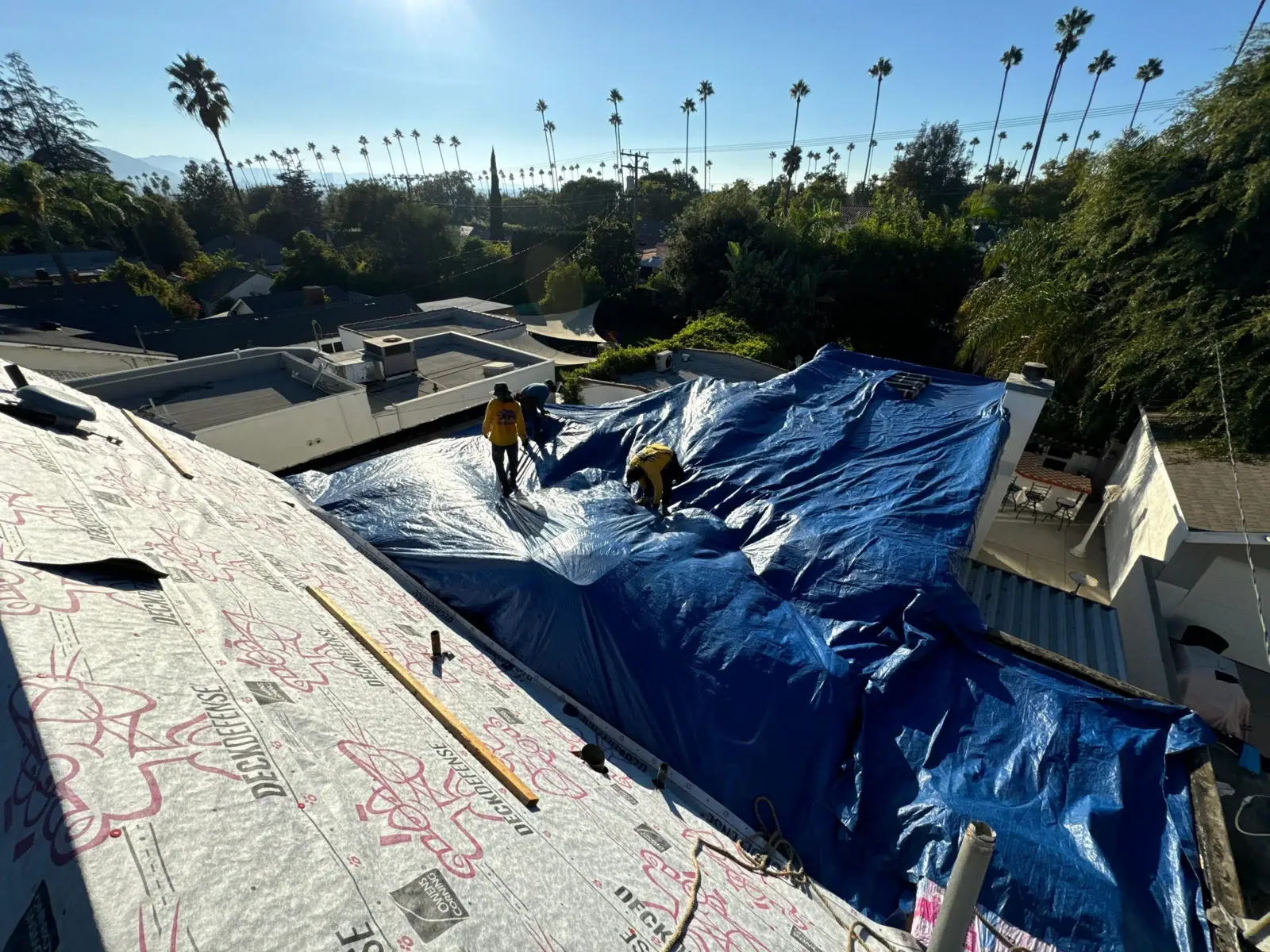

A restoration alternate needs more than a coating quantity when the retained roof surface has lost the condition needed for a lasting connection. We assess heat and ultraviolet damage on commercial roofing in Fairfield, CA, to establish the preparation and repair tasks a general contractor should carry before selecting an alternate. The visit examines exposed covering, transitions and support where their condition affects retention. Its purpose is to define workable construction, including the investigation needed when surface appearance leaves an important question unresolved.
The September 5, 2022 high of 117 F in Fairfield gives historical context for planning summer roof work. Present application decisions still need the selected material's requirements and conditions measured at the work area. We use that distinction to coordinate preparation, storage and installation timing. A historical city reading informs planning without becoming a temperature measurement or failure diagnosis for the subject roof.
Material condition defines the preparation
Cracks, surface deterioration or a weak receiving area can change the work needed before a repair is joined. Ultraviolet exposure can contribute to weathering of organic roofing materials, making examination of the receiving surface part of the restoration decision. We examine the identified membrane and adjacent material to determine where preparation can reach a suitable surface. Dirt and contamination need different treatment from covering that has lost useful integrity. The bid should identify the condition being addressed, because a cleaning allowance does not include removal of material that cannot support the selected connection.
A repair at a deteriorated seam needs the system-specific method and usable material around it. We identify when the field condition affects that boundary and explain any examination required before the quantity is fixed. The general contractor can then compare a local correction with broader preparation while keeping their different tasks and retained construction visible.
Movement can expose a weak detail
Heating and cooling can move roof components at different rates, placing demands on a transition that also needs to remain weather resistant. We assess the affected wall, curb or pipe detail and the construction receiving it. A split may occur beside a connection that has become restrained, but its cause requires examination. The proposed repair should address the actual detail and the movement it must accommodate, rather than cover the opening while leaving its constraint unchanged.
Correction of the affected flashing assembly can include termination and receiving support tasks beyond the visible base of the detail. We identify those components and any work another discipline must coordinate. The contractor can include that interface during pricing, so a roof surface restoration does not leave a damaged vertical connection outside the scope that still needs attention.
A coating needs a suitable retained assembly
A restoration decision requires the existing covering, concealed condition and proposed coating to be considered together. We assess preparation and compatibility, identifying where further investigation or a trial application is appropriate under the selected requirements. A coating can be considered for a suitable retained surface, but it does not make wet insulation or unsound support fit to remain. Those findings must be resolved in the preparation scope.
Evaluation of a roof coating proposal needs the actual detail and substrate information before procurement. We explain what the examination establishes and which product-specific questions need review. The general contractor can then carry the accepted preparation and repair work with the application, instead of comparing a coating-only number with an alternate that also corrects the affected assembly.
Application timing follows the selected materials
An installation period reserved on the schedule does not establish suitable conditions for every primer, adhesive or coating. We review the selected requirements and assess the work area before application. Surface moisture, temperature and the preparation already completed can affect which task can proceed. The general contractor needs those dependencies retained in the sequence, with material storage and handling considered before the delivery reaches the building.
A proposed project near Green Valley Corporate Park, at the convergence of I-680 with I-80, also needs its own operator-approved access arrangement. Material movement and a limited released period may affect how much preparation can be completed before the permanent connection. We explain those effects during pricing, so daily access and application conditions are coordinated as separate requirements that both have to serve the chosen roofing task.
The investigation distinguishes retention from removal
A weathered surface can coexist with sound underlying layers or with concealed conditions that change the entire repair approach. We examine the accessible indicators and available construction records, then identify targeted testing or authorized openings where the result affects the intervention. The scope should describe those tasks and compatible closure. That gives an investigation allowance a purpose the general contractor can schedule before the permanent material decision.
Thermal screening followed by appropriate confirmation may help select an area for closer examination under suitable conditions. Its result needs interpretation against the roof construction and other influences on the image. We retain those limits with the findings, so the estimate uses established material condition for a removal boundary and keeps an unresolved question separate until the evidence supports it.
The alternative includes its complete endpoint
A limited repair, surface restoration and replacement involve different preparation and disruption. We explain the observed condition that supports each option and the task still needed to make its scope firm. A replacement assessment of the affected area includes removal and the new transitions where retention is unsuitable. The contractor can then compare alternatives that identify their own finished construction rather than judge them only by the area of field covering.
For assignments near the Green Valley business park, we need the exact building's roof drawing and operating instructions with that comparison. A record of the completed boundary and installed materials belongs in closeout after the work. The owner and contractor can use it for later compatible repair, retaining any concern that remains outside the authorized intervention.
Commercial Roofing Questions
What should precede a coating allowance on a weathered roof?
Assess the retained surface, concealed condition and proposed product requirements. We identify the cleaning, repair or removal needed for a suitable receiving assembly. Carry those preparation tasks with the application, so the general contractor can compare a complete restoration scope with the other permanent options.
Can a split at a curb be included as surface preparation?
Define the affected connection separately where its repair needs termination, backing or movement treatment. We examine the material around it and describe the compatible correction. The bid can then include the actual flashing work instead of assuming the surface application will resolve a damaged detail.
Does the planned start date establish suitable coating conditions?
Check the work area against the selected application requirements before release. We assess surface moisture and temperature along with preparation and material handling. The schedule should distinguish tasks that can proceed from application that requires a later suitable period, rather than use calendar availability as the only decision.
Which evidence supports retaining insulation beneath damaged covering?
Use appropriate examination where the concealed condition affects the scope. We review the assembly records and propose targeted investigation when needed, including compatible closure of authorized openings. Surface appearance or a screening image alone should not establish a removal quantity or prove that the retained layers are suitable.
When should replacement be compared with restoration?
Consider the comparison where the retained construction cannot support the proposed preparation and connection. We explain the findings and the broader work needed to reach usable support. The contractor can then present alternatives with their complete removal, detail and protection tasks rather than compare only field material quantities.
Related Roofing Work
Send the affected material and the proposed alternate
Share the roof drawing, available assembly records and the repair or restoration option being considered. We will establish the examination needed to price its preparation and finished connections.