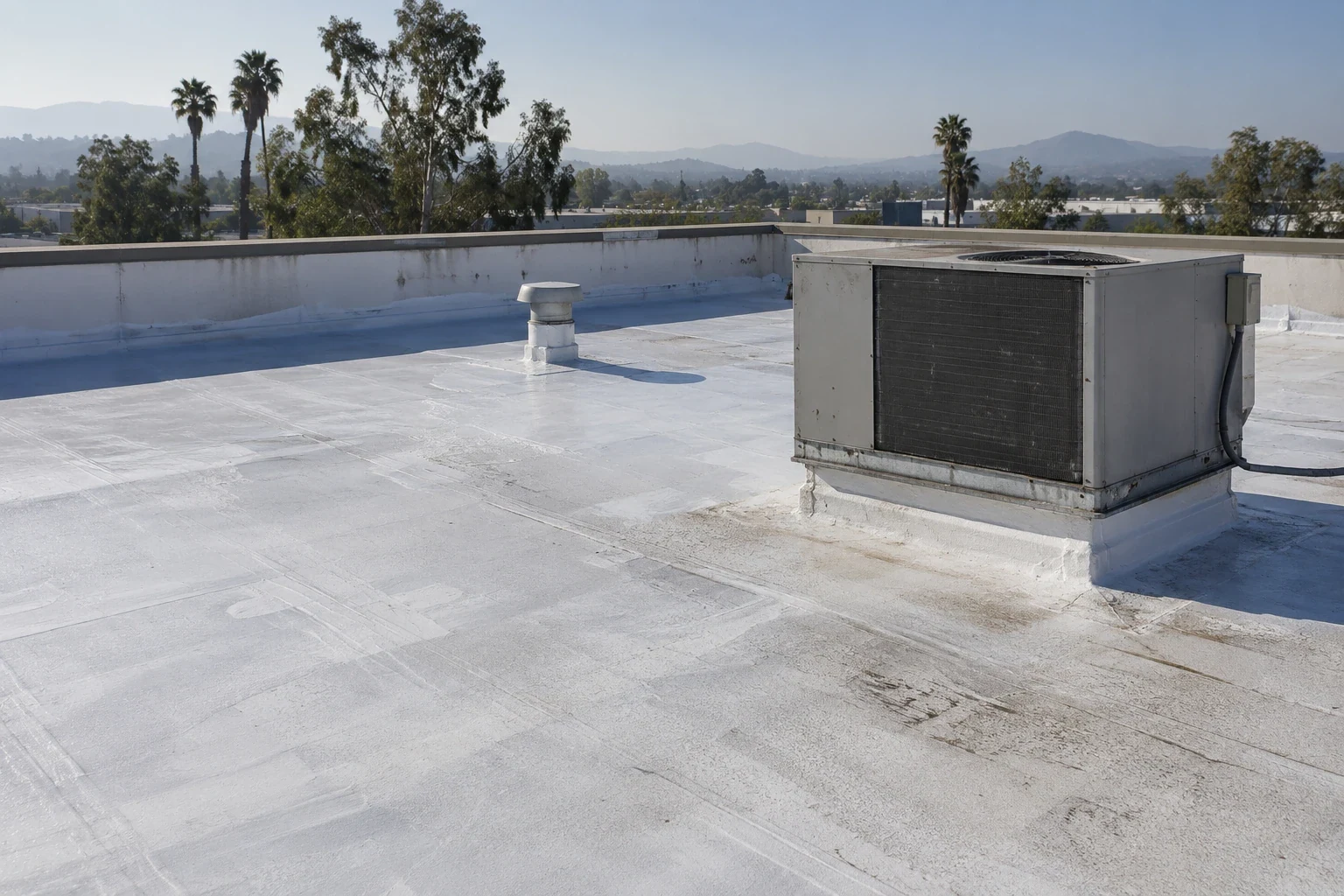

A Fairfield, CA restoration bid becomes difficult to compare when the coating line includes preparation that has not been defined. Washing the field, replacing wet insulation and reconstructing a drain detail are different cost drivers. We inspect the assembly before proposing a coating, then identify the work needed to create a suitable substrate. The general contractor receives a scope that separates surface application from repairs and explains which conditions could change the schedule.
The city's historical 117 F reading on September 5, 2022 gives local context for evaluating heat exposure and material handling. It does not identify a roof surface temperature or prove that a coating is appropriate. NorthBay Health Medical Center is a hospital in Fairfield; its specific roof, access and operating conditions cannot be inferred from the citywide temperature record. The restoration plan for an assigned building follows its own roof condition, ventilation and access requirements.
Confirm the substrate
A coating depends on a roof that can carry the new material and remain useful beneath it. We examine the field, seams and flashing for deterioration, then investigate areas that may contain moisture. Cleaning can improve the exposed surface without correcting damaged supporting layers. The bid needs a repair boundary for those layers before coating quantity and preparation time can be treated as settled, particularly where earlier overlays conceal the assembly. Before the bid is finalized, record the installed surface by roof zone and separate coating removal from preparation that can remain. Note where a transition changes from membrane to metal, where earlier repairs interrupt the field, and which drains or curbs need a compatible termination. A small adhesion check only answers the tested area and should not be represented as approval for the entire roof. The proposal can define how additional incompatible material will be measured and authorized if removal exposes a different assembly. That keeps application quantities traceable to the surface actually prepared and gives the owner a clear stop point before work advances across another zone.
An appropriate roof moisture survey can help direct investigation, with confirmation where the pattern or construction leaves uncertainty. We describe that limit rather than converting every thermal difference into a removal area. For work in the NorthBay medical district, the GC should arrange the assigned property's roof and interior access early. That allows suspect areas to be assessed before the restoration bid depends on assumptions that later removal could overturn.
Price preparation separately
Surface contamination can determine how much preparation a coating needs. Dirt, grease, chalking and old repair compounds affect adhesion differently, so the inspection and product requirements govern cleaning and removal. We evaluate test areas where appropriate and identify the primer or other preparation needed for the selected system. The bid should state those tasks in practical terms, including protection of outlets and nearby equipment during washing.
With silicone coating applications, compatibility and the existing roof condition still require examination before the material is selected. A substitution should include its preparation requirements instead of being judged only by the container price. The GC can protect the schedule by resolving the product and substrate questions through submittals before mobilization. A mockup or adhesion check may add an early task, but it can prevent a wider application from beginning on an unsuitable surface.
Repair details before application
An open lap needs a detail repair, not merely a heavier coating pass. We reconstruct failed connections and address damaged flashing before treating the field, using methods compatible with the existing system and the selected coating. Drainage defects also belong in that preparation scope. Water remaining against an unsound detail can continue to expose it even after the surrounding surface receives new material, leaving the owner with a recurring leak despite a fresh appearance.
Our repairs ahead of roof restoration are described as separate tasks so the GC can review their quantities and sequence. Where repeated details are comparable, a unit price can be based on a stated repair condition, with concealed variations handled separately. For a hospital roof restoration assignment, the operator's ventilation and room protection requirements can affect that sequence. Building use should be confirmed for the project before the repair and application stages are scheduled.
Allow drying and curing time
A cleaned roof can remain unsuitable for coating while moisture sits in seams or shaded details. We assess the work area and follow the selected material's surface and weather requirements, including the curing period after application. A rain-free morning does not automatically support the whole day's application plan. The schedule should account for the actual preparation and cure requirements, with a clear stopping boundary if conditions change during the work.
Hot conditions also affect handling and the working surface, which makes the local heat record relevant as context for planning rather than as a fixed design value. We coordinate material storage and application stages accordingly. Through planning roofing work above occupied interiors, we discuss access, odors where relevant and protection of nearby equipment. The GC should carry those coordination tasks into the schedule instead of leaving them for the applicator to resolve after the field has been prepared.
Review the restoration decision
A restoration recommendation should explain what the coating will accomplish and what condition it cannot correct. A sound, compatible roof with repairable defects can support a surface treatment; widespread wet layers or unreliable attachment can require another approach. We provide findings that distinguish those situations and identify further investigation where the assembly remains uncertain. That prevents a lower initial line item from being compared with replacement as though both address the same construction problem.
Our planning for roof expenditure can place restoration alongside repair or replacement using the inspected condition and the building's constraints. Cost drivers include preparation, selective removal, detail reconstruction, access and material application requirements. We explain those drivers so the GC can develop a bid that is reviewable and a schedule that follows the roofing sequence. If the investigation changes the proposed extent, the revised work is described before application proceeds beyond the agreed boundary.
City of Fairfield identifies the 150-acre Green Valley Corporate Park at I-80 and I-680 for office, R&D, biomedical and technical support users. A project there still needs its own roof review and operator access plan.
Commercial Roofing Questions
Can coating quantity be set before moisture investigation?
Treat the quantity as provisional until the substrate and repair areas are established. Wet insulation or unsound material can change both preparation and the usable coating area. We recommend resolving suspect layers before pricing the field as a uniform application, with any remaining uncertainty stated in the bid.
Should a cheaper substitute use the same preparation allowance?
Review its compatibility and application requirements independently. A different coating may need another primer, cleaning method or curing sequence, changing labor and timing as well as material cost. We can assess the proposed substitution against the existing roof before the GC accepts it as equivalent work.
Will extra coating repair an open seam?
A failed connection needs a suitable repair before field application. Increasing coating thickness does not reconstruct an unsound lap or restore wet supporting material. We recommend pricing the detail correction separately and confirming its compatibility with the selected restoration system before the coating stage begins.
How much schedule float belongs after washing?
The drying requirement at the actual substrate governs that allowance. Seams, shaded areas and existing repairs can retain moisture after the exposed field dries. We explain the application conditions and inspect readiness, allowing the GC to plan a hold without assuming every washed area is ready together.
What would make restoration unsuitable?
Widespread moisture, poor attachment or a surface that cannot support a reliable bond can defeat the purpose of a coating. We recommend investigating those conditions before committing to restoration. The report should explain the alternative work needed and distinguish the unresolved assembly problem from cosmetic surface aging.
Related Roofing Work
Send the roof scope early
Send the Fairfield roof scope, existing assembly information and proposed coating early. We will identify preparation, repair and application requirements so the price and construction sequence can be reviewed together.