
What does a Fairfield, CA general contractor need from the roofing trade before setting the construction allowance? A usable answer connects the assembly condition with the preparation, access and coordination required to do the work. Commercial Roofing Fairfield repairs, replaces, recovers and restores commercial roofing, with inspection and maintenance supporting those decisions. We explain the technical driver behind a recommendation and the action it introduces into the bid or schedule, so a roofing number describes work rather than an assumption about the building.
The starting information can be drawings, a reported leak or a proposed equipment change. We review the intended decision and identify the examination needed to support it. A visual observation may establish a damaged connection while leaving concealed moisture unresolved. We state that difference and discuss further investigation where it can change the permanent scope. The contractor then has a practical basis for confirmed work, a defined allowance and a task that needs resolution before procurement.
We define the preparation
A repair needs a connection to usable material, not merely a covering over the nearest visible defect. We examine the roof system, the affected detail and the supporting assembly to identify that boundary. Localized commercial roof repair can be suitable where the surrounding conditions support it. Wet insulation, deteriorated backing or broader attachment problems can require a wider correction. We explain how each finding changes removal, disposal and the preparation needed for permanent closure.
The same method supports roof replacement planning. The covering is only one part of the work: drainage interfaces, wall transitions, penetrations and substrate correction may affect labor and sequence. We describe them early so the contractor can compare a complete scope with a proposed alternate. Where a recover or coating option is considered, its retained assembly requirements receive their own review rather than being treated as an automatic reduction in work simply because less material is removed.
We keep assumptions visible
An unexamined condition should be identified by its location and the decision it could change. Our roof condition documentation records observed defects, access limits and recommended follow up in terms the project team can use. We distinguish that physical account from a warranty coverage decision or a structural assessment requiring another discipline. The contractor can then assign the next task and preserve the relevant assumption with the bid, instead of carrying a broad contingency with no defined purpose.
Due diligence roofing reviews apply the examination to a purchase or renovation decision. The useful scope begins with what the team needs to resolve and when that answer is needed. We discuss available records, proposed changes and access before the visit. A recommendation for testing explains what the result would establish, allowing investigation to be placed ahead of the permanent decision rather than discovered as a dependency after material has been released.
We examine the individual property
NorthBay Health Medical Center is a hospital in Fairfield. It gives a healthcare reference for construction coordination, while proposed roofing work needs the actual operator's access and protection requirements. A scope in the NorthBay medical district should identify occupied areas and equipment interfaces before the contractor fixes the removal sequence. We obtain those requirements with the project information and examine the subject building's roof rather than infer its material from the surrounding use.
The Solano County Administrator office is identified in Downtown Fairfield. For a downtown Fairfield roofing project, roof access and material staging likewise belong to the property's own work plan. We confirm the responsible contact and the rooms beneath the proposed area, then explain how those controls affect examination or construction. These local references help orient coordination while the actual assembly findings determine repair, retention or replacement. The contractor receives a recommendation specific to the building, with the operating arrangements included in its work requirements.
We sequence the interfaces
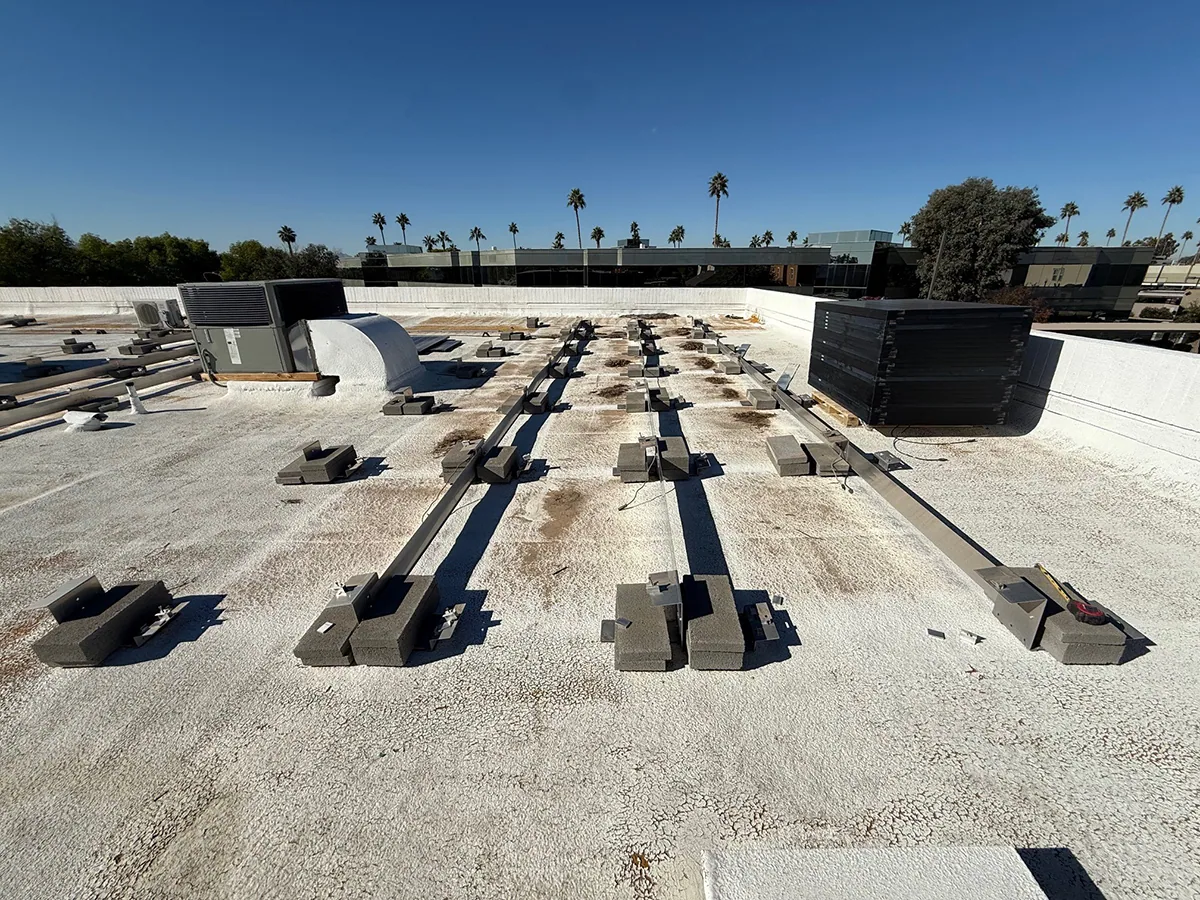
A curb concealed by newly installed equipment can make a roofing connection harder to prepare than it was during design. We review the equipment interface before installation and identify access, lifting or shutdown dependencies for the contractor to coordinate. Roof work at equipment supports should be included with the mechanical sequence, so responsibility for opening and closure is clear before either trade creates an exposure. The material submittal can then address the complete connection rather than approve the field covering alone.
For construction above occupied rooms, temporary closure and interior protection require similarly clear assignments. We explain the area proposed for removal, the conditions needed for preparation and any restriction that changes the amount of work that can be opened at one time. Weather and actual surface condition may affect the sequence, so the plan needs suitable protection and a clear next action. The contractor can preserve those dependencies during scheduling instead of assuming that an available calendar day is sufficient for every roofing task.
We separate urgent and lasting work
An active leak calls for a protection discussion before the permanent scope is fully resolved. Our emergency call handling extends through nights, weekends and holidays. We identify immediate exposure, arrange access and describe temporary work suited to the condition found. The operator coordinates interior attention and qualified specialist assessment where water affects electrical systems or other sensitive components. We state the protection provided and the remaining examination needs, keeping the urgent measure distinct from a completed repair of the assembly.
The follow up defines compatible material, usable support and any wet area that must be removed. Photographs preserve the discovered defect before temporary work covers it. The contractor can then connect the permanent allowance to the recorded findings and understand why the boundary changes if concealed damage appears. This approach supports a calm transition from loss protection to lasting correction: each stage has a purpose, a location and a condition that allows the next work to proceed.
We preserve the completed scope
A completed roofing detail needs a record the operator can use later. We document its location, the work performed and adjacent conditions outside the correction. Maintenance can then address the relevant drainage path, service route or transition without treating one repaired defect as an assessment of the entire roof. The contractor can gather these records during closeout while the scope and responsibilities remain clear, with any required agreement documents retained alongside the physical work record.
Later alterations still require examination of the present assembly. Earlier photographs and material information help identify what changed, but they do not establish current condition by themselves. We compare them with the roof found and explain the preparation needed for the next proposal. The owner and contractor gain a clearer decision path when the record preserves both completed work and its limits, allowing the next bid to begin with defined information rather than an unsupported assumption about every retained component.
Commercial Roofing Questions
What should a contractor send before requesting roofing pricing?
Provide the drawings, intended work and the date your decision needs to be made. Include available roof records and the operator contact for access. We identify the assembly questions and coordination needed to support the price, with further investigation defined where concealed conditions can change the scope.
How do you explain a repair that grows beyond the visible defect?
We connect the revised boundary to the condition found, such as wet insulation or unusable supporting material. Photographs and locations show why additional removal is needed. The contractor can distinguish that finding from an unrelated change and coordinate the resulting preparation before permanent closure.
Can you review a proposed recover or restoration alternate?
We examine the retained assembly requirements as part of that decision. Moisture, attachment and surface suitability affect whether the option can proceed. Our recommendation identifies preparation and remaining investigation so the contractor can compare a defined alternate with the replacement work.
What happens when the building has an active leak during planning?
We discuss temporary loss protection and the access needed to examine the roof. Emergency calls are handled outside normal working hours, with the permanent scope receiving the additional review required. The operator should coordinate appropriate interior and specialist attention alongside the roofing response.
Bring the roofing scope forward
Send the drawings, operating requirements and the decision date before the construction allowance is fixed. We explain preparation and interfaces early so your roofing price supports a workable sequence.