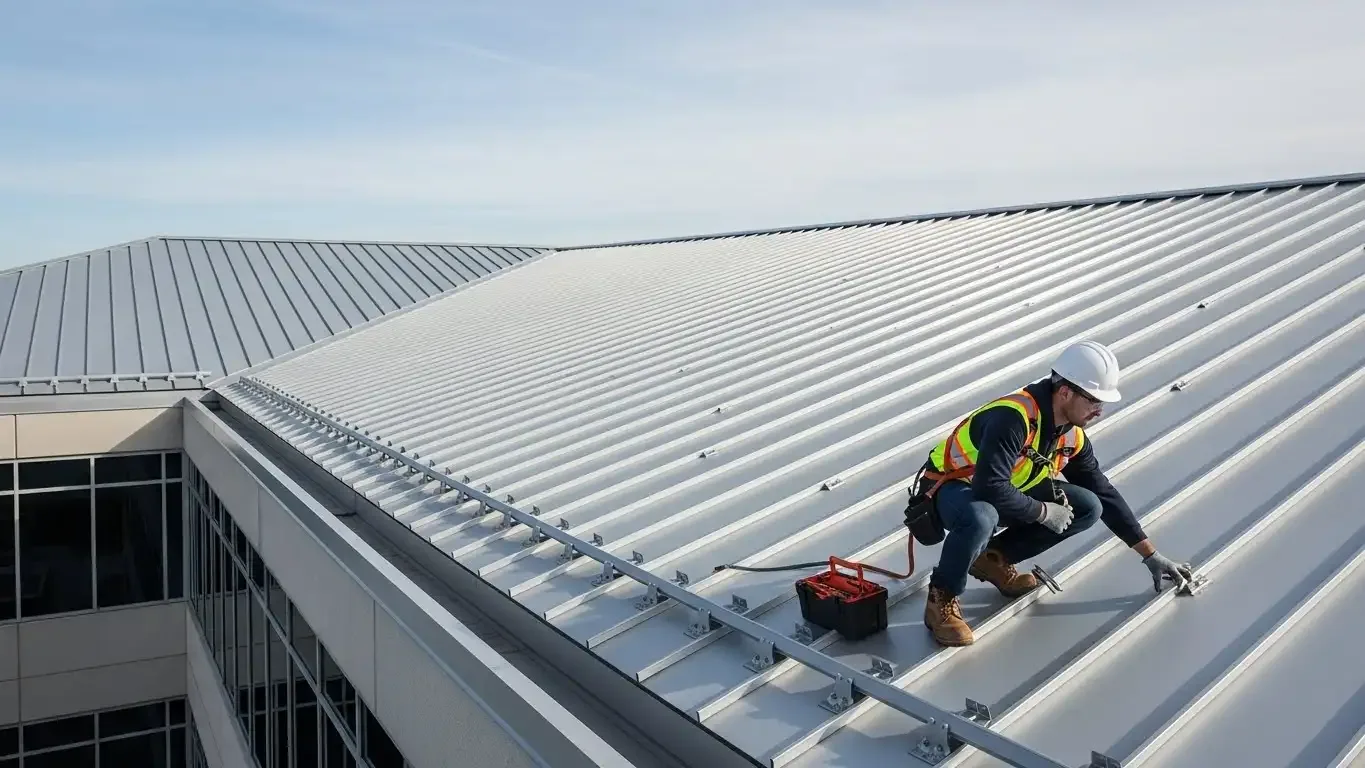

A maintenance allowance on a Fairfield, CA roofing bid needs a defined inspection extent before it becomes a useful number. Clearing an outlet, checking a seam and rebuilding failed flashing are different tasks, with different labor and material requirements. We establish the roof construction, access and known concerns, then distinguish routine care from corrective work. That separation gives the general contractor a bid that can be compared and a schedule that accounts for what the visit actually includes.
Fairfield reached 117 F on September 5, 2022, illustrating the local heat exposure that makes movement and existing repairs useful inspection points. Heat history does not set a maintenance interval by itself; the assembly and observed condition do that. NorthBay Health Medical Center is a hospital in Fairfield; any maintenance plan still follows the assigned roof's observed assembly and condition. Any assigned property needs its own room protection and access arrangements before maintenance begins.
Define the visit
Inspection coverage drives the maintenance line item. A roof with several equipment service routes needs attention at the traffic areas, penetrations and connections as well as the field membrane. We identify what can be reached, where concealed construction limits the check and whether a closer investigation is needed around an existing leak. The bid should describe those limits so a routine visit is not mistaken for a complete moisture assessment or a repair program.
Our commercial roof condition checks can establish the initial findings for that program. The GC can then coordinate roof access and identify the person who will receive the report, reducing delays caused by missing permissions or unavailable interior rooms. A separate visit in the NorthBay medical district requires the same attention to the actual building use and inspection boundary. The report records the property findings, not assumptions based on the surrounding district.
Separate cleaning from repair
Debris removal changes drainage conditions, but it does not reconstruct a damaged outlet. We clear accessible material where the scope allows, then examine the drain connection and surrounding roof for defects. A cracked component, an open lap or failing sealant needs a corrective task with its own preparation requirements. Keeping those items separate lets the GC understand what is included in the maintenance visit and what requires another approved line item.
When an outlet needs reconstruction, repairing the roof drainage connection is priced against the actual detail and any piping coordination. A unit price may help with repeated similar work, but it needs a stated basis and a method for handling concealed differences. We also identify disposal and access that affect the work. The useful allowance covers a defined uncertainty; it should not replace investigation of a known failed component that can be inspected before the bid closes.
Keep traffic off vulnerable details
Equipment service can introduce punctures or wear around a repair that was sound at the last visit. We examine the approach route and discuss how technicians carry tools, stand near curbs and move replacement parts. Practical roof protection can reduce that exposure, but it needs to suit the membrane and permit routine inspection. A maintenance task becomes more useful when the operator can carry the protection arrangement into later equipment visits.
For medical office roof care, room use and mechanical scheduling can affect when those checks proceed. We coordinate the roofing work with the building contact rather than assume a service visit can enter every space at any hour. Where repair materials need a suitable surface temperature or drying period, the schedule reflects those requirements. The GC can protect schedule float by identifying the access route and equipment coordination early, before the visit reveals a conflict that was already foreseeable.
Record changes clearly
A photograph without a location or action does little to support the next expenditure. We connect each observed defect to a roof reference and state whether it needs correction, further investigation or continued monitoring. A small seam opening can call for repair, while a suspect moisture area can require another method before removal dimensions are established. The report should preserve that distinction so the maintenance budget does not gradually absorb a larger construction project without review.
Our written findings for roof maintenance give the GC and owner a practical record of the visit. Previous reports can show where a detail has changed, but they do not replace a current check after new equipment work or a reported leak. We explain what was completed and what remains for approval. That record also helps separate roof repair from interior restoration, allowing the affected trades to schedule their work after the entry and remaining moisture have been addressed.
Set the next interval
Roof condition, debris exposure and the consequences of water entry influence the next visit. A heavily used equipment route may deserve closer attention than an undisturbed field, while an outlet with recurring accumulation may require a cleaning arrangement tied to the actual site. We recommend an interval based on those observations and explain what should trigger an earlier check. A new leak, displaced component or work by another trade can change the need before the planned date.
Where the findings exceed routine care, corrective commercial roof work receives a defined scope rather than an undefined maintenance instruction. Widespread deterioration can instead support capital planning for a larger project. Emergency support remains available overnight and throughout weekends and holidays, with response timing confirmed for the address and conditions. The maintenance program should reduce avoidable disruption while leaving a clear route for urgent protection and the permanent repair decision when a new defect appears.
A maintenance route through Cordelia Junction, can be coordinated regionally, while each building retains its own inspection interval and repair history.
Commercial Roofing Questions
What belongs in the base maintenance allowance?
Include a defined inspection area, accessible cleaning tasks and the reporting required at completion. State exclusions for concealed investigation and reconstruction so bids remain comparable. We can identify known defects before pricing, then separate them from the routine visit instead of allowing an open-ended allowance to hide a predictable repair.
Can repeated drain cleaning replace a drainage repair?
Recurring retention deserves an inspection of the outlet, flashing and connected drainage route. Cleaning can restore flow where debris is the cause, but it cannot repair damaged components or poor connections. We recommend recording what remains after cleaning and pricing any corrective work separately from the next routine visit.
How should equipment contractors use the maintenance report?
Give them the relevant roof access and protection information before service work begins. A marked traffic area or vulnerable detail helps coordinate where tools and replacement parts can be handled. We can inspect suspected new damage afterward, with the scope based on the affected area rather than automatically repeating the entire maintenance visit.
Is an annual interval suitable for every building?
Use the roof condition and exposure to select the interval. Debris accumulation, frequent equipment access and sensitive rooms below can justify a different frequency. We explain the observed drivers and identify events that should prompt an earlier check, so the scheduled visit remains a working plan rather than a fixed assumption.
What changes maintenance into a capital project?
Damage that extends across the assembly can exceed the usefulness of small repairs. Moisture spread, loss of attachment or material that no longer accepts reliable connections may support broader work. We recommend additional investigation where necessary and provide a scope that distinguishes urgent corrections from the later construction decision.
Related Roofing Work
Send the roof scope early
Send the Fairfield roof information, access requirements and known defects before setting the maintenance allowance. We will define the visit and corrective items so the bid and schedule reflect the actual work.