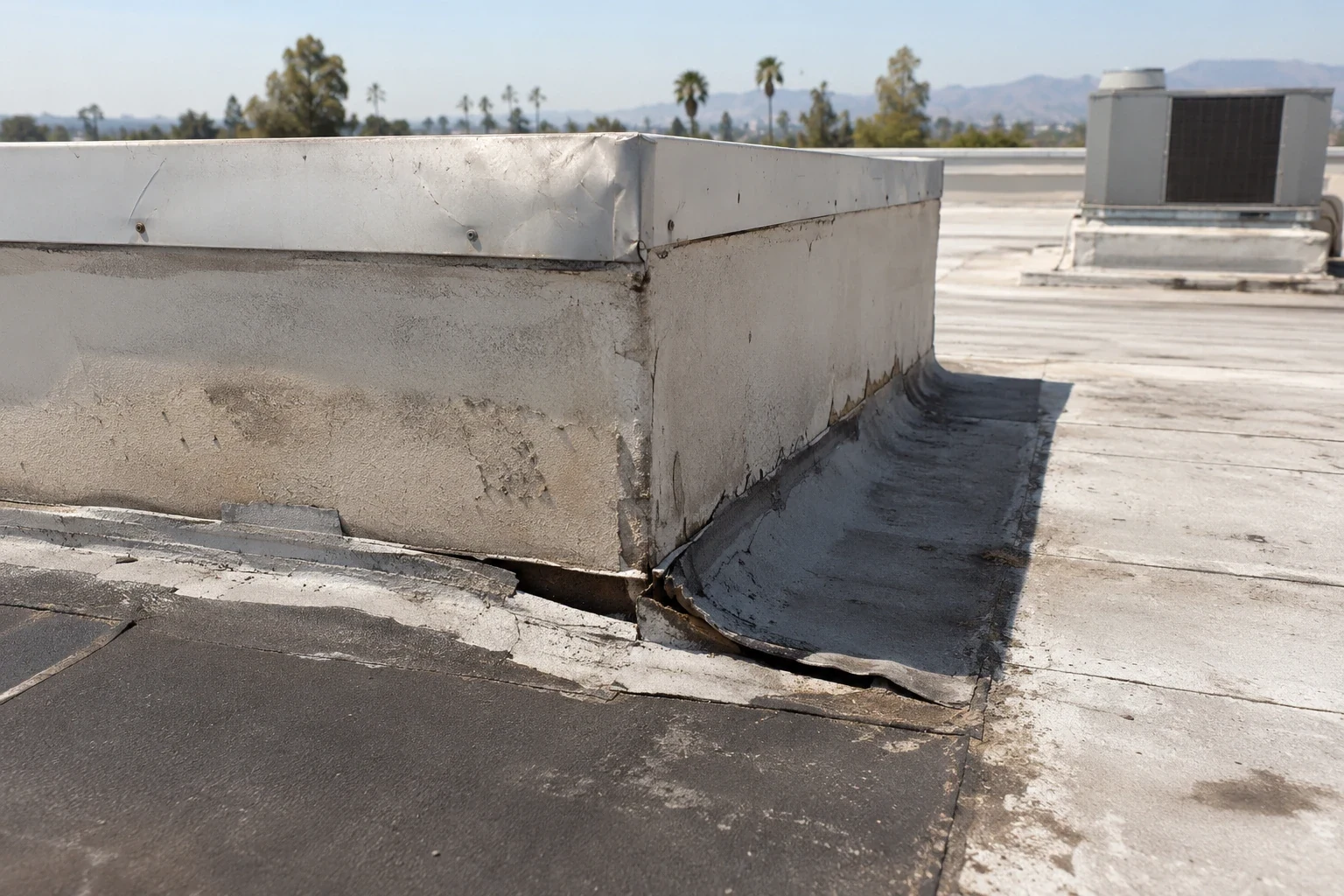

The flashing repair allowance changes when the receiving wall, curb or pipe needs work before the roof connection can be completed. We examine commercial roof flashing failures in Fairfield, CA, to define those interfaces and the roofing task that follows. The general contractor needs a clear division between accessible membrane work and any adjoining construction still requiring assessment. A surface seal alone should not settle that division before the concealed transition is examined.
NorthBay Health Medical Center sits within Fairfield’s medical district. A repair at another healthcare property still depends on the assigned operator’s instructions for the affected space and roof access. For a proposed roofing repair serving a medical property nearby, we need the assigned operator's instructions for the affected space and access route. We explain the opening and closure required by the proposed detail. The contractor can arrange the appropriate release and outside-trade coordination before committing to a permanent repair period.
The receiving construction sets the boundary
A split at a vertical transition may involve the membrane connection, its support or the surface behind it. We examine what is accessible and identify any removal necessary to establish the receiving condition. The bid should separate that examination from a confirmed flashing replacement. This keeps the uncertain supporting work visible until the contractor has enough information to authorize its extent.
A joint failure extending into the field membrane can change how the replacement flashing connects to retained roofing. We assess both boundaries before selecting the repair detail. The contractor can obtain the necessary material and identify any adjoining preparation as part of the same release. Repairing only the vertical face can leave an unresolved connection at the horizontal transition.
The upper termination needs a working detail
An exposed upper edge needs the termination and any counterflashing examined together. We assess the available connection to the wall or curb and the condition of accessible fasteners and receiving construction. Loose support or an unsuitable finish can affect the correction beyond the visible membrane. The contractor should carry that supporting task in the appropriate line item before the roofing material is ordered.
Work at the parapet and its roofing connection can require masonry, metal or other outside-trade coordination depending on the observed construction. We define our roofing boundary and describe the adjoining item that must be resolved. The roofing sequence should preserve an effective closure during that interface. An uncertain wall repair needs a separate decision rather than an assumed inclusion in a flashing quantity.
Movement needs clearance at the connection
Equipment vibration, component movement and changes in direction can affect a flashing detail. We assess the available clearance and the connection's geometry where those conditions influence the proposed repair. A service panel that cannot open without contacting the detail needs coordinated attention. The general contractor can arrange that outside-trade task before the final roofing connection restricts access.
Damage through the covering beside a curb should be examined separately where its receiving boundary differs. We identify how the corrections meet and whether either detail needs additional removal. This helps the bid describe the actual combined work without reducing distinct defects to one counted curb. The completed arrangement should leave appropriate access for future equipment service.
Compatible materials require an identified assembly
An unknown coating or earlier sealant can complicate preparation for a new flashing connection. We identify the covering and accessible repair materials, then assess what can be retained under the proposed procedure. Some surface material may need removal to expose a usable receiving area. That preparation belongs in the price and work period because it affects the connection's feasibility.
A flashing correction on an EPDM assembly needs the appropriate material and joining procedure for that roof. Thermoplastic and asphalt-based systems have different connections. We retain the actual assembly information with the proposed detail so the contractor can complete procurement and submittal review. Selecting a generic repair material before that identification can leave compatibility unresolved when the work is released.
Removal may expose another repair task
A failed flashing can admit water into insulation or supporting construction that is not visible from the surface. We assess the indications of entry and describe further examination where retention depends on the hidden condition. The contractor needs the investigation's purpose, authorized extent and closure method stated together. That allows an unresolved concealed quantity to remain explicit while the confirmed roofing work is defined.
Investigation of the entry path at a transition helps establish whether the proposed flashing task addresses the observed leak. We examine adjacent details where they could affect that decision. An interior symptom alone should not set the removal limit or prove that the entire wall connection has failed. The resulting scope should distinguish an established defect from an adjacent condition still needing confirmation.
The daily endpoint includes the exposed transition
A restricted release can limit how much flashing may be opened and prepared before closure. We coordinate that extent with the operator's access instructions and suitable application conditions. Temporary protection may be required while supporting work or additional material is arranged. We discuss emergency assistance at any hour, including holidays, when active entry requires an immediate feasible holding measure.
The County Administrator's office location in Downtown Fairfield. For a proposed office repair in the downtown Fairfield area, the building contact needs the affected rooms and roof access identified before an exposed transition is created. A task near the NorthBay medical district needs its own operator release. We retain each agreed boundary with the completed flashing locations, repair materials and any deferred supporting work so the contractor has a clear closeout record.
At a wall or curb transition, identify the receiving surface, existing counterflashing, attachment and any movement that could reopen the joint. Remove enough material to expose the actual termination without extending demolition past the authorized limit. The repair detail should state how the roof membrane turns up, where the metal edge is secured and how the final joint is protected. If masonry, glazing or equipment work is needed, name the responsible trade before the roofing crew closes the connection.
A separate flashing repair in Suisun City needs its own joint findings and operator-approved work boundary.
Commercial Roofing Questions
Why can a flashing price include another trade?
Establish the receiving construction and termination before finalizing the roofing quantity. We identify adjoining wall, metal or equipment work where it affects a suitable connection. The contractor can assign that task separately and preserve its completion dependency in the roofing sequence, rather than assume that membrane replacement resolves every interface.
Can sealant close an opening at the top edge?
Assess the termination and supporting condition before treating a surface bead as the permanent correction. We examine the exposed edge and identify the detail needed for the discovered construction. The bid should include appropriate preparation and any supporting repair; temporary sealing may serve a holding purpose without resolving those tasks.
How should a covered transition be investigated?
Define the proposed opening and its closure before authorizing removal. We explain what the examination must establish and coordinate the space below with the access instructions. The contractor can retain a separate allowance for concealed supporting work until the investigation identifies the actual condition and required boundary.
Does an equipment curb need replacement with its flashing?
A flashing defect does not by itself establish that the curb must be replaced. We examine accessible support, geometry and the receiving surface, then identify any outside-trade assessment needed. The contractor can price the confirmed roofing correction while keeping an unresolved equipment or curb task distinct.
What needs to be settled before the repair period is reserved?
Complete assembly identification, the receiving-detail decision and the operator release first. We identify procurement or submittal dependencies and the preparation that fits the available work period. The contractor can then schedule a feasible permanent closure and retain a separate holding task where an active leak needs earlier attention.
Related Roofing Work
Send the transition details before reserving the roofing task
Provide roof and wall drawings, photographs and equipment clearances. We will identify the flashing correction, supporting dependencies and preparation needed for the proposed release.