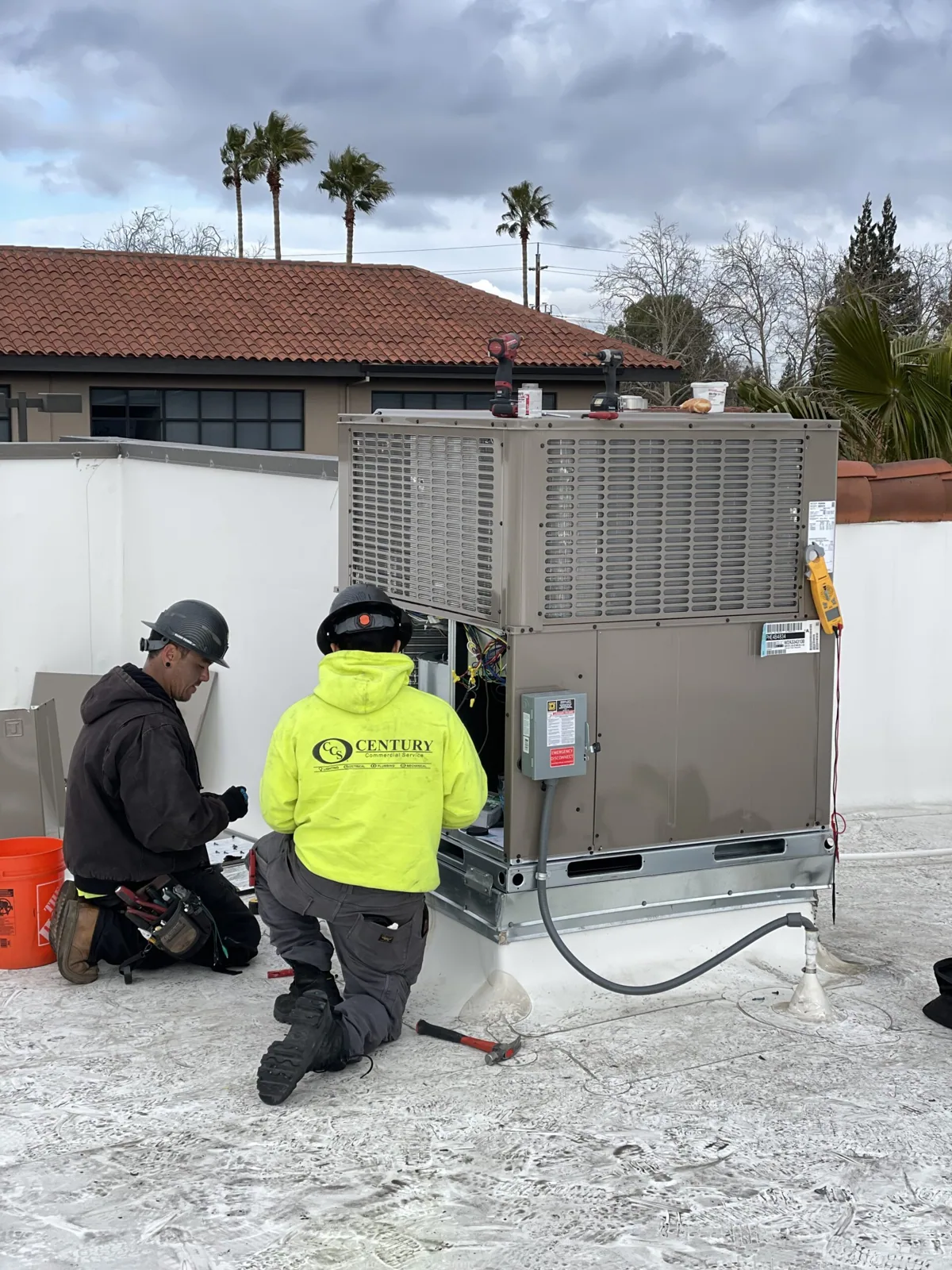

Equipment release can hold a roofing phase even after the field membrane is ready to install. Rooftop equipment curb and support work in Fairfield, CA, begins by defining the roof connection, the mechanical task and the period when the equipment can be released. We examine accessible details and identify the roofing work required for a permanent tie-in. Send the equipment schedule with the roof plan before pricing, so the general contractor can assign lifting, disconnection and closure responsibilities instead of carrying an unresolved interface between trades.
Near NorthBay Health Medical Center in Fairfield, equipment served and authorized operator access still have to be confirmed for the assigned structure. For a healthcare roof assignment, the contractor needs the authorized facilities contact, equipment served and occupied area below the connection. Put that information in the request alongside the proposed curb work. We can then discuss the actual release and protection needed before removal, rather than base the work sequence on the assumption that equipment and roofing will be available at the same time.
Equipment release controls the sequence
Lifting or disconnecting equipment adds time before a concealed flashing detail can be reached. Some curb connections can be rebuilt with the unit in place, while others require mechanical coordination. We assess the accessible condition and identify what remains blocked. The contractor should assign the trade that provides disconnection, handling and return to service, including its release period. That makes the roofing price a defined task instead of an allowance that silently assumes another contractor will move equipment whenever the membrane work reaches it.
Temporary closure at the equipment opening also needs an assigned scope. If the mechanical task and permanent flashing occur at different times, the connection must have a suitable interim detail and protection below. We describe the roofing exposure and available closure before opening the assembly. Carry the required visits and releases in the schedule, including who approves the next work boundary. A field membrane installation date cannot stand in for completion of a curb whose equipment or supporting construction remains unavailable for the permanent connection.
Supports need a defined load path
Supporting construction affects both design review and installation access. A roof membrane is not a structural equipment support, and the supporting detail needs the appropriate project assessment. We identify the roofing interface and flag missing construction information rather than select a support from equipment weight alone. Provide the proposed equipment and support drawings early so the responsible design team can resolve attachment and loading. The roofing bid can then describe the actual curb or support connection without treating the field membrane as the complete construction.
Replacement roofing can change the height relationship at an existing curb. Added insulation or board may leave a flashing detail needing reconstruction, while removal can reveal deterioration below the visible connection. We compare the intended roof section with the accessible curb and identify the information needed for review. Include those elevations and supporting layers in the replacement roofing scope. That lets the contractor coordinate equipment clearance and flashing height before a revised roof assembly is ordered against an unresolved existing detail.
Flashing needs a sound connection
Movement at a curb corner can stress material where the flexible roof meets a restrained vertical connection. The repair has to address attachment, compatible material and preparation beyond the visible gap. We examine the accessible detail before pricing correction of failed curb flashing. Mark the affected units and provide previous repairs with the request. The resulting quantity should describe the connection being rebuilt rather than assume that every curb receives the same surface patch regardless of construction or concealed condition.
Membrane identification controls how the new detail joins the field. A TPO connection at a curb differs from an EPDM flashing repair, and aged surrounding material may need further examination before it provides a suitable tie-in. We identify the system and the supporting condition needed for the proposed permanent work. State the assembly and review requirements in the bid package so an equipment interface does not become a material substitution decided solely by what happens to be available during the release.
Water exposure changes the scope
Condensate can create a separate mechanical problem beside a roof opening. We inspect accessible discharge paths and roof connections, then identify which findings concern the membrane and which need equipment follow-up. The contractor should provide the unit contact and symptom timing before the visit. Water appearing during equipment operation does not automatically establish a roofing failure, while a visible curb gap still needs its own assessment. Separating those tasks avoids paying for an unrelated patch while a mechanical obstruction continues to introduce water beside the repaired detail.
Wet insulation beneath a curb adds removal and replacement layers to the scope. A surface closure can reduce new entry without establishing the condition below it. We describe the confirmation needed and the proposed opening and tie-in. Include those tasks in the repair allowance with an approval method for changed boundaries. The contractor can then distinguish the known equipment connection work from a concealed wet-material quantity, instead of using the curb perimeter as an assumed measurement of all assembly material requiring attention.
Release conditions affect the bid
Material application needs suitable conditions at the roof, particularly when heat changes working limits. On September 5, 2022, Fairfield recorded 117 F, a historical city reading useful for planning the task. We check actual conditions against the intended material rather than assign that reading to the project roof. Keep equipment release and preparation ahead of the application decision on the day plan. That allows the contractor to coordinate the unit task without assuming that every access period supports the same permanent adhesion work.
Occupied-area coordination can add protection and repeated setup. For roofing in the NorthBay medical district, the assigned operator needs the proposed equipment release and overhead work zone. We explain the connection work and debris route before the contractor places it beside reroofing above occupied rooms. Carry those limits into the price and construction sequence so the final detail, equipment return and interior release have defined responsibilities rather than a shared completion date that leaves the interface unfinished.
At a building in Cordelia Road Industrial Corridor, confirm equipment isolation and material access with its operator before opening or rebuilding a curb connection.
Commercial Roofing Questions
Who should carry equipment lifting in the roofing bid?
Assign the lifting, disconnection and return-to-service tasks explicitly between the responsible trades. We identify the roofing exposure and whether equipment movement is needed to reach the connection. Put the release and temporary closure alongside those responsibilities so the curb is not left waiting on a task omitted from both proposals.
Can the existing curb remain with a thicker roof assembly?
Compare its actual dimensions with the complete proposed roof section and detail requirements. We identify the accessible height and concealed questions before the design review. Added supporting layers can change the connection, so the decision should precede material orders rather than rely on the existing exposed flashing alone.
Should every unit receive the same flashing repair quantity?
Price the established construction and condition at each assigned connection. Similar equipment can sit on different curbs or supporting layers. We define preparation and tie-in needs from examination so the contractor can group comparable work without treating every visible perimeter as an identical permanent repair.
Could equipment drainage be mistaken for a curb leak?
Compare water timing with equipment operation and inspect accessible discharge paths alongside roof details. We identify the relevant roofing and mechanical findings. The contractor should coordinate the responsible equipment trade so condensate trouble is addressed separately from a membrane defect that may also need permanent repair.
What should the completed interface include?
Identify the permanent flashing, support-related roofing connections and records required by the project. Coordinate equipment return and interior release with the responsible trades. We report the roofing work and unresolved concerns so a restarted unit does not become the only evidence that the curb connection is finished.
Related Roofing Work
Send the equipment release requirements
Send the roof section, curb and support drawings, equipment responsibilities and access periods. We will define the roofing connection and closure tasks for the trade schedule.