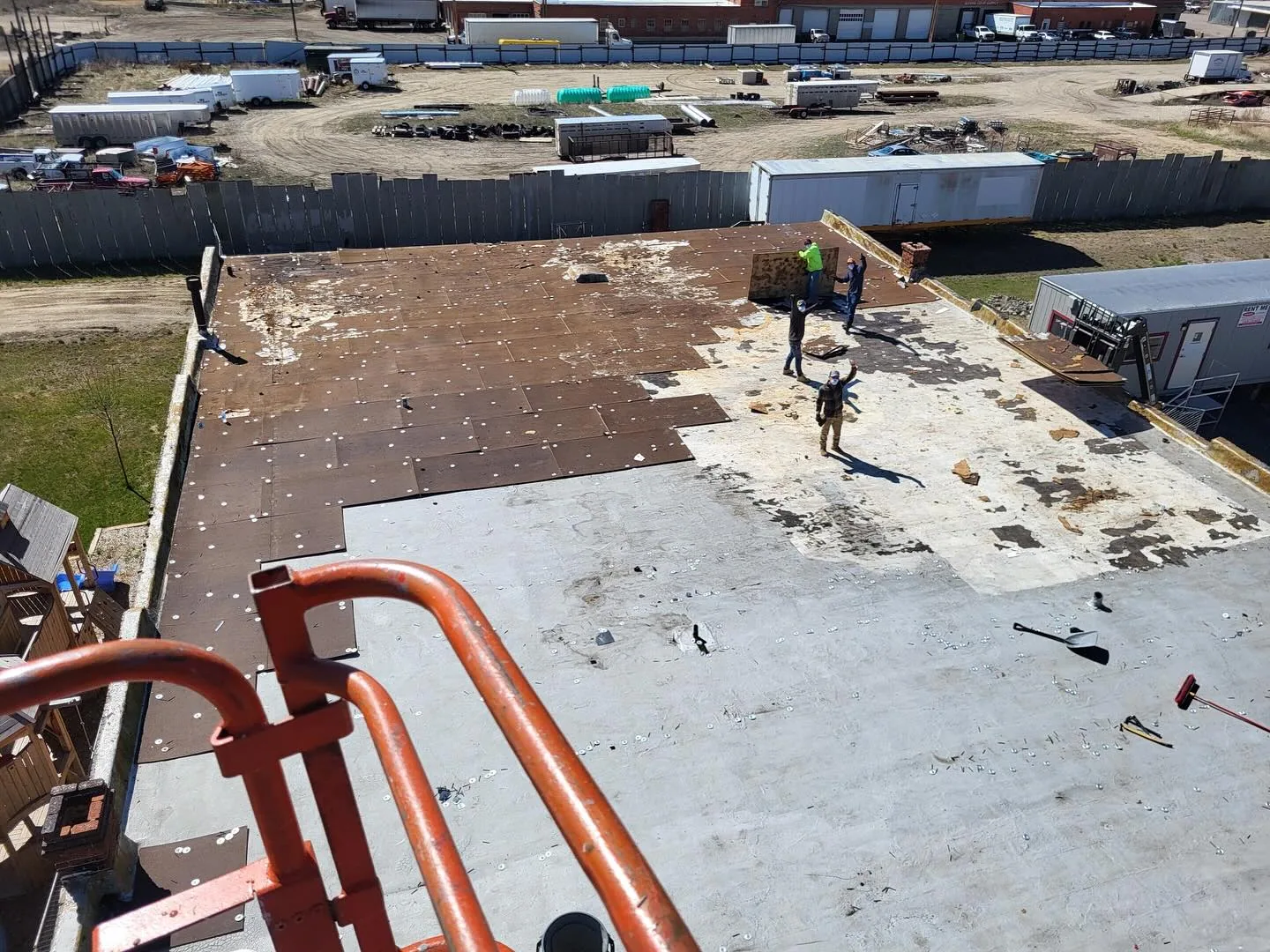

A replacement bid loses useful schedule float when the removal depth remains uncertain until the roof is opened. Commercial roof replacement in Fairfield, CA, starts by defining the existing layers, the new assembly and the daily closure, so the general contractor can compare quantities that reach the same finished condition. We inspect accessible construction and explain where cores or limited openings are needed. The bid should separate known removal from concealed-condition allowances before the roofing sequence is placed between equipment work and interior completion.
A healthcare scope near NorthBay Health Medical Center, in Fairfield, needs the assigned building and authorized operator contact identified before pricing. We assess access, interior protection and equipment responsibilities for that specific structure. Put the released work area and available roof drawings beside the delivery instructions in the request. Those details let us connect the removal sequence to the spaces below it and identify which operating decisions must be settled before construction begins.
Removal depth changes labor
Removal depth changes labor, handling and disposal. A surface membrane, insulation and supporting board are different layers, and an older recover can add work that the roof outline does not show. We compare available assembly records with examination of the roof, then identify what remains uncertain. Carry the defined layers in the base scope and state the investigation needed for the remaining condition. That keeps two bids from appearing comparable when one removes only the surface and the other reaches the structural deck.
Deck deterioration requires a repair boundary and a method for measuring changed work. An allowance can carry an agreed quantity with a defined insulation and supporting-board scope, while a separate unit price may address concealed deck repair where appropriate. Specify what the price includes, how the condition will be recorded and who approves additional removal. An allowance is a budgeting tool rather than a cap on necessary repairs, so the construction agreement should explain how quantities beyond it are handled.
Assembly review precedes orders
Submittal timing can delay material procurement even after a contractor receives the award. The proposed membrane, attachment, insulation and details need to match the project requirements before orders are committed. We identify the roofing information needed for review and flag unresolved interfaces. Place that review ahead of the planned removal date, including time for a response if the assembly changes. A material substitution needs an equivalent project review; availability alone does not establish that the alternate fits the specified roof or its supporting construction.
Attachment and detailing can affect the price as much as the field material. A TPO roof assembly may use a specified attachment approach with its own preparation and installation tasks, while modified bitumen roofing has different joining and detail requirements. We price the selected assembly rather than treat the membrane name as a complete specification. Ask the design team to resolve the roof section, applicable requirements and detail interfaces before comparing alternates that would change the supporting layers or equipment connections.
Daily closure adds work
Phased removal changes the labor calculation because each opened zone needs a reliable tie-in to the remaining roof. Small phases can reduce exposure over occupied rooms but add repeated setup and closure work. We describe the proposed daily boundary, interior protection and material route with the replacement scope. Give us the released room areas and access periods early, then include those limits in the bid request. A roof quantity alone cannot price the effort of opening and closing several constrained work zones.
Equipment coordination adds another schedule dependency where curbs or supports must be rebuilt. Roof work at equipment curbs may need a mechanical release or lifting arrangement before its permanent flashing can be completed. Identify which trade provides that task and when the connection is available. We discuss the closure required while another trade works so an exposed curb does not become an unassigned gap between scopes. Include that responsibility in the schedule rather than relying on a roof completion date that assumes uninterrupted access.
Application needs suitable conditions
Heat can affect handling and application timing, so the day plan needs the selected material’s requirements and actual site readings. Fairfield recorded 117 F on September 5, 2022, a historical city heat event that supports planning for difficult conditions without establishing a subject roof temperature. We assess the intended application and discuss work limits when conditions are unsuitable. Keep procurement and access decisions ahead of the daily application check, so a material delivery is not treated as permission to install regardless of surface or ambient conditions.
Weather exposure adds a contingency that should be assigned in the construction schedule. Rain, damp substrates and unsafe handling conditions can restrict removal or permanent application, while preparatory tasks may remain possible. We identify the work affected and the temporary closure needed. For an assignment in the NorthBay medical district, the authorized manager also needs the proposed occupied-area limits. Confirm those release requirements alongside schedule contingencies, rather than assuming every day allowed for roofing can support the same removal quantity.
Scope endpoints support comparison
Scope boundaries affect bid comparison when one proposal includes drainage corrections and another preserves the existing geometry. We identify the replacement endpoint, including outlets, wall heights and connection work. A defined roof condition report can support the distinction between observed defects and proposed improvements. Send the existing records with the requested roof section so we can identify gaps before pricing. The general contractor can then compare the base scope and alternates without converting an unresolved detail into an assumed inclusion.
Closeout work also takes time after the field membrane is installed. Completed connections, remaining concerns and required project records need to be addressed before the roof scope is considered finished. We discuss the expected inspection and handoff requirements during pricing, along with any testing specified for the project. Place those tasks after detail completion in the schedule. That gives the owner a defined permanent endpoint and prevents the field installation date from standing in for completion of every curb, edge and documentation item.
For replacement work in Cordelia Road Industrial Corridor, confirm the operator's lift route and dock schedule before setting the removal and installation phases.
Commercial Roofing Questions
How should hidden deck repair be carried in the bid?
Use an agreed allowance or unit-price arrangement with a defined measurement and approval method. State the material, removal, replacement and protection included. We record exposed deterioration before changed work proceeds, so the contractor and owner can distinguish actual repair quantities from the initial budget allowance.
Can a replacement alternate omit the drainage work?
Identify the drainage endpoint separately before comparing prices. Preserving existing elevations and rebuilding a low area are different scopes. We describe the connection changes and supporting layers required for either approach so the contractor can present a clear base scope and alternate to the design team.
What should precede the membrane order?
Resolve the assembly submittal and confirm supplier availability for the approved materials. Include insulation, attachment and details in that review. Ordering an unapproved membrane can create a substitution problem, while ordering the field sheet alone leaves the critical connection materials outside the procurement decision.
How can we price roofing above released rooms?
Provide the room boundaries, operating restrictions and approved access periods with the roof plan. We compare those limits with workable removal phases and daily tie-ins. Smaller releases can increase repeated closure labor, so the bid should identify the phasing assumption instead of hiding it in a general roofing quantity.
Does interim leak protection let us postpone removal indefinitely?
Plan reassessment over the proposed interval. An interim detail can reduce current entry but may leave wet layers or unreliable attachment unresolved. We explain the remaining investigation and permanent task so the replacement schedule reflects the roof condition as well as the owner’s construction sequence.
Related Roofing Work
Send the replacement assembly and release dates
Send the roof section, existing assembly records, equipment responsibilities and proposed access periods. We will price the removal and permanent details with the schedule assumptions shown.