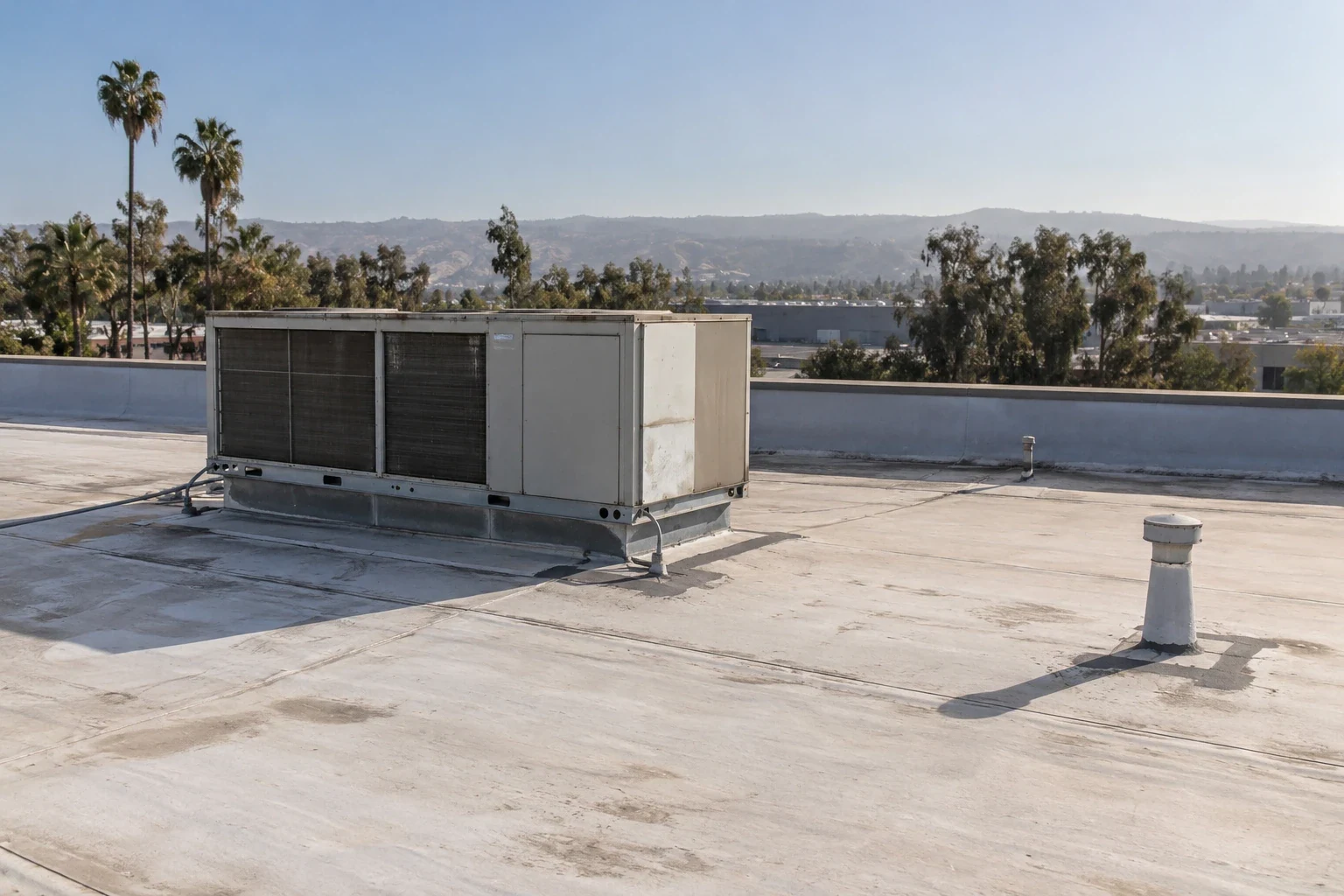

A public agency roof bid in Fairfield, CA needs an understandable construction boundary before the GC carries its permanent repair allowance. The visible opening may be small while moisture, backing or equipment responsibilities extend beyond it. We inspect low-slope and metal roofs, prepare findings with photographs and define repair, restoration or replacement work. The scope relates each correction to its supporting construction so the agency can review useful options and the GC can coordinate preparation rather than price a surface outline without its dependencies.
The Solano County Government Center is an infill civic campus near Main Street in Downtown Fairfield. Fairfield Civic Center Library serves the downtown area, and Fairfield Cordelia Library serves the Cordelia area. Those office and library references place the local discussion. The actual subject building's roof, occupied rooms and access requirements establish the project, allowing the GC to plan construction without assigning an unconfirmed assembly or operating arrangement to a named civic property.
Written findings support the allowance
A useful roof finding identifies the defect, location and accessible supporting condition. We relate photographs to the proposed correction and state where concealment or limited access prevents a firm conclusion. The GC should distinguish observed reconstruction from additional investigation before fixing the bid. Otherwise, an agency can receive a clear-looking quantity that still omits the layer or interface deciding whether the proposed permanent work is useful.
Our roof findings for public construction decisions describe those limits alongside the recommendation. An assignment in downtown Fairfield begins with its own roof access and assembly review. We explain the basis for local correction or wider work rather than allow an office address to establish replacement extent. Further checks are defined as tasks with a purpose, helping the GC settle quantities while the weather surface remains intact where practical.
Comparable bids describe supporting work
A membrane repair may require damaged insulation or backing replaced before the new connection is installed. We examine accessible layers and attachment to define the permanent assembly. Similar patch areas can conceal different removal depths and disposal tasks, making surface dimensions an incomplete comparison. The GC should carry the supporting construction beside field material so each option addresses the defect and provides a suitable base rather than only the same visible outline.
Our selective roof base reconstruction addresses confirmed damage where useful adjacent material can remain. For roofing assignments for educational districts, the same distinction between observed layers and concealed uncertainty matters to scope review. We identify a component, quantity basis and approval route for unresolved construction. Additional findings are recorded before extending removal, keeping a changed allowance tied to the assembly encountered rather than an unrestricted instruction to replace more roof wherever the first difference appears.
Access responsibility affects the installation date
Occupied civic spaces can need protected routes and separate assessment below the roof opening. We confirm relevant operator instructions and the person who can authorize access changes before mobilization. Electrical, ceiling and moisture concerns go to the responsible personnel. The GC should arrange those tasks with material handling and removal limits, because a roof order can be ready while the assigned room or equipment still prevents practical installation.
Our roof work coordinated with public building interiors identifies secure stopping boundaries and temporary closure. A separate project near Vanden Road receives its own operating and permission assessment. We connect access to the technical detail while construction remains protected. The resulting sequence gives the GC a prepared work zone rather than an opening that waits for an unresolved route decision, helping preserve the useful interval between removal and permanent weather closure.
Material choices include the interfaces
A field membrane or coating choice does not resolve every curb, outlet and edge connection. We inspect geometry, support and earlier compounds before defining compatible reconstruction. A substitution can alter preparation and accessory procurement alongside the purchase price. The GC should review those tasks early so the agency's material comparison reflects a complete installed connection rather than assume different surface choices can share an unchanged preparation allowance.
For roofing scopes coordinated with a general contractor, we explain the trade dependencies and readiness conditions behind the recommendation. Moisture and temperature are checked at the actual joining or application area, including shaded components that may differ from the field. A remaining preparation hold is stated with secure protection, giving adjacent trades a condition to coordinate. Delivery and a dry forecast are then treated as relevant planning information rather than proof that every retained layer is suitable for the next construction stage.
The permanent record preserves the boundary
Handover identifies the corrected component, replaced layers and retained limits, with separate equipment or interior work still visible. We provide practical service access guidance so later visits can avoid stressing the new connection. The GC uses the roofing status with personnel assessing moisture and safety below before finishes resume. A stopped drip is useful protection evidence, but it does not establish completion of every affected building component by itself.
Roof assistance can be arranged overnight, throughout weekends and on holidays, with response timing confirmed for the assigned address and access conditions. Temporary protection may precede the permanent scope decision while materials or investigation are completed. Wider reconstruction follows current roof condition and repairability. Maintenance recommendations use drainage and traffic observations from the subject property. Another symptom receives a new examination, allowing the agency and GC to distinguish fresh damage or discharge from the completed repair before extending its scope or carrying a larger replacement allowance.
Public agency proposals should make the authorized work boundary and approval path visible to facilities, procurement and the construction manager. Identify who can release a roof opening, approve a concealed-condition change and accept the completed work. When public access must continue below the roof, map entrances, accessible routes and protected rooms before staging. The estimate should separate immediate protection, investigation and permanent correction, with supporting trade dependencies named so the agency can compare bids on equivalent assumptions.
Commercial Roofing Questions
What makes a public roof report useful for pricing?
Relate the defect and supporting condition to an identifiable location, with inspection limits stated. Photographs should support the proposed construction boundary. We recommend resolving further investigation before fixing quantities so the GC carries an allowance based on a usable assembly rather than a surface observation alone.
How should an agency compare equal-area repair proposals?
Examine removal depth, replacement layers, attachment and interface work with the field quantity. Equal exterior areas may represent different supporting construction. We identify those components so the GC can compare useful permanent corrections and separate unresolved concealed work from measured reconstruction.
Which access decisions should precede a civic roof installation date?
Confirm operator instructions, protected routes, room readiness and authority for changes at the assigned property. Necessary equipment and interior personnel should be coordinated before removal. We recommend aligning those dependencies with materials so the GC schedules work through an available protected boundary.
Can a surface substitution retain every preparation task unchanged?
Assess compatibility and accessory requirements against the installed assembly. A different material can alter cleaning, joining or procurement even across the same field area. We explain those consequences so the agency and GC compare complete connections rather than treat the purchase amount as the only change.
What should a permanent public facility roof record distinguish?
Identify corrected construction, retained areas and separate remaining trade tasks. Include service access guidance for future work. We recommend using those details with current inspection when another symptom appears, allowing a new defect to be diagnosed before the previous repair is automatically expanded.
Related Roofing Work
Send the roof scope early
Send the public agency roof scope, access requirements and condition information early. We will connect findings to supporting construction so the GC can price and schedule a reviewable permanent correction.