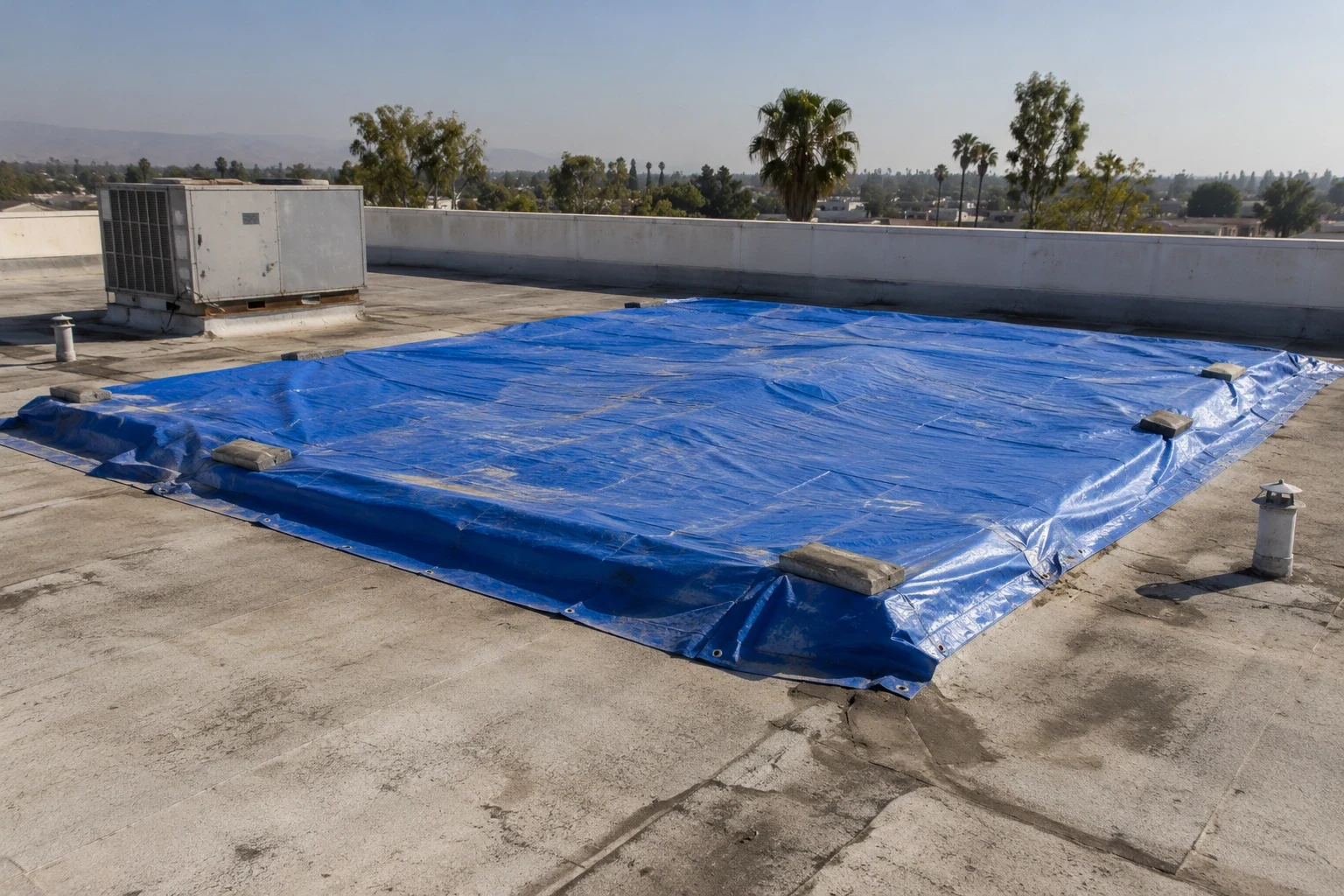

An emergency roof allowance needs a limit on the initial task before the general contractor can assign the next trade. Emergency commercial roof repair in Fairfield, CA, begins with the reported exposure, safe roof access and available protection, then separates interim work from permanent assembly correction. We accept urgent requests during nights, weekends and holidays, while response options depend on the actual conditions and access. Describe the affected room and active entry at the outset so the roofing task can be assessed alongside the building manager’s immediate interior decisions.
The exact assignment affects response arrangements. in Fairfield, NorthBay Health Medical Center provides a healthcare reference; any roofing request there would still require its own building contact and work release. An address does not authorize access or identify the affected roof. Give us the assigned structure, entry route and operator contact before committing another trade to follow-up work, so the response reaches the correct building and its protection requirements can be discussed from the reported exposure.
Access controls the initial task
Initial access is a schedule dependency when a gate, escort or roof route remains unresolved. We establish the available means of reaching the assigned work area and discuss whether the conditions permit investigation. The operator controls its release, and emergency urgency does not remove that requirement. Put the contact and access limitations beside the complaint rather than assume the property’s normal entrance provides a roof route. The general contractor can then distinguish a response awaiting access from a roofing task that has been assessed for immediate action.
Protection feasibility affects the first scope. Active rain, unstable materials or unsafe handling conditions may limit what can be installed, and a temporary detail still needs a suitable connection. We describe the available task and its limitations rather than promise to stop every entry immediately. Further leak investigation may be needed once the initial exposure is reduced. Carry that follow-up separately so the owner understands what the emergency response addressed and what remains uncertain in the permanent assembly.
Interior release remains separate
Interior exposure can require action while the roof remains under investigation. The building manager controls room access and material movement, with electrical or other affected systems evaluated by the responsible professionals. We identify the proposed overhead work area and roofing exposure. Send the room use and equipment concerns with the emergency request so protection can be discussed before a roof opening is proposed. Roofing closure does not clear every interior material or equipment item for use, and that separate release belongs in the contractor’s coordination plan.
Debris movement adds an access requirement when loose roofing material must be handled. We assess the removal and temporary closure task, then discuss separation from occupants and active routes. A roof response at a hospital needs the actual operator’s assigned work boundary, while a warehouse response may involve goods directly below the exposed zone. Identify those conditions for the particular building instead of pricing protection solely from the roof area or the general property type.
Cause needs its own evidence
Event attribution can add investigation beyond the emergency closure. CAL FIRE identifies Solano among the counties affected by the historical LNU Lightning Complex, which began August 17, 2020 and was contained October 2, 2020. That regional incident does not establish damage at the project building. We record observed roof conditions and flag cause questions requiring further assessment. If a fire-related scope is proposed, arrange the relevant building and material review before treating a county incident record as proof of the removal needed at an individual roof.
Records for a claim need dates, locations and observed condition, including the task performed during the urgent response. Roof documentation for claim review can preserve those findings without promising a coverage result. Identify the required reporting alongside the response allowance so it has a defined scope. The contractor should coordinate interior records and any specialist assessment separately, especially where the cause remains uncertain. Emergency roofing findings should distinguish direct observations from an event connection that has not been established.
Permanent repair needs investigation
Permanent correction may require opening wet layers after a temporary closure has reduced new entry. We identify the investigation needed to establish the removal boundary and supporting condition. A survey of suspected roof moisture can help direct confirmation where suitable, but its interpretation must account for construction and conditions. Schedule that task before the permanent quantity is committed. The disappearance of a drip cannot establish that insulation is dry or that all damaged connections have been restored beneath the interim detail.
Procurement and equipment releases can keep the permanent task separate from immediate protection. The repair may need compatible materials, mechanical coordination or a design response before the connection can be rebuilt. We describe those dependencies with the roofing findings. The contractor should assign each unresolved release and include suitable daily closure in the follow-up plan. That creates a defined path to permanent work without treating a temporary material as the finished roof simply because it was the practical option during the emergency visit.
Conditions limit the available work
Application limits can change the available work during extreme heat. The September 5, 2022 Fairfield reading of 117 F is historical city heat context, rather than an observation of the assigned roof. We check the actual surface and ambient conditions for the intended material before permanent application. Put that assessment in the day plan rather than rely on urgency to override material requirements. Preparation or interim protection may differ from the final detail, and the contractor needs that distinction before releasing interior finish work behind the response.
Assigned access also affects the completion record. For a response in the NorthBay medical district, the operator must release the actual structure and affected work zone. We identify the interim closure, outstanding investigation and permanent task for the handoff. Include a follow-up review where condition or access remains unresolved, so a response receipt does not become roof acceptance. The contractor can then coordinate other trades from the stated repair endpoint rather than infer completion from a quieter occupied room.
An urgent call serving Suisun City, starts with the affected interior, safe roof access and a feasible temporary weather closure.
Commercial Roofing Questions
What should the emergency allowance include?
Define the initial assessment, feasible temporary work and reporting before treating the allowance as a permanent repair price. We establish those tasks from access and reported exposure. Include a separate approval path for concealed-condition investigation or broader removal so the response scope does not expand without a clear boundary.
Can the contractor promise an arrival time before access is released?
Resolve the assigned contact and usable roof route before confirming response arrangements. Controlled access or unsafe conditions can prevent the intended task even when the address is known. We discuss available options from that information so other trades are coordinated against an assessed response rather than an assumed unrestricted visit.
Does a temporary closure release the interior for finish work?
Arrange the relevant interior assessment and confirm the permanent roof task separately. Interim protection can reduce entry while wet layers or damaged details remain. We record what was completed and what needs follow-up so the contractor does not close finishes solely because the visible drip has stopped.
How should suspected event damage be described for a claim?
Record the observed condition, reported timing and work performed, then distinguish any unconfirmed cause. We can supply roofing findings while the insurer and relevant professionals resolve coverage or specialist questions. A regional incident account should not be presented as proof that the assigned roof sustained that damage.
What makes the follow-up visit a permanent repair?
The scope must address the established assembly condition with suitable material and a defined tie-in. We identify wet-layer removal, equipment release or design review still needed after the urgent closure. Put those tasks on the schedule so the permanent endpoint is clear before the emergency response is treated as finished.
Related Roofing Work
Send the active exposure and access contact
Give us the building, affected rooms, current water entry and authorized access contact. We will discuss the available urgent task and the investigation remaining for permanent repair.