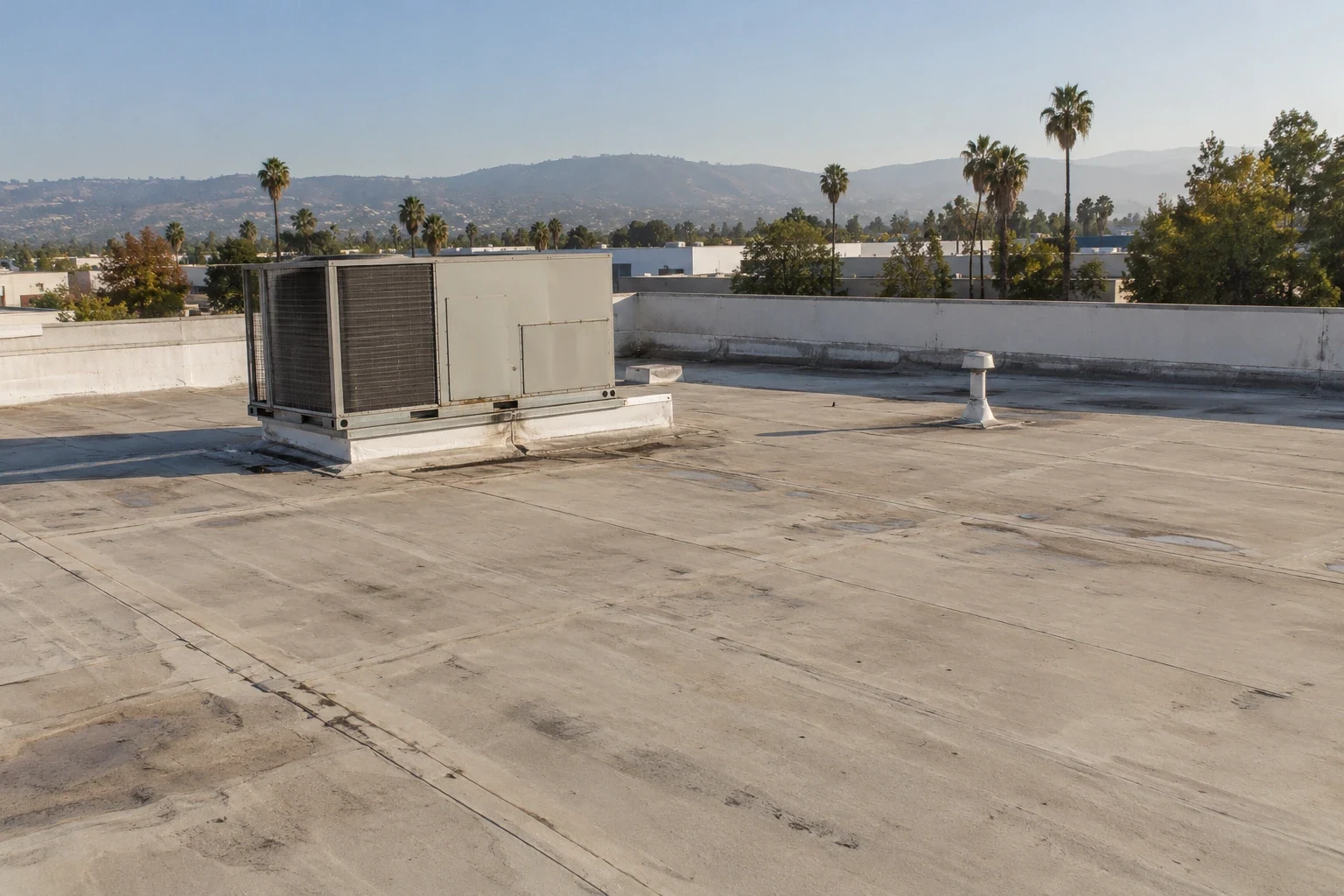

Which production and equipment requirements should enter a manufacturing roofing bid in Fairfield, CA before the contractor prices the membrane? The roof scope can depend on a unit shutdown, a lifting operation or access to a transition hidden behind equipment. We examine the assembly and discuss the work area with the responsible operator, then identify the interfaces that affect preparation and duration. Those tasks belong alongside the covering so the bid accounts for the work needed to keep the construction sequence practical.
An interior leak near production equipment requires its own protection decision while the lasting scope is investigated. Roofing emergency calls can be made during overnight hours, on weekends and during holidays. We examine the exterior entry and explain temporary protection suited to the discovered condition, with the operator coordinating specialist attention for equipment or electrical exposure below. Permanent work then addresses the usable repair surface, any wet insulation and the mechanical tasks that must occur before the new flashing can be completed.
Equipment clearance affects preparation
A curb connection can be inaccessible after a unit is placed, leaving insufficient room to remove damaged flashing or prepare a new detail. We review the interface with the contractor before the equipment sequence is fixed. Roofing at plant equipment supports includes the connection to the actual roof assembly, with mechanical lifting or adjustment coordinated where needed. The bid can assign that dependency rather than assume the roofing trade can reach every surface after installation.
Repeated equipment servicing can also affect the surrounding membrane. We examine the route used to approach the unit and identify abrasion, cuts or other observed damage. Compatible protection may be appropriate where traffic regularly reaches a vulnerable area, while drainage and service panel clearance must remain usable. The contractor should carry the necessary roof protection as a defined task and coordinate it with the operator so the new detail remains accessible without exposing it to the same avoidable contact.
Trade responsibilities need closure
A pipe or duct alteration creates both an equipment task and a roof opening. We define the roofing preparation and closure requirements before another trade removes the existing component. The contractor can assign who opens the detail, who provides the new equipment connection and who confirms that roofing access is available afterward. Penetration flashing work should include that sequence rather than enter the bid as an undefined allowance for sealing whatever remains.
The surrounding assembly can change the work even when the new equipment itself is fully specified. Wet insulation, damaged backing or an unsuitable retained covering may require a wider removal boundary. We identify what the examination establishes and what further investigation could affect the quantity. The contractor can then separate the known equipment interface from concealed roof correction, preserving a clear basis for any scope adjustment instead of assigning every discovered condition to the original flashing line item.
Proposed uses guide coordination
Biomedical and technical support uses are among those marketed for Green Valley Corporate Park near the intersection of I-680 with I-80. For a proposed technical operation in Green Valley Corporate Park, send the equipment drawings and operating restrictions with the roofing request. We identify the assembly and the clearance needed for the particular alteration. The contractor can include those requirements in submittal review before procurement narrows the available installation choices.
For project coordination in Fairfield, NorthBay Health Medical Center is a recognizable healthcare reference; its authorized operator still controls access. For a proposed service or support building scope associated with a healthcare operation, coordinate access through the responsible operator before investigation is scheduled. We ask which rooms and equipment sit below the work and what controls apply to opening the roof. The bid then describes protection and specialist coordination for the subject property, with the roof examination supporting the material and preparation recommendation.
Operating periods define work areas
A production restriction can limit the amount of roof that may be opened in one period, changing handling and temporary closure labor. We discuss those restrictions before selecting the work boundary. Roofing during continued plant activity needs the area below the opening to be coordinated with the exterior sequence. The contractor should reserve the relevant access period and identify who can approve a change if concealed damage makes the planned boundary unsuitable.
Actual material requirements remain part of that sequence. A surface needs appropriate preparation and dryness for the selected connection, and equipment conditions can affect access to the detail even during a scheduled shutdown. We explain those dependencies so the contractor can plan protection if permanent closure cannot proceed as initially arranged. The operator receives a specific account of exposure and next work, rather than an assumption that ending the shutdown means every part of the roofing assembly is complete.
The retained roof needs its own decision
Flex industrial roof work can combine production and office areas, each with different interior controls. Cold storage roofing introduces additional assembly questions related to the conditioned space. We examine those requirements when they occur in the proposed project instead of applying one production protection plan across all uses. The contractor can keep the material selection coordinated while assigning the operating obligations of each work area separately.
A permanent plant roof scope should identify the interfaces corrected, the retained assembly requirements and any conditions left for further assessment. We record the completed detail locations so later service activity can be coordinated without losing track of the repair boundary. Maintenance follows observed vulnerability, including drainage, equipment access and the condition of repaired transitions. This gives the operator an understandable handoff and the contractor a closeout record showing how the roofing work and mechanical responsibilities were resolved.
A manufacturing roof scope should identify production windows, utility routes and process areas that need protection from dust or water entry. Coordinate any shutdown or equipment isolation with the plant contact before cutting an opening or changing a rooftop connection. The work plan should name the daily limit, interior safeguards and emergency closure if a shift ends before permanent tie-in. Separate roofing tasks from controls, process piping and structural work so the general contractor can see which trade must release each interface before the roof is closed.
Commercial Roofing Questions
Can the mechanical unit be installed before the roof flashing is reviewed?
Review the interface before installation limits working clearance. We identify the roofing access and preparation required, while the contractor coordinates lifting or shutdown tasks with the mechanical trade. Put these dependencies into the sequence so permanent closure does not depend on reaching a concealed detail afterward.
What should a shutdown allowance include for roof work?
Define the affected equipment, the accessible roof area and the closure tasks expected during the period. We explain material preparation and any unresolved concealed condition. The contractor should also plan temporary protection if the permanent connection cannot be completed within the agreed operating restriction.
Does a plant use require replacing a leaking roof?
Examine the defect and retained assembly before selecting replacement. A local repair can be suitable where the surrounding material and support are usable. We explain whether wet insulation, attachment or wider deterioration changes that recommendation, with production protection priced for the chosen work.
How can service traffic be addressed during repair?
Identify the route and the observed damage around equipment. We consider compatible roof protection without blocking drainage or service clearance. The contractor can assign installation and the operator can coordinate later access so technicians do not have to cross a vulnerable new connection unnecessarily.
Who handles water reaching electrical equipment below?
The operator should arrange qualified electrical assessment alongside roofing response. We address exterior entry and explain the protection provided. The contractor can keep those responsibilities separate while coordinating the affected work area, preventing a roof repair from being treated as completion of specialist interior attention.
Related Roofing Work
Send the equipment and production requirements
Share the roof scope, equipment drawings and operating restrictions before the bid is finalized. We identify interfaces and preparation so your plant roofing sequence includes the coordination required to build it.