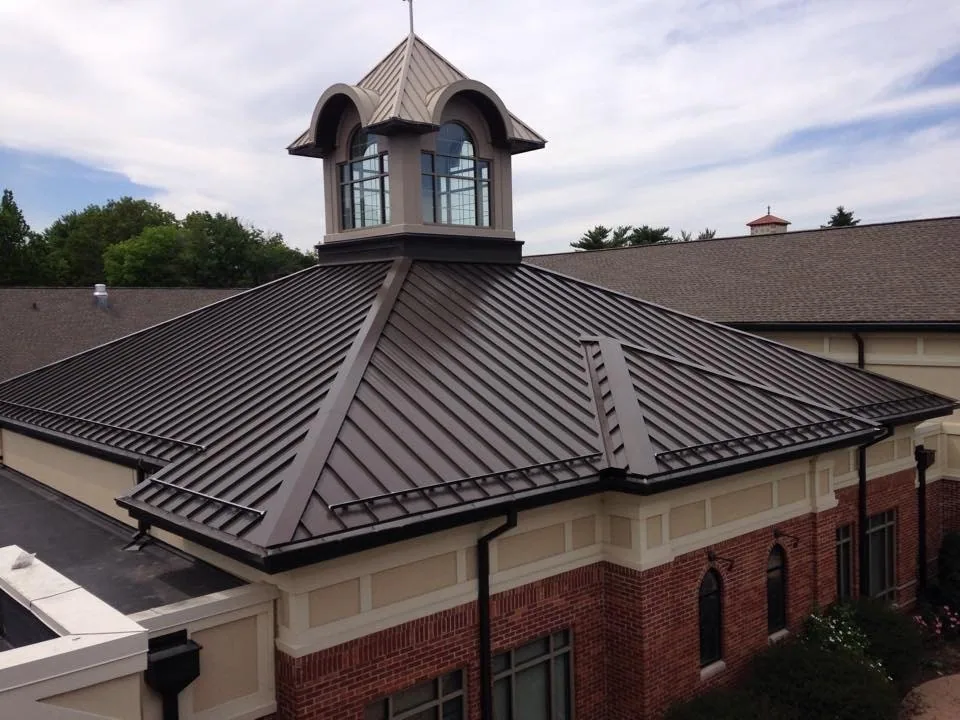

Panel fabrication can control the schedule for standing seam metal roofing in Fairfield, CA. The panel profile, attachment and movement details need resolution before ordering, because a similar visible shape can conceal different connections. We inspect existing metal construction and review the proposed system, then describe the supporting work and penetrations with the field panels. The general contractor receives a sequence that links procurement to the assembly rather than assuming delivery completes the difficult decisions.
NorthBay Health Medical Center is a hospital in Fairfield that helps orient local service coverage. Downtown Fairfield's civic campus provides an institutional point of reference for local project coordination. Those locations do not identify their roofing systems. An actual standing seam assignment requires its own panel construction, access and room use established before the bid and removal schedule are fixed.
Resolve the joint construction
The seam profile and attachment arrangement govern how the panels connect and accommodate movement. We review the actual system and project details rather than assume every standing seam roof uses identical clips or fastening. Existing modifications can also change the interface at an edge or curb. The submittal should identify those connections so procurement includes compatible components and installation requirements before material is ordered.
Our inspection of existing metal roof details helps establish the retained construction and where further opening is needed. The GC can provide drawings and previous modification information to reduce avoidable uncertainty. A project in downtown Fairfield still needs the assigned property's access and delivery route confirmed. Those practical arrangements affect when measurements and investigation can occur, making early coordination useful before fabrication turns an unresolved joint into a fixed material decision.
Allow the panels to move
Metal expands and contracts as its temperature changes, and the assembly needs details suited to that movement. We examine clips, joints and fixed points according to the actual construction, including repairs that may have restrained a connection. A rigid surface seal over a moving joint can fail without addressing the underlying arrangement. The bid should distinguish local preparation from reconstruction needed to restore the intended movement detail.
An alternative metal roof retrofit approach needs a separate review of retained construction and new attachment. It cannot be compared only by panel area. We explain the movement and interface work relevant to the proposal so the GC can assess what remains unresolved under each option. Substitution review should also consider fabricated details and their lead time, keeping the roofing sequence connected to compatible components rather than selecting a profile solely because it appears similar.
Price penetrations deliberately
Equipment openings interrupt a panel system and require details that account for geometry, support and movement. We examine curbs and penetrations before defining a flashing repair, and identify whether another trade must isolate or adjust equipment. A metal field can remain serviceable while one opening needs reconstruction, but a wider substrate problem can change that recommendation. The scope should explain the findings that establish the repair boundary.
Our repairs at metal roof openings connect the penetration detail to the surrounding assembly. Against a TPO replacement proposal, the GC should compare complete supporting and interface work rather than panel quantity against membrane quantity. Each construction has its own base and attachment requirements. We identify those tasks early so the project can coordinate equipment access before removal and avoid leaving an opening while an unassigned curb or support issue is resolved.
Coordinate fabrication and access
Long panels and fabricated components need a delivery and handling plan suited to the property. We review staging, lifting and protected routes before installation begins, with the building contact identifying restrictions below the work. Conditions can interrupt handling, so the sequence needs a secure stopping boundary and a plan for the exposed assembly. Procurement and installation should not be placed on the same assumed date without accounting for those dependencies.
For standing seam work over warehouse uses, the assigned stock and service routes can affect the handling arrangement. We coordinate them through the GC and operator rather than infer access from the building type. The bid includes removal, preparation and detail closure that may occur between panel delivery and final installation. Where measurements or concealed backing remain uncertain, investigation is resolved before fabrication where practical, reducing the chance that delivered pieces need revision after the old construction is opened.
Record the finished connections
A metal roof closeout should identify the assembly, completed details and any retained condition outside the work. We inspect assigned seams, edges and penetrations and record corrections required within the scope. The operator also needs practical information about later equipment service, since unplanned traffic or added fasteners can affect a new connection. That handover makes the construction record useful beyond confirmation that panels arrived at the building. Photograph the finished seams and label any remaining movement or water-entry concern for follow-up.
Through care of metal seams and flashing, changing joints, drainage and service damage can be examined over time. Night, weekend and holiday assistance remains available for urgent roofing problems, with timing confirmed against access and conditions. The GC should identify separate equipment or structural findings that remain with other trades rather than bury them in a completed metal line item. Future repair then follows current observations and the installed construction instead of an assumption that a standing seam roof has no maintenance needs.
Metal roof planning begins with panel profile, substrate, clip condition, seam type and the direction of drainage. A leak at a penetration or end lap may require a different correction from a loose clip or failed panel fastener, so mark the observed condition before choosing sealant or replacement material. For work that crosses panel seams, confirm whether the attachment can move with thermal expansion and whether the proposed fastener pattern reaches the supporting member. The closeout should identify repaired panels, penetrations and retained conditions the owner should monitor.
Commercial Roofing Questions
Can a matching panel shape establish replacement compatibility?
Review the actual seam, clip and attachment requirements before ordering. Similar profiles can connect differently, and existing modifications may change the interface. We recommend resolving the measured detail and compatible components through the submittal so fabrication matches the construction rather than appearance alone.
Will sealant repair every leaking metal joint?
Investigate the joint movement and adjoining details first. A rigid surface repair can leave a restrained or damaged connection unresolved. We can identify whether preparation and a local correction are suitable or whether the joint needs reconstruction to accommodate the movement required by the assembly.
How should panel delivery be scheduled?
Coordinate staging, handling, building access and the readiness of supporting work. Delivery alone does not establish that installation can proceed, especially where long components need protected routes. We recommend planning those tasks before ordering and defining a secure boundary for interrupted work.
Does one leaking curb justify replacing all panels?
Assess the field and supporting construction separately from the opening. A localized curb defect can be repairable where surrounding material remains useful, while broader damage can require more work. We recommend documenting the findings that distinguish those conditions before the GC accepts the replacement extent.
What belongs in the closeout for other service trades?
Provide the relevant access routes, vulnerable connections and completed detail information. New penetrations or added fastening need review against the assembly. We recommend identifying any separate equipment task still unresolved so later service work does not unknowingly damage or restrain a finished roofing connection.
Related Roofing Work
Send the roof scope early
Send the Fairfield metal details, measured profiles and handling restrictions early. We will resolve attachment and interfaces so fabrication and installation follow the same construction scope.