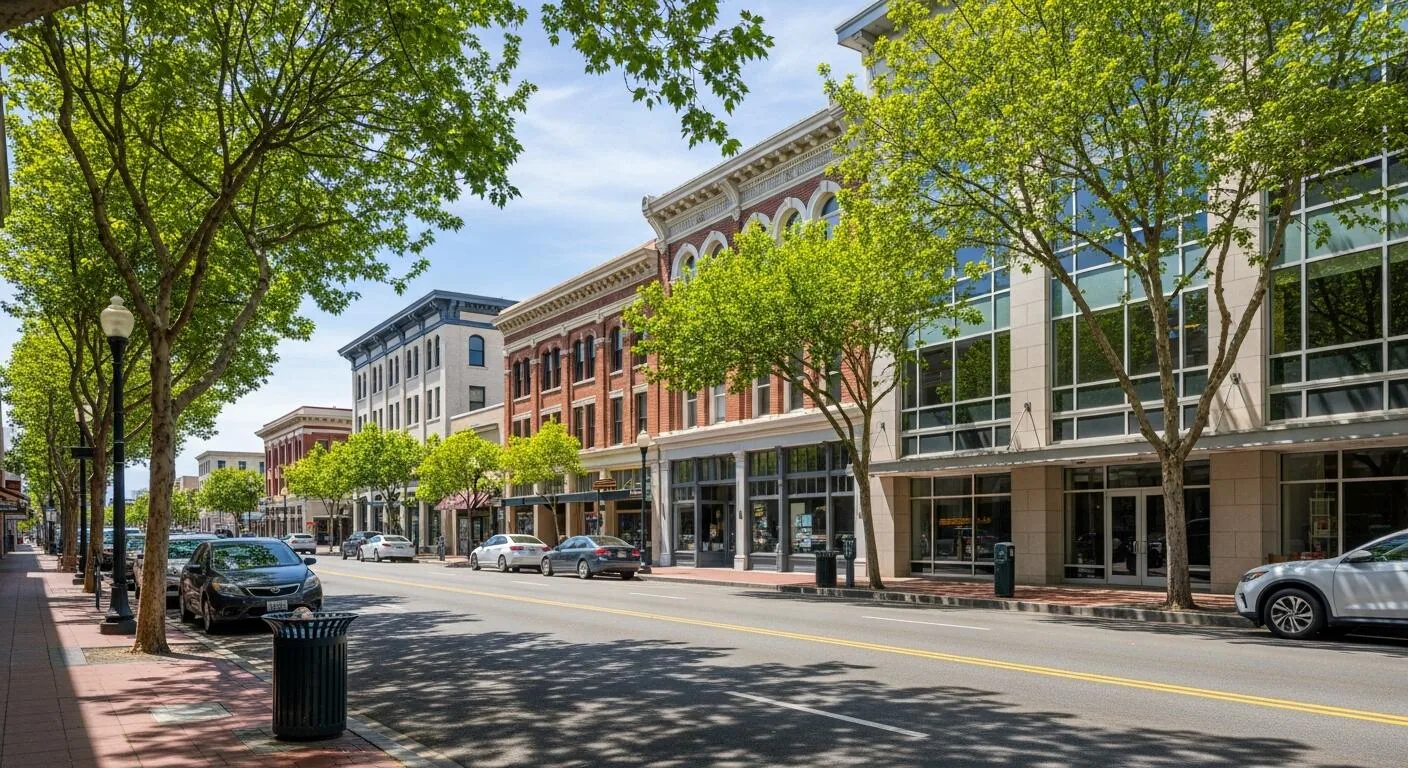

Downtown Fairfield commercial roofing needs an access plan before a repair allowance becomes a dependable construction number. A general contractor may need to repair a leaking curb while the rooms beneath it remain occupied, or price a larger project with uncertain layers below the membrane. We inspect those conditions and define the repair, protection and removal work separately. Our capabilities include low-slope and metal repair, moisture investigation, restoration and replacement, with the proposed extent tied to the actual assembly.
County Administrator's office is located in Downtown Fairfield. A roof assignment at a particular building still requires its own operator contact, affected-room information and construction review. Historical Fairfield heat includes the city's 117 F temperature on September 5, 2022. That context makes material handling and existing detail condition worth checking without establishing a subject roof temperature or a fixed installation rule for the downtown area.
The first task sets the scope
A reported leak can require immediate protection before the permanent quantity is known. We inspect the roof route and compare it with the affected interior, then explain which opening can be corrected and which concealed layers need further investigation. The GC should keep that protection task separate from a permanent reconstruction allowance. A room that stops receiving water can still sit beneath damp insulation or an unsound detail that needs a return visit.
Our investigation of downtown roof leaks establishes the repair basis with observations rather than the ceiling stain alone. Urgent support can be arranged at night and during weekends and holidays, with timing confirmed for the address and conditions. Work in the NorthBay medical district has its own property requirements, so a shared city location does not establish the same interior restrictions. The bid follows the actual opening and the protection needed beneath it.
Occupied rooms affect the sequence
Opening a curb or field area creates exposure below, even where the permanent repair is small. We agree on the work boundary with the building contact and identify electrical or ceiling concerns that require the appropriate personnel. Access and protected routes are arranged before tools and removal debris move through the property. The GC should place those coordination tasks before roofing removal, rather than leave them as instructions issued after the assembly is open.
Through roofing construction over occupied rooms, we stage work with secure stopping boundaries and suitable temporary closure. Delivery and equipment isolation are scheduled against the assigned building's requirements. A separate property near Solano Town Center may need a different access arrangement, so its schedule is developed independently. The useful comparison is the inspected roof construction and operational constraint, not an assumption that commercial buildings in the same city can all tolerate the same removal sequence.
Hidden layers change removal
Wet insulation can change a flashing repair into selective reconstruction. We examine suspect areas and use suitable survey methods to direct investigation, with confirmation where construction or equipment effects leave uncertainty. The visible membrane cannot establish the condition of every layer beneath it. A bid should describe the inspected limits and any remaining allowance so the GC can distinguish measured removal from an assumed hidden condition.
Our moisture investigation of retained roofing can support that review where the assembly suits the method. Thermal patterns are interpreted alongside hands-on findings instead of used as automatic removal dimensions. For roof work at a government building assignment, access and documentation requirements can influence when those checks proceed. We identify that dependency early so the project can resolve the repair extent before material selection and disposal quantities are treated as settled.
Permanent connections need preparation
A permanent patch must join material capable of supporting the selected connection. We inspect adjoining laps, older repair compounds and the substrate before defining preparation or removal. Cleaning a surface does not make every retained component sound or compatible. Where the base needs reconstruction, the scope states that work and how the new detail will connect to the useful surrounding assembly.
A wider roof decision follows the spread of damage, attachment and repairability rather than the recurrence of one stain alone. Our planning for future roof expenditure can distinguish urgent correction from scheduled replacement or restoration. The GC receives the technical drivers behind that recommendation, including access, layer removal and equipment coordination. Submittals and material lead time are resolved with those findings so the price describes the construction that will actually occur, rather than a field quantity detached from the supporting work.
Handover records support later work
A report should identify the repaired area, remaining conditions and any separate trade task still needed. We connect photographs to roof locations and describe whether the work was temporary or permanent. That record helps the GC coordinate interior restoration against the roofing status, while the responsible trades assess moisture and readiness below. New finishes should not be scheduled solely because the visible drip disappeared.
Later equipment work can introduce damage at a repaired detail, so the operator needs practical access and protection information at handover. Maintenance can examine drainage, seams and traffic areas as use changes, with the interval selected for the actual roof. A later leak prompts another focused investigation rather than an automatic assumption that the previous repair or whole assembly failed. The construction record remains useful context, while current observations establish the next correction and any change in the roof decision.
For a downtown Fairfield project, define the release period for each roof section before setting production assumptions. A building contact may limit deliveries, noise or access below an opening. We describe the protection needed, how the crew will secure the work if the period ends and what permanent task remains for another visit. Where concealed layers affect removal, keep the exposed finding and revised quantity separate from the original base. The general contractor can then place coordination, temporary dry-in and final tie-in on a schedule that reflects the actual scope.
Commercial Roofing Questions
What should a downtown repair allowance include before access is confirmed?
State the known roof work and identify access or interior protection as unresolved coordination. We recommend obtaining the building contact and affected-room requirements before setting a fixed removal date. That lets the GC price practical staging rather than assume a small roof repair has no occupied-space impact.
Can a stopped leak support immediate interior finish replacement?
Coordinate the roof status and remaining moisture with the responsible interior trades. Temporary protection can stop entry without resolving wet layers or ceiling materials. We provide the permanent repair limits so the GC can sequence finishes against the actual building condition instead of visible dryness alone.
Should thermal survey patterns become the tear-off quantity?
Interpret the pattern against roof construction and confirm uncertain areas before specifying removal. Equipment heat and layer changes can affect readings. We recommend distinguishing confirmed damage from investigation still needed, giving the GC a reviewable basis for the quantity and any concealed allowance.
How is a larger downtown roof project justified?
Use the spread of moisture, attachment and material repairability to establish the scope. Repeated symptoms alone do not identify the whole assembly condition. We explain which findings support localized correction and which require broader work, allowing the GC to compare options that address the actual problem.
What must other service trades know at closeout?
Provide the repaired boundary, vulnerable details and practical access routes. Separate equipment findings should remain visible as their own responsibilities. We recommend transferring those instructions before later rooftop service so tools or added penetrations do not undo a completed roofing connection.
Related Roofing Work
Send the roof scope early
Send the downtown Fairfield address, affected-room information and roof scope early. We will define access, investigation and permanent work so the bid supports a practical occupied-building sequence.