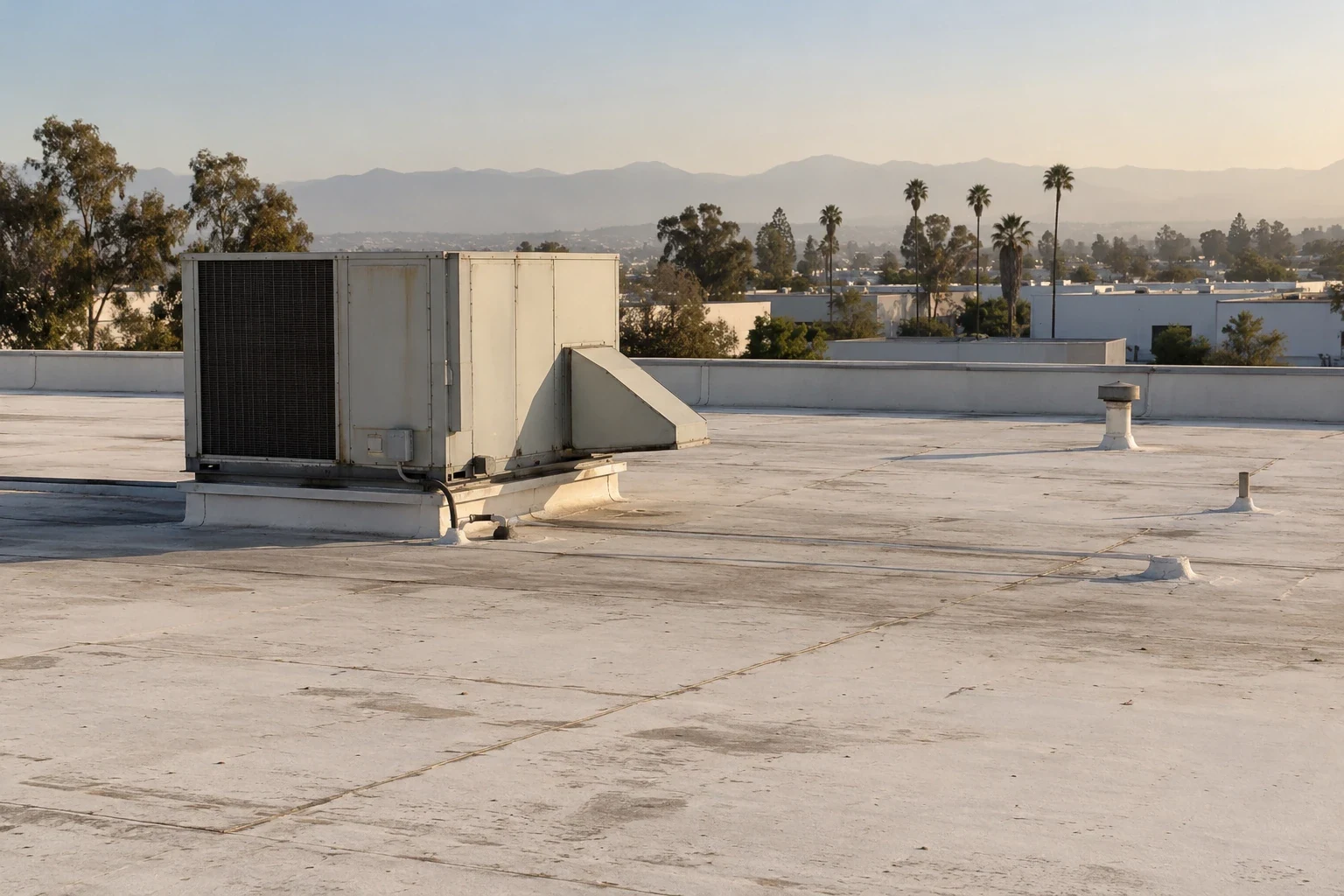

How can a Fairfield, CA contractor price distribution center roofing without disrupting the routes the operator needs for goods movement? The bid should identify ground staging, lifting positions and the interior area beneath proposed removal before material is ordered. We inspect the roof and review the operation with its responsible contact, then connect the chosen repair or replacement scope to those requirements. A covering quantity cannot describe the handling changes that result when a delivery route or occupied passage must remain available.
The roof decision also depends on the existing assembly. A localized leak may involve a seam or equipment transition, while concealed moisture can make the removal boundary wider than the reported interior mark. We explain the findings and identify the investigation still needed to support the allowance. During an active event, emergency roofing calls are handled day and night, including weekends and holidays. Temporary protection receives its own description so the contractor can distinguish immediate exposure control from the permanent work to follow.
Deliveries need an agreed route
Roofing material deliveries can conflict with normal vehicle movement if staging is chosen without operator input. We identify the area available for unloading and the path used to reach the roof, then discuss how those arrangements affect handling labor. The contractor can reserve the necessary position and coordinate dates before delivery becomes a schedule constraint. A change in lifting location may introduce additional movement of material, and that effect belongs in the price rather than appearing as an unexplained delay.
Reroofing with the facility operating requires the roof boundary and the work below it to remain aligned. We describe the proposed exposure area and the temporary closure needed at each stage. The operator can then assign protection for goods and confirm whether a normal route must be restricted. If the work area changes after concealed damage is found, the contractor needs a defined method for adjusting those protections before the larger opening proceeds.
A seam defect may conceal moisture
A failed membrane connection can admit water that travels within the assembly before reaching the floor below. We examine the seam and nearby transitions rather than treating the interior location as a complete repair boundary. Correction of separated membrane seams needs a usable perimeter and the preparation appropriate to the installed material. The contractor should carry the investigation and any restoration of test openings separately where the concealed condition remains unresolved.
Wet insulation can change attachment, disposal and the quantity that must be removed. We explain whether observed indicators justify further moisture assessment and what the result would change in the scope. A surface repair may address the entry point while leaving a wider roof decision open. The bid should state that limit so the operator can understand which work protects the immediate area and which additional correction depends on examination of the assembly underneath.
The address defines access planning
AMPORTS operates a marine terminal in Benicia, a regional industrial reference for goods-handling work. For a proposed goods handling roofing project in Benicia, the contractor should obtain the staging and movement requirements set by the subject operator with the visit request. We examine the actual property and describe roof entry, equipment interfaces and the rooms or work areas below. Those findings allow delivery arrangements to be coordinated with the roofing sequence before the bid fixes handling assumptions.
Fairfield Cordelia Library is a civic landmark in the Cordelia area. For a proposed building scope in the Cordelia area that includes goods deliveries, identify the usable ground area and the responsible access contact early. We review those conditions against the roof work rather than choose a staging position solely from a plan image. The contractor can then reserve the space needed for roofing while the operator retains a defined route for its own activities, with any restriction included with the construction plan.
Outlets affect phased work
A roof section receiving water from another area may remain exposed to flow even when that section is temporarily closed. We examine drainage relationships before dividing the work. Repairs at drains and scuppers can require a different sequence from field membrane installation, particularly where a damaged outlet connection needs opening. The contractor should identify the dependency and coordinate plumbing work when the restriction lies beyond the roofing interface.
A phased plan also needs compatible connections between new work and retained material. We explain the proposed temporary and permanent tie in boundaries, including the surface condition needed for preparation. This gives the contractor a basis for material quantities and protection labor. If the retained edge is unsuitable for the intended connection, the work boundary may need revision before installation. That decision should follow examination and be coordinated with the goods movement requirements set by the operator rather than be discovered during the final closure.
Use changes the comparison
Warehouse storage roofing and distribution work may use similar materials while requiring different handling and interior access plans. We ask the operator to describe the actual movement pattern and protection needs before carrying a common sequence across uses. Big box retail roof work adds its own occupied routes and public access considerations. The contractor can separate those obligations while comparing the preparation required by the proposed assemblies.
A distribution center alternate should state the retained materials, removal boundary and drainage corrections included. We explain which findings support repair, recover or replacement, then identify the work that remains contingent on further investigation. Closeout records preserve the completed areas and temporary boundaries that became permanent connections. The operator can use that record when reporting later water entry, while maintenance checks focus on the relevant seams, outlets and service routes instead of treating the entire facility as one undifferentiated roof area.
For a distribution building, establish the shift calendar, trailer movement and any temperature-sensitive storage below the assigned roof before setting the sequence. Map the roof areas over active docks and determine whether protection or a temporary change in receiving is required during removal. Confirm the material-lift path, staging limit and daily closure at each released zone. When a separate refrigeration, conveyor or electrical trade must isolate equipment, identify its lead time and hold point so roofing production is not scheduled ahead of an unavailable system release.
Commercial Roofing Questions
Can roofing deliveries use the normal goods staging area?
Obtain approval from the operator for the space and timing before arranging delivery. We describe unloading and lifting needs so the contractor can coordinate them with normal activity. Include any additional handling required by a restricted position in the roofing allowance rather than assume unrestricted access.
How should phased work be divided on the roof?
Examine drainage relationships and usable connection boundaries before selecting the work areas. We identify temporary closure and permanent tie in requirements. The contractor should coordinate those boundaries with the interior protection plan so a convenient schedule division does not leave an unsupported roof connection.
Does a repaired seam resolve wet insulation beneath it?
Investigate the concealed condition when it affects the permanent scope. A surface connection can stop entry without restoring saturated material. We explain the findings needed to establish a removal boundary and distinguish immediate protection from correction of the affected assembly.
What changes when ground staging has to move?
Material travel, lifting arrangements and delivery coordination may change the labor. We review the proposed location with the contractor and operator before committing to a sequence. The bid should preserve the agreed access assumption and describe how a later change affects the work.
Can one alternate cover distribution and retail areas?
State the operating controls of each area and roof findings separately. We compare the assemblies and identify the preparation they need, while occupied routes and goods movement remain defined obligations. The contractor can combine procurement where suitable without hiding the different construction requirements.
Related Roofing Work
Send the movement and access plan
Send the roof scope with ground staging limits, goods movement requirements and the target construction date. We identify handling and assembly dependencies before your distribution roofing bid is committed.