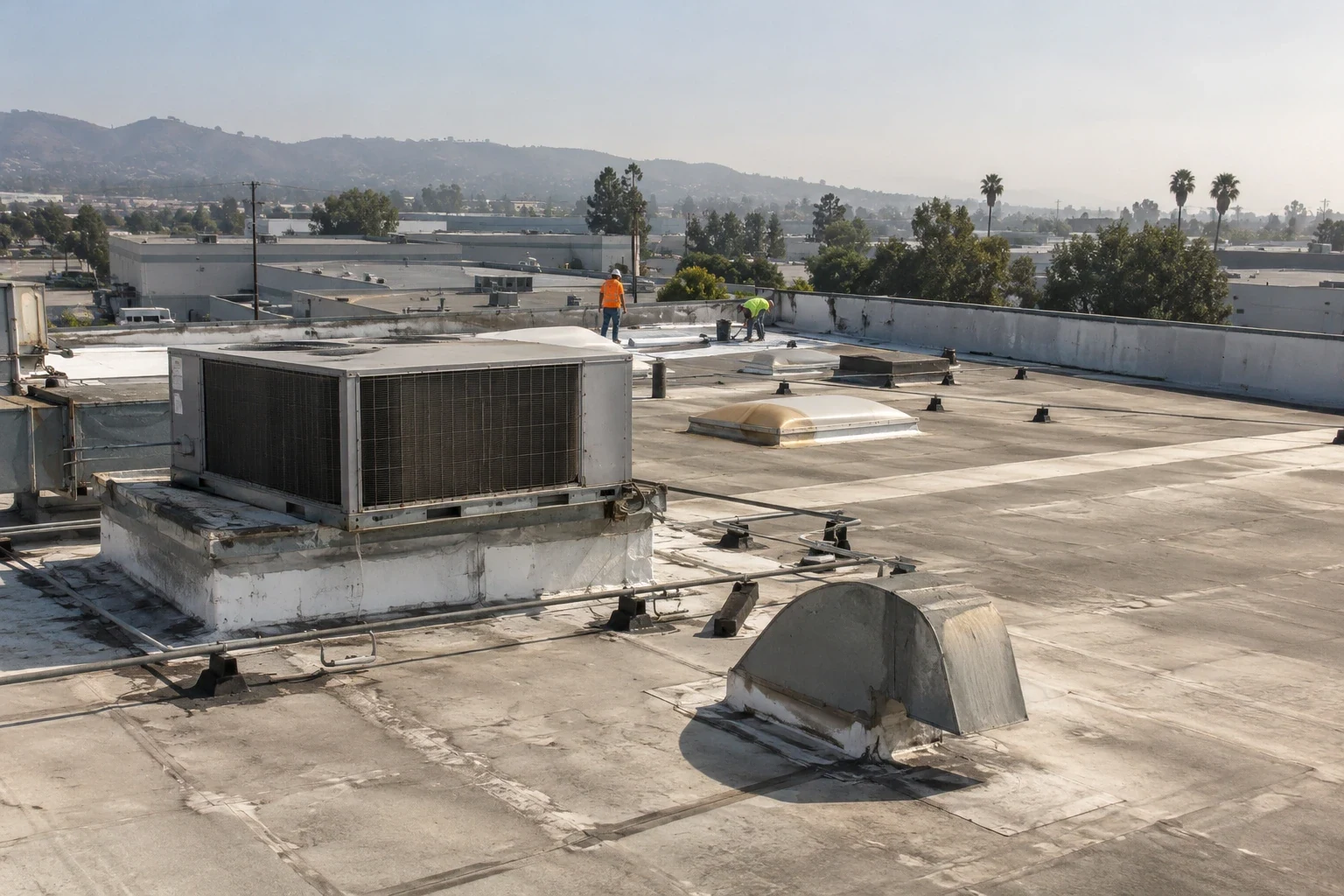

A production release can determine the roofing sequence before the roof area determines the removal quantity. We provide commercial roofing for manufacturers in Fairfield, CA, with the affected work zone, equipment interfaces and closure requirements defined for the assigned operation. The general contractor needs the operator's actual restrictions before reserving a period above production. The proposed roof task should state what can be opened, prepared and closed within that release.
Fairfield includes manufacturing and warehouse properties with distinct operator requirements. For each proposed roofing assignment, identify the affected interior space and material route with the facility contact. We describe the planned examination or removal exposure. The contractor can coordinate that release with the examined assembly and the closure needed before the affected work zone returns to use.
The equipment interface precedes the roof connection
A rooftop exhaust, intake or service support can affect access to the receiving detail. We examine the accessible connection and describe the clearance needed for the proposed roofing work. The equipment trade and assigned operator need to resolve any adjustment or operating restriction. The contractor should retain that task in the sequence before releasing membrane removal beside the component.
Preparation at a production building's equipment curbs may need supporting construction examined separately from the covering. We identify the roofing boundary and any receiving surface requiring correction. An equipment change scheduled later can disturb a completed connection. The bid should show which supporting task must finish before the final flashing is installed, with procurement coordinated to the approved detail.
The proposed assembly has application requirements
A selected membrane or restoration material needs receiving conditions suitable for its installation. We establish the existing assembly and accessible contamination or weathering before defining preparation. The operator should identify restrictions relevant to the proposed application and material handling. The contractor can then complete submittal review from the actual task rather than assume that any covering suits the assigned production area.
A proposed PVC roof connection needs material compatibility and the examined receiving boundary established before procurement. A different assembly can require different preparation and detail materials. We describe the work needed for the selected option and identify any unresolved retention decision. This allows the contractor to carry the complete preparation rather than compare only the membrane material line item.
Concealed conditions affect the removal allowance
A visible covering can conceal insulation or supporting material whose condition changes the replacement scope. We examine accessible indications and propose further investigation where retention depends on those layers. An authorized opening should state the space affected and its compatible closure. The contractor can price that examination separately while leaving the unresolved concealed quantity available for adjustment from the findings.
The roofing scope for the assigned manufacturing building should distinguish confirmed removal from supporting work still requiring assessment. We identify the observed boundary and the decision needed to extend it. The operator can evaluate the actual exposure and protection task. A larger opening should not enter the production release simply because a broad replacement allowance was established earlier.
The material route can change the work period
A restricted receiving route can affect how repair material and removed roofing move through the assignment. We identify the proposed handling arrangement and coordinate it with the operator's instructions. The contractor needs space and access for the actual task, including any supporting equipment. Material delivery and removal should be scheduled from that arrangement before the roof area is exposed.
Coordination with an assigned receiving or dispatch operation needs its actual release period retained. We discuss the roofing movement and the access it requires, leaving the operator to identify restrictions on its own process. The contractor can arrange compatible deliveries without assuming that an unused route in a photograph remains available during work. The agreed material path should stay with the approved roofing scope.
An urgent leak needs a defined holding task
Active water entry can require immediate feasible protection while a permanent production release is arranged. We assess the discovered defect and available access, with emergency calls answered on nights, weekends and holidays. The initial task should identify its purpose and the unresolved permanent work. The contractor can then keep the holding measure separate from removal or repair that requires a later operator decision.
An insurer-related damage assessment may need photographs and observed-condition records retained before material is disturbed. We document accessible findings and distinguish them from an unconfirmed cause. The production schedule should still reflect the actual protection and roofing task that can be authorized. A claim review does not itself establish a removal boundary or release the affected operating space.
The actual assignment determines the closure
Lonza has manufacturing operations in Vacaville, a separate regional service geography. For a proposed production-building task in that area, we need the assigned operator's access and protection instructions before selecting the exposed roofing boundary. We explain the preparation and connection required by the examined assembly. The general contractor can retain the required supporting decisions in the sequence and request the release for that defined work boundary.
Work across the Fairfield service area and a task near North Village commercial area require separate building records and release decisions. We retain the completed roof locations, material connections and deferred supporting items with each assignment. That gives the contractor a defined endpoint for the released task and lets the operator identify what still needs approval before a further exposed area is created.
Plant roofing can interrupt production even when the repair area is outside the process floor. Identify shifts, ventilation needs, material sensitivity and the utility owner before choosing an opening sequence. The facility contact should coordinate any rooftop exhaust or service shutdown with the responsible trade, while the GC carries dust and weather protection at active operations. Show where a controlled work boundary can be created and define the restart sign-off for the affected zone, rather than assume a sealed roof alone authorizes process equipment to resume.
Commercial Roofing Questions
Which production information is needed before pricing removal?
Identify the affected interior zone, access restrictions and equipment interfaces for the proposed task. We describe the roofing exposure and preparation so the operator can establish its release requirements. The contractor can then price suitable closure and supporting work from that actual boundary rather than assume an unrestricted shift.
Can a material choice be settled before the existing roof is identified?
Establish the assembly and usable receiving condition first. We identify compatibility and preparation requirements for the proposed option, including supporting decisions that affect retention. The contractor can use those findings in procurement and submittal review before committing the production release to an unresolved connection method.
How should concealed removal be handled in a restricted work zone?
Authorize the examination and compatible closure needed to establish the condition, with the affected-space instructions retained. We distinguish confirmed removal from an allowance still awaiting that evidence. The contractor can then coordinate a further release only after the actual quantity and supporting preparation have been defined.
Does urgent protection resolve the production shutdown question?
Keep the immediate feasible holding task separate from the permanent work period. We assess the accessible defect and describe any unresolved roofing correction. The operator and contractor can arrange the later release from that scope, including equipment coordination and material dependencies the initial response could not establish.
What roof information should the operator receive at closeout?
Retain completed locations, repair or replacement materials and relevant photographs with the assigned building identification. We identify any deferred condition or outside-trade dependency still requiring attention. The contractor can then demonstrate the released task's endpoint without treating a temporary measure or remaining allowance as completed permanent work.
Related Roofing Work
Send the production restrictions and proposed roofing details
Provide the affected work zones, roof information and equipment interfaces. We will define preparation, access and closure tasks so the contractor can price an operator-approved sequence.