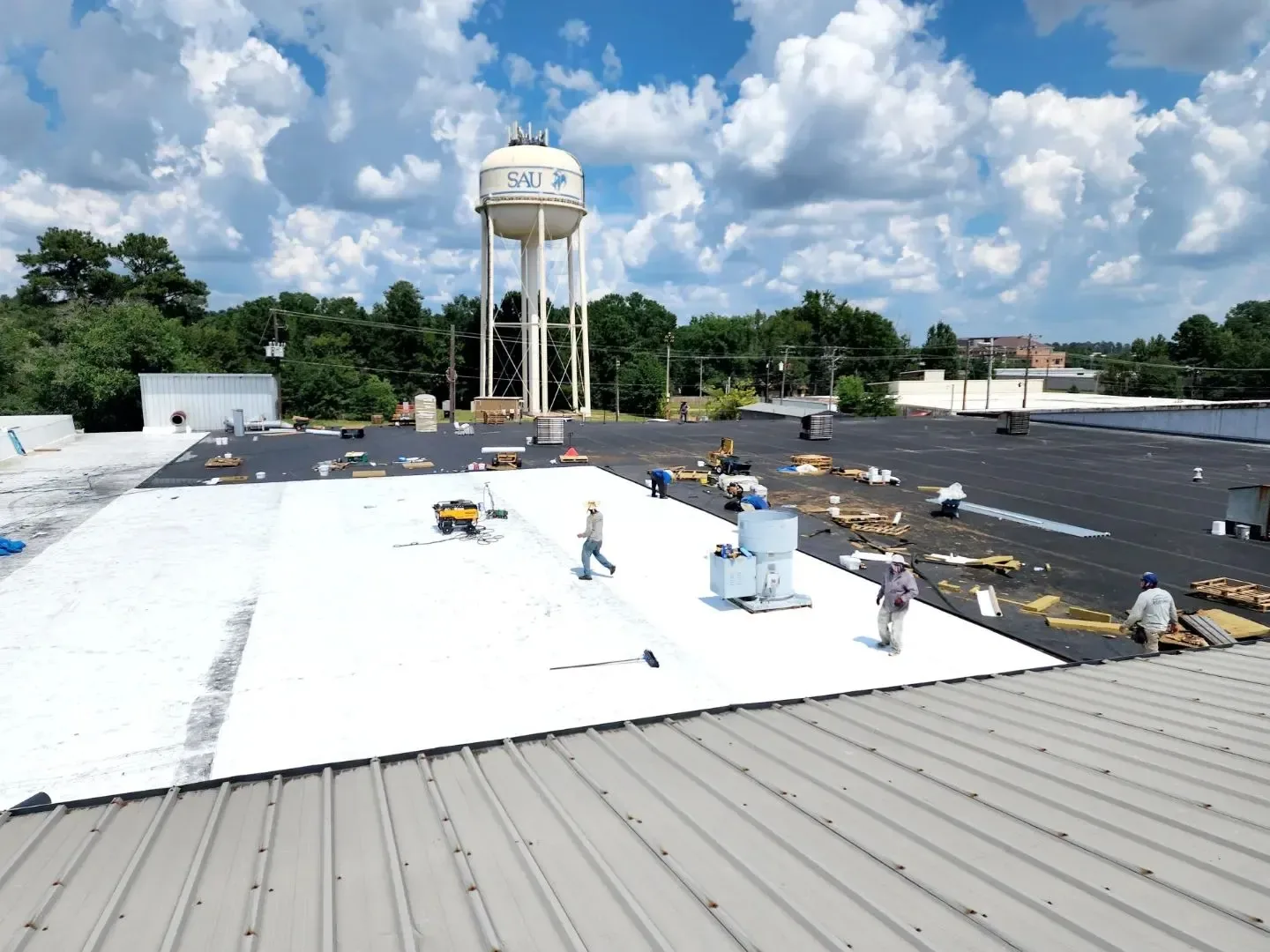

A TPO roofing allowance in Fairfield, CA needs an attachment method and a defined substrate before membrane quantity becomes a useful price. Mechanically attached, adhered and other approved assemblies involve different labor, supporting layers and coordination. We inspect the existing construction and review the project requirements, then identify the details and preparation that belong with the membrane. The general contractor can compare a complete roofing assembly instead of a sheet material number that leaves the base and perimeter unresolved.
Fairfield's September 5, 2022 historical temperature of 117 F gives local context for planning material handling and evaluating exposure. It is not a roof surface reading or a fastening design input. The County Administrator's office is in Downtown Fairfield; each public-building project still needs its own access and room-protection plan. A TPO assignment at any property follows its own deck, room access and specified construction, with those facts established before removal is scheduled.
Resolve the attachment method
Attachment depends on the deck and the specified assembly, including the insulation, cover board and membrane connections. We examine accessible construction and identify testing or design coordination needed where the base is uncertain. An added fastener cannot correct damaged decking, and an adhesive needs a substrate suitable for its application. The bid should state the selected method and any unresolved condition that could change it, keeping investigation separate from a guessed attachment allowance.
Our work on insulation and cover board can establish a suitable base for the proposed TPO system. The GC should resolve the layer submittal and attachment requirements together, so material delivery does not precede a decision about how the roof will be secured. For a project in downtown Fairfield, the assigned building's access and overhead restrictions remain part of that planning. They can influence staging even when the membrane itself is available.
Define welded connections
TPO seams are joined with compatible heat-welding methods suited to the membrane and conditions. The work includes equipment adjustment, surface preparation and checks of the completed seam, rather than only positioning sheets across the field. Dirt, moisture and older repairs can affect a connection, especially at a tie-in to retained material. We examine those details before treating a small overlap as a routine production task with no preparation allowance.
A comparison with PVC membrane roofing should focus on the proposed complete assembly and project requirements, not assume the materials are interchangeable because both use welded seams. Each needs its own compatible components and detail review. The GC can protect the schedule by resolving penetrations and perimeter submittals alongside the field membrane, leaving time for preparation and testing. Those tasks are part of producing a reliable connection, not optional additions after the roof appears covered.
Plan the existing roof interface
A recover can change curb heights, perimeter geometry and the connection to drains. We inspect the retained layers and identify whether moisture, damage or construction limits make them unsuitable beneath a new TPO surface. The bid needs a basis for keeping or removing those components. A new membrane cannot restore wet insulation or turn uncertain attachment into a sound assembly simply by concealing it.
Our evaluation of recover construction establishes those limits before pricing the overlay. Where selective removal is useful, we define the affected area and the tie-in to surrounding material. An alternative EPDM assembly requires its own details and installation requirements rather than inheriting the TPO scope unchanged. The GC should review substitutions against the full repair and attachment sequence, including the work that supports the new weather surface and affects access below it.
Sequence occupied construction
Opening an existing roof creates a temporary exposure that must be controlled before new material is installed. We coordinate removal, layer replacement and closure in stages that can be secured at planned stopping points. Interior restrictions, equipment isolation and deliveries should be resolved before the opening, so production does not pause while another trade or the building operator decides how to protect the room below.
For TPO work over office interiors, roof access and the affected workspace can influence the daily sequence. We confirm those arrangements for the actual assignment. Surface temperature, moisture and the selected bonding requirements also affect readiness, so the schedule includes checks at the work area. A dry entrance route does not prove a shaded detail is ready. The GC can carry suitable float without assigning a fixed seasonal production rate that ignores the actual system and conditions.
Keep closeout specific
A completed field does not establish that every penetration and perimeter connection has been checked. We examine the assigned details and record the inspected boundary, correction of identified defects and any condition left outside the scope. The closeout should identify the assembly installed and the access needed for later equipment work. That makes the roof record useful for maintenance rather than merely confirming that a membrane quantity was delivered.
Through planned TPO roof care, drains, seams and traffic areas can be checked as the building use changes. Urgent assistance is available overnight and during weekend and holiday periods, with timing confirmed for the address and conditions. The GC should pass the relevant protection information to equipment trades before they cross new details. A permanent installation and its maintenance needs remain distinct, allowing later repair work to follow current findings instead of assumptions about how the roof was originally used.
Coordinate sensitive interiors
In Fairfield, the institution identified as NorthBay Health Medical Center occupies the address numbered Fairfield. Its healthcare identity gives the discussion of interior protection a concrete local reference. For an actual roofing assignment, the GC confirms the affected room and operator requirements before selecting the removal boundary. That prevents a membrane delivery date from becoming a work commitment before protection and access are arranged.
Commercial Roofing Questions
Can the TPO material price represent the complete roofing bid?
Include the substrate, attachment, insulation and detail work before comparing totals. A membrane-only number can leave substantial construction unassigned. We recommend resolving the proposed assembly through drawings and inspection, then describing any remaining uncertainty so the GC can compare bids that address the same roof.
Do welded seams remove the need for inspection?
Seam preparation and completed connection checks remain necessary. Surface condition and equipment settings can affect the joint, particularly at older material and complex details. We include those tasks in the roofing sequence and recommend allowing access for correction before closeout rather than judging completion by field coverage alone.
Can wet layers stay beneath a TPO recover?
Investigate their condition before selecting recover. Unsound or wet components can undermine the supporting assembly and remain trapped under the new surface. We recommend defining selective removal where appropriate and explaining when wider deterioration requires another approach instead of assuming an overlay solves the hidden condition.
Should a PVC substitution retain the same detail allowance?
Review the compatible components and installation requirements separately. Similar appearance does not establish identical preparation or tie-in methods. We can assess the proposed assembly and explain any changes to labor, procurement or testing before the GC accepts the substitute against the original scope.
What should be settled before occupied-building tear-off?
Confirm the daily removal boundary, interior protection, material staging and secure stopping plan. Equipment and access dependencies should be coordinated before opening the roof. We recommend tying those tasks to the actual building use so the membrane installation is not ready while the space below remains unprepared.
Related Roofing Work
Send the roof scope early
Send the Fairfield TPO assembly, deck information and occupied-area restrictions early. We will define attachment and detail work so procurement and the roofing schedule carry the complete scope.