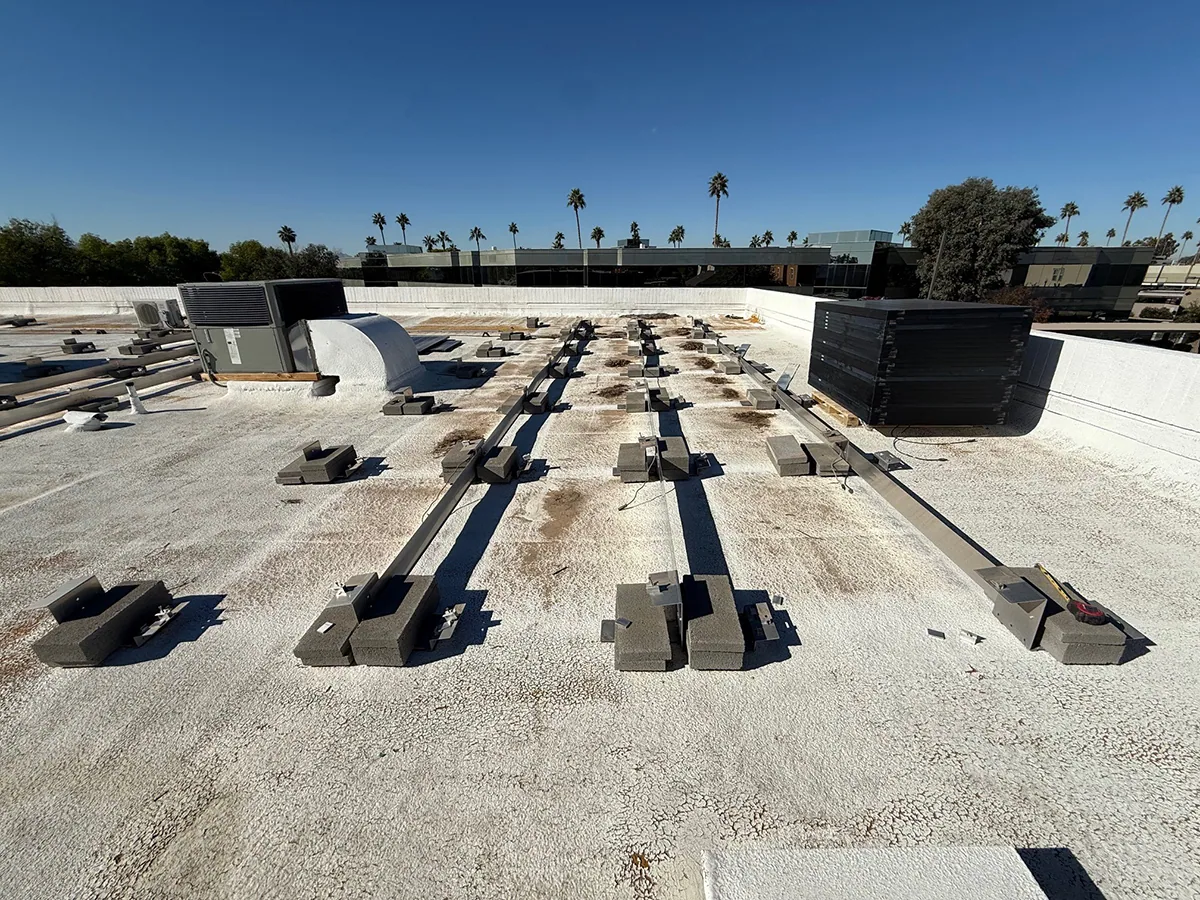

An inspection allowance needs a stated decision to support before it becomes useful to a bid. Commercial roof inspection in Fairfield, CA, can address a localized repair, a replacement comparison or an unresolved assembly question, with different access and investigation requirements for each. We examine the accessible roof and record the conditions relevant to that assignment. Tell us the construction decision and available records when requesting the visit, so the general contractor can carry a defined investigation task instead of assume one walk establishes every concealed layer and repair quantity.
Building identification controls coordination for the inspection. NorthBay Health Medical Center is a hospital in Fairfield; any roofing request at a healthcare property would still need the actual structure, operator contact and released area. A roofing scope still begins with the assigned building and an inspection of its actual assembly. Provide those assignment details with the roof plan so access and interior protection can be discussed for the intended task. An inspection of the roof reached by an available ladder should not be mistaken for examination of every building at a shared address.
The bid question guides scope
A repair decision needs the condition around the affected connection, while a recover decision needs information about layers proposed to remain. We tailor the investigation scope to that construction question and identify the evidence still missing. This affects price because a visual visit and limited assembly openings involve different tasks. Include the requested endpoint in the bid package. The inspection can then distinguish an observed split or unstable detail from a broader recommendation requiring moisture confirmation, deck information or review by the project design team.
Record review can reduce uncertainty before the roof visit. Available as-builts, previous repair drawings and leak locations help identify construction zones that should not be treated as identical. We compare those records with exposed conditions rather than accept them as proof of today’s assembly. Give us the documents early and mark the areas relevant to the bid. That allows the report to state where the observed roof agrees with the records and where another check is needed before a repair or removal quantity is established.
Visible findings need locations
Hands-on examination can identify accessible openings, damaged attachment and drainage restrictions that affect a repair scope. We compare seams, flashing and penetrations with the assigned complaint and describe the observed condition. A commercial repair scope can then identify the detail and supporting material needed for permanent work. The contractor should retain the marked locations with the bid so a repair quantity remains attached to a physical condition rather than a general allowance for miscellaneous roof defects.
Drainage observations need a boundary between cleaning and construction. We examine accessible outlets and the flow route, then flag questions about a low area or concealed connection. Drain and scupper work can involve restoring an obstructed route or rebuilding damaged material, with different quantities and closure requirements. State the intended correction in the pricing request. A photograph of retained water alone does not establish the design change needed, and a dry inspection day does not prove that every drainage path performs during rain.
Concealed layers need checks
Concealed layers add investigation when moisture or supporting condition can change the assembly choice. A visual surface review cannot establish every insulation zone or hidden deck connection. We explain the appropriate confirmation task and the closure needed for an opening. Infrared moisture assessment may help direct that work under suitable conditions, while interpretation needs the construction context. Schedule the follow-up before finalizing retained-layer or removal quantities so an initial inspection report does not stand in for a confirmed concealed condition.
Opening locations affect both representativeness and protection. Different roof sections or prior repairs may require separate checks, and the selected locations need a route and closure plan. We discuss that scope with the authorized manager before proceeding. Include interior restrictions where an opening could affect occupied space. The contractor can then price the investigation as a defined preconstruction task, with a clear method for expanding it if findings show construction differences beyond the areas originally released for examination.
Access affects the findings
Access setup can consume inspection time before any roof condition is recorded. Ladder routes, controlled entrances and equipment restrictions need review for the assigned building. We identify the available approach and discuss limitations affecting the findings. A roof inspection above offices may have a different interior coordination need from a healthcare roofing assignment. Provide the actual room use and operator requirements instead of assuming the property type describes every route or overhead exposure at the structure.
Work-period limits can reduce what the visit establishes. A short access release may permit observation while leaving assembly openings or equipment coordination for another task. We state those exclusions in the findings and explain their effect on the bid decision. For a visit in the NorthBay medical district, identify the actual operator contact and approved roof boundary early. The contractor then has a report tied to the released inspection area, with unexamined zones kept distinct from documented roof conditions.
Records support repair pricing
Historical heat supplies a useful inspection context without establishing a defect. Fairfield’s city reading reached 117 F on September 5, 2022, which supports attention to material movement and application limits in the project discussion. We inspect actual seams, corners and attachment before linking a concern to the repair scope. Keep observed conditions beside the recommendations in the report. That lets the contractor distinguish a measured defect from a seasonal stress that makes a connection relevant but has not proved it failed.
Report detail affects how readily the inspection can support pricing. A written roof condition record should identify locations, relevant photographs, accessible findings and unresolved investigation needs. We discuss the requested reporting scope before the visit so the bid question receives usable information. Place review of that record before repair quantities are committed. The report can guide the next construction task without becoming a promise that every concealed layer, unrelated building or future weather exposure has been assessed.
For an inspection in Green Valley Corporate Park, the report begins with the roof area actually released and records any sections that were inaccessible.
Commercial Roofing Questions
What should the contractor state before requesting an inspection?
Identify the bid decision, assigned building and areas to be examined. Include available roof records, leak locations and access limitations. We can then define a visit that supports the repair or assembly question and identify additional investigation needed rather than price an open-ended assessment without a construction endpoint.
Will a visual visit establish recover feasibility?
Treat it as one part of the assessment. Retained-layer condition, moisture, supporting construction and applicable project requirements may need additional checks. We describe those tasks from the accessible findings so the contractor can resolve the remaining questions before committing an overlay assembly.
Can one core represent the entire roof?
Assess the construction zones and purpose of the investigation before choosing locations. Different assemblies or prior repairs may need separate checks. We discuss the selected openings and closure so the contractor can understand what the findings represent and which areas remain unexamined.
How should inspection findings become repair quantities?
Connect each proposed item with its location, condition and permanent endpoint. We distinguish visible defects from concealed-condition allowances and additional checks. Retain that marked scope with the pricing request so bidders compare similar repair boundaries instead of assigning different meanings to a general defect count.
Can the inspection report close every roofing question on the bid?
Review its stated scope and unresolved items before treating it as complete for the project decision. Accessible observation may leave moisture, structure or design questions open. We identify the follow-up task so the contractor can place the required review before procurement rather than assume a report title establishes every layer.
Related Roofing Work
Send the construction question
Send the roof records, areas of concern and access limits with the decision the inspection must support. We will define the visit and reporting scope for the bid.