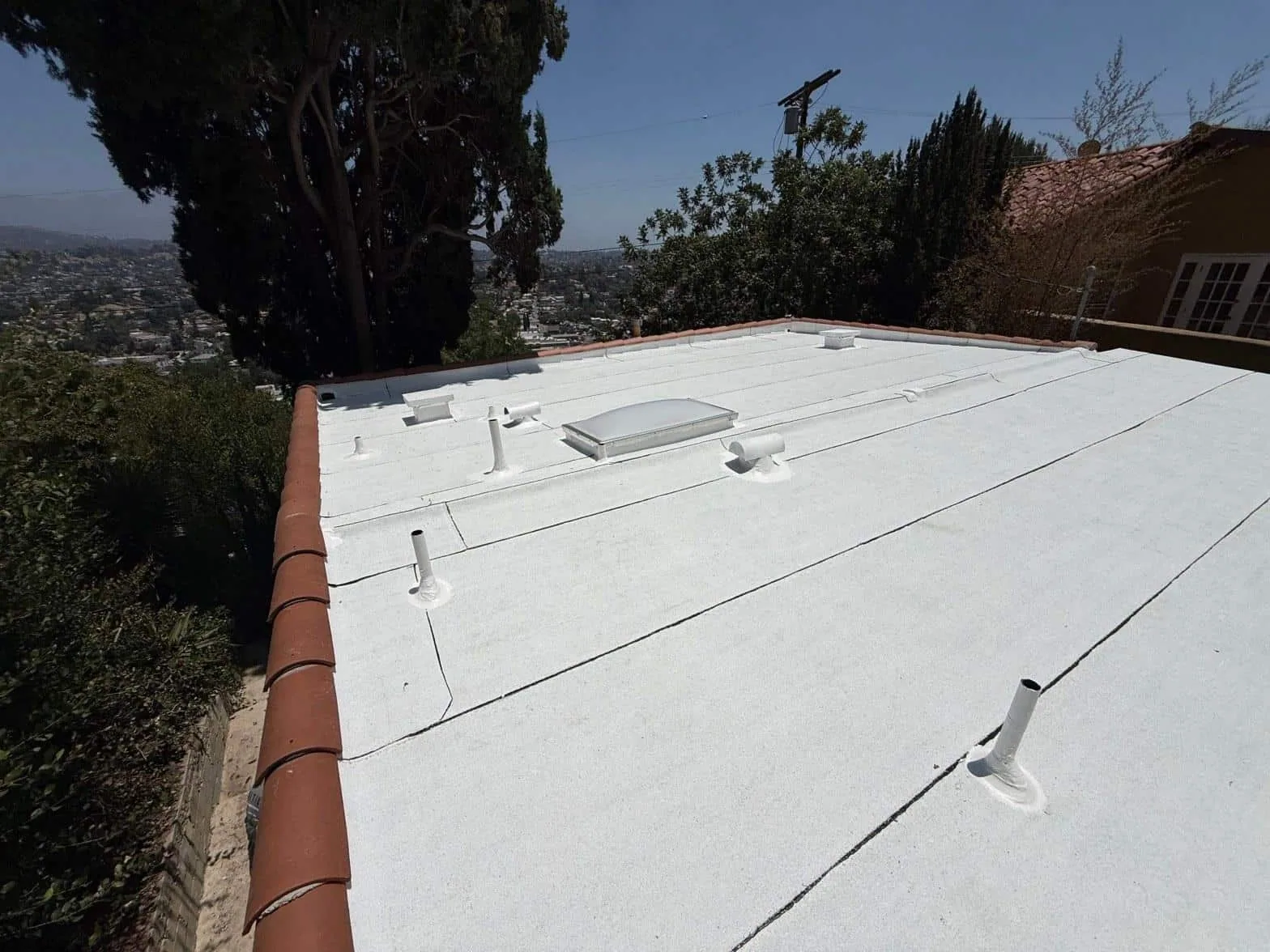

The preparation line item can determine a silicone coating bid in Fairfield, CA more than the exposed field area. Cleaning, removing incompatible patches and replacing unsound supporting layers are different tasks. We inspect the roof before proposing the coating, then identify the corrections and application requirements that belong in the scope. The general contractor can compare a prepared restoration system rather than a container quantity that leaves the construction beneath it unresolved.
NorthBay Health Medical Center is a hospital in Fairfield, while the Solano County Administrator's office is part of Downtown Fairfield's civic geography. Those references help locate the service area but do not establish roof materials or access conditions. A named location does not establish a suitable coating substrate. The actual assigned roof condition and access requirements govern whether silicone restoration is appropriate and how preparation will proceed.
Test the existing surface
A coating needs a substrate that can support the specified bond. We examine contamination, aging and repair compounds, then review the preparation requirements for the selected product. Test areas may be useful where adhesion or the retained material is uncertain. Cleaning alone does not establish compatibility with every previous patch. The bid should identify removal, primer or other preparation required so labor is not hidden inside a general field application price.
Our preparation for roof restoration connects those findings to the proposed application. At a property in downtown Fairfield, the GC should arrange the actual building's access and equipment protection before surface washing or testing begins. Those tasks can affect the sequence even where coating material is available. We explain the inspected boundary and any unresolved substrate condition before the restoration quantity is treated as a uniform application across the roof.
Remove unsound layers
A firm-looking weather surface can conceal wet insulation or damaged supporting material. We investigate suspect areas before recommending another coating layer, using appropriate methods and confirmation where needed. Thermal differences can direct checks but are interpreted against construction and equipment influences. The report should distinguish observed conditions from uncertainty, so the GC understands which removal dimensions are established and which require another investigation.
Our moisture assessment before coating selection can help define that work where the assembly supports the method. A comparison with acrylic coating restoration still needs a sound substrate under either proposal. The material choice does not remove a hidden-layer problem. We define selective correction where practical and explain when wider moisture or poor attachment changes the recommendation, allowing the GC to compare complete restoration work with an alternative construction that addresses the same findings.
Repair details independently
An open seam or damaged flashing needs a compatible correction before field coating. Added liquid material cannot reconstruct a broken drain component or restore attachment beneath a failed curb. We inspect those details and define the work needed to prepare them for the selected coating system. The bid should separate their geometry and labor from field quantity, especially where older repairs or equipment access complicate preparation.
Our reconstruction of roof flashing details can be coordinated ahead of silicone application. Where a spray foam substrate is involved, its condition and the specified protective coating requirements also need review. The GC should resolve product compatibility and any damaged foam removal before the application stage. A surface proposal cannot be accepted as the complete correction if unsound construction remains beneath it or another trade still needs to alter an equipment connection.
Schedule preparation and cure
Surface moisture and temperature influence application readiness at the actual work area. We follow the selected product requirements for cleaning, drying and curing, including the conditions after application. A forecast without rain does not establish that seams, shaded details or previously wet areas are ready. The sequence needs a planned stopping point and protection for any prepared construction that cannot yet receive the final material.
For coating work over medical office interiors, the assigned operator's requirements may affect ventilation coordination, access and equipment protection. We confirm those tasks before washing or application begins. The GC can preserve useful schedule float by resolving the system and readiness requirements early, rather than treating a coating as work that always proceeds immediately after cleaning. We describe the reason for a hold and the remaining preparation so adjacent trades can plan against an understandable construction condition.
Plan future repair access
A coated roof needs a later repair method compatible with its surface and underlying system. We record the material and repaired boundary at closeout, including any retained condition outside the agreed scope. The operator should receive practical protection information for equipment traffic so service work does not puncture or contaminate the new surface. Future inspection distinguishes a coating defect from damage in the assembly beneath it.
Emergency roofing assistance is available during nights, holidays and weekends, with timing confirmed for the property. Temporary protection can limit exposure while the permanent coating or substrate repair is prepared, but it does not establish readiness for another field application. We inspect the current damage and describe the correction required. The GC can use that record to coordinate removal and closure instead of assuming a new coating pass will resolve every returning symptom, keeping later repairs tied to the actual construction and condition.
Before recommending silicone, document where water remains, how the existing surface sheds it and whether the membrane is compatible with the proposed primer and coating. Ponding that remains after rain may require drain or slope correction rather than added coating thickness. Define the repair sequence around blisters, open seams and penetrations, and state how the dry-film target will be checked across each roof zone. Areas that cannot be prepared or cured in the available weather window should remain outside the completed quantity until conditions support application.
Commercial Roofing Questions
Does silicone eliminate the need for drainage correction?
Inspect outlets and retained water conditions independently of the coating choice. A damaged drain or unsound flashing still needs reconstruction. We recommend defining that work before application so the GC does not treat a surface material as a substitute for correcting the component that controls the water route.
Can every old patch stay below a silicone coating?
Review bond and compatibility at the retained compounds. Loose or unsuitable repairs may need removal before the selected coating can connect to sound material. We recommend test preparation where useful and a defined repair boundary, rather than pricing the field as though all existing patches are equally suitable.
Should acrylic and silicone bids share a curing allowance?
Assess the selected product requirements separately. Preparation and conditions after application can differ, changing practical timing. We can explain those tasks for the actual substrate so the GC compares complete restoration sequences instead of assuming a coating substitution changes only the material price.
What happens when moisture is found below the membrane?
Establish its extent and correct unsound layers before coating is accepted as the permanent work. Survey findings may need confirmation at the assembly. We recommend separating that removal and reconstruction from field application so the bid addresses the hidden condition rather than enclosing it.
What information supports later repairs to a coated roof?
Record the installed material, preparation and repaired details, with retained limits made clear. Later service traffic and equipment changes also matter. We recommend using that construction record alongside current inspection so the correction is compatible and reaches the actual damaged layer.
Related Roofing Work
Send the roof scope early
Send the Fairfield silicone proposal, existing surface information and access restrictions before pricing application. We will define preparation and repairs so the restoration bid reflects the assembly that will remain.