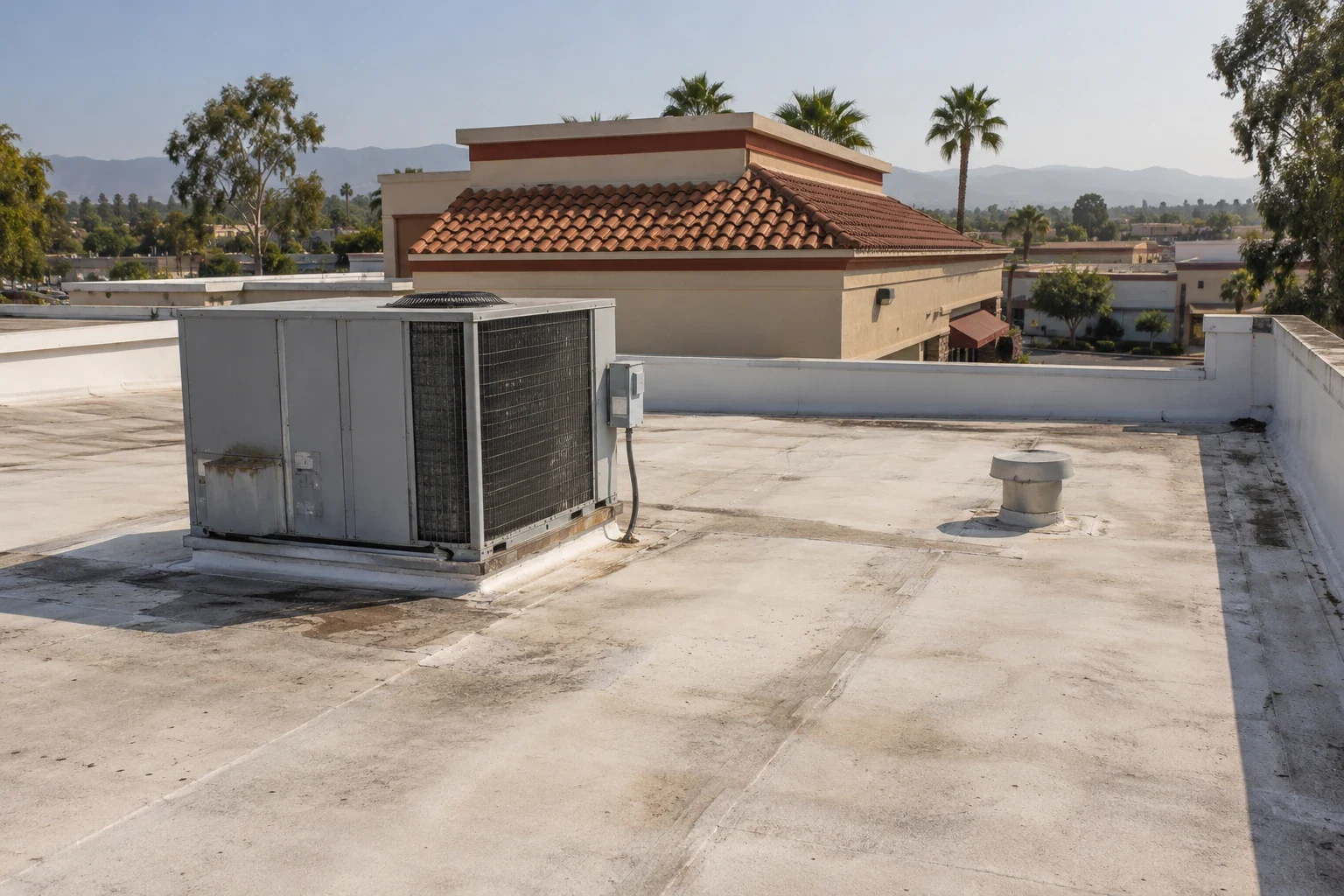

What exhaust and service access work belongs in a Fairfield, CA restaurant roofing bid when a leak appears near kitchen equipment? The roof connection needs examination alongside equipment drainage and the operating arrangement below. We investigate the covering and transitions, then explain compatible preparation and the responsibilities that must be coordinated before closure. The contractor should define equipment adjustment, roof access and interior protection as tasks where they apply, rather than assuming a general patch allowance covers every interface at the unit.
An active leak may need protection while mechanical or concealed assembly questions remain open. We take roofing calls at night, on weekends and during holidays. The initial discussion identifies the room affected and the available access, with the exterior examination establishing a practical temporary measure. The operator coordinates interior and electrical attention where required. Permanent roofing work then reaches usable covering and support, with any additional removal tied to the condition found rather than the appearance of the last surface patch.
Exhaust interfaces need preparation
An exhaust curb can have roofing, equipment and duct connections that require separate work. We inspect the accessible flashing and identify clearance needed to remove damaged material. Roofing at restaurant equipment supports should be reviewed with the equipment sequence before a new component conceals the connection. The contractor can assign any lifting or adjustment that precedes preparation, keeping the roofing work tied to an accessible detail rather than a repair method chosen without room to apply it.
Surface contamination can affect whether new material will connect to retained covering. We examine the condition and select cleaning or removal appropriate to the actual roof system. A wider unusable area may require more preparation than the visible opening alone suggests. The bid should describe that boundary and any remaining examination needed, allowing the contractor to compare options from usable material requirements rather than assume every exposed surface can accept the same repair product after a brief cleaning.
Service routes affect the covering
Repeated equipment servicing can expose the membrane to abrasion or accidental cuts, especially where access requires crossing vulnerable details. Repairing damage along the restaurant roof route includes checking the surrounding surface and support. We identify observed defects and explain whether compatible traffic protection is appropriate. The contractor can include that work while keeping drainage and panel clearance usable, instead of solving a puncture while leaving its service approach unaddressed.
The roof record should separate observed damage from a guessed cause. Several trades may have accessed the area, and the exterior condition does not by itself identify who created the opening. We photograph the defect and describe the preparation needed for correction. The contractor can price the physical work from those findings and coordinate later access with the operator, with no need for an unsupported explanation of the event to decide how the assembly should be repaired.
Food related sites need operator controls
Fairfield includes food manufacturing as well as restaurant and retail uses. For a proposed food-service roofing scope, request the operator's equipment drawings and work restrictions before investigation. We examine the actual roof and identify the occupied space below the proposed detail. The contractor can then coordinate material handling, access and temporary closure with the operating requirements that apply to that building.
For a proposed restaurant-related scope near Solano Town Center in Fairfield's east side, define the kitchen and customer areas affected before pricing. Work in the Solano Town Center district needs its own staging arrangement and operator contact. We review the assembly and the equipment interface, then explain any adjustment needed before roofing preparation. The bid can preserve those dependencies while the contractor still has time to coordinate the involved trades.
Kitchen periods need defined closure
A limited operating interruption can change how much roof work can be opened and closed at once. Roofing during continued restaurant use should identify the protection underneath and the exterior work boundary. We describe preparation and material requirements before the contractor reserves the period. An available kitchen shutdown does not establish that wet backing or contaminated covering is ready for a permanent connection, so the plan must allow suitable temporary protection where another stage is needed.
Concealed moisture can widen the scope after the damaged detail is opened. We explain the finding and the new boundary before additional removal, allowing the operator's protection arrangement to be reviewed. Mechanical work may also need another visit if the equipment interface cannot be closed as initially proposed. The contractor should preserve those responsibilities and their order in the sequence, with temporary measures documented separately from the permanent connection rather than treated as an unqualified completion of roof repair.
Adjacent uses keep their requirements
Grocery store roofing can share food related operating concerns while introducing different conditioned spaces. Shopping center roof work can require coordination across tenant boundaries. We identify those uses when they occur in the scope and define their protection and equipment obligations separately. The contractor can coordinate roofing materials without carrying one kitchen access plan across areas needing different operator controls.
A restaurant roof condition record preserves repaired locations, preparation and adjacent observations outside the scope. We identify the service routes and transitions that warrant future attention, allowing maintenance to focus on conditions relevant to the completed work. Later equipment changes still need review of their roofing interface and current material condition. The closeout account supports that decision while keeping prior repair completion distinct from the additional work or permission needed for a new alteration.
Restaurant scopes should map dining hours, kitchen exhaust, refrigeration and delivery access before a roof zone is opened. Confirm which units can be shut down and whether the operator needs temporary ventilation or food-protection measures. At grease exhausts, coordinate the responsible service contractor so cleaning or disconnection does not fall between trades. Define the daily weather closure and interior inspection contact, then sequence noisy work outside peak service where feasible. These requirements belong in the construction allowance, not as an assumed accommodation after mobilization.
A restaurant group with a second kitchen in Downtown Fairfield should scope exhaust, refrigeration and delivery access at that building independently.
Commercial Roofing Questions
Can a curb be repaired without moving the exhaust unit?
Check access to usable flashing material before selecting the method. We identify the preparation and clearance required. The contractor can coordinate lifting or adjustment where the unit blocks the connection, rather than assume equipment in place allows every part of the damaged detail to be reached.
Does cleaning establish a usable repair surface?
Examine the actual contamination and retained covering condition. We explain whether suitable preparation can produce a compatible connection or whether damaged material must be removed. Carry that work in the bid rather than assuming the visible opening is the complete preparation boundary.
Should traffic protection be part of the repair?
Review the service route and observed damage around equipment. We consider compatible protection where appropriate without blocking outlets or panel access. The contractor can define that task separately while the operator coordinates future servicing against the repaired detail.
How should a short kitchen closure be used for roofing?
Compare the available period with removal, preparation and closure requirements. We explain any dependencies or concealed questions that could affect completion. The contractor should plan temporary protection and trade coordination rather than treat the shutdown date as proof the permanent detail can be finished.
What should be documented after a restaurant roof repair?
Record the location, preparation and exterior connection completed. We separate deferred conditions and mechanical responsibilities from roofing work. The operator can use that account during later servicing without assuming a repaired flashing detail establishes equipment drainage or operating performance.
Related Roofing Work
Send the kitchen and equipment sequence
Send the roof scope, equipment information and operating restrictions before pricing. We identify accessible repair boundaries and trade tasks so your restaurant roofing allowance supports the planned work period.