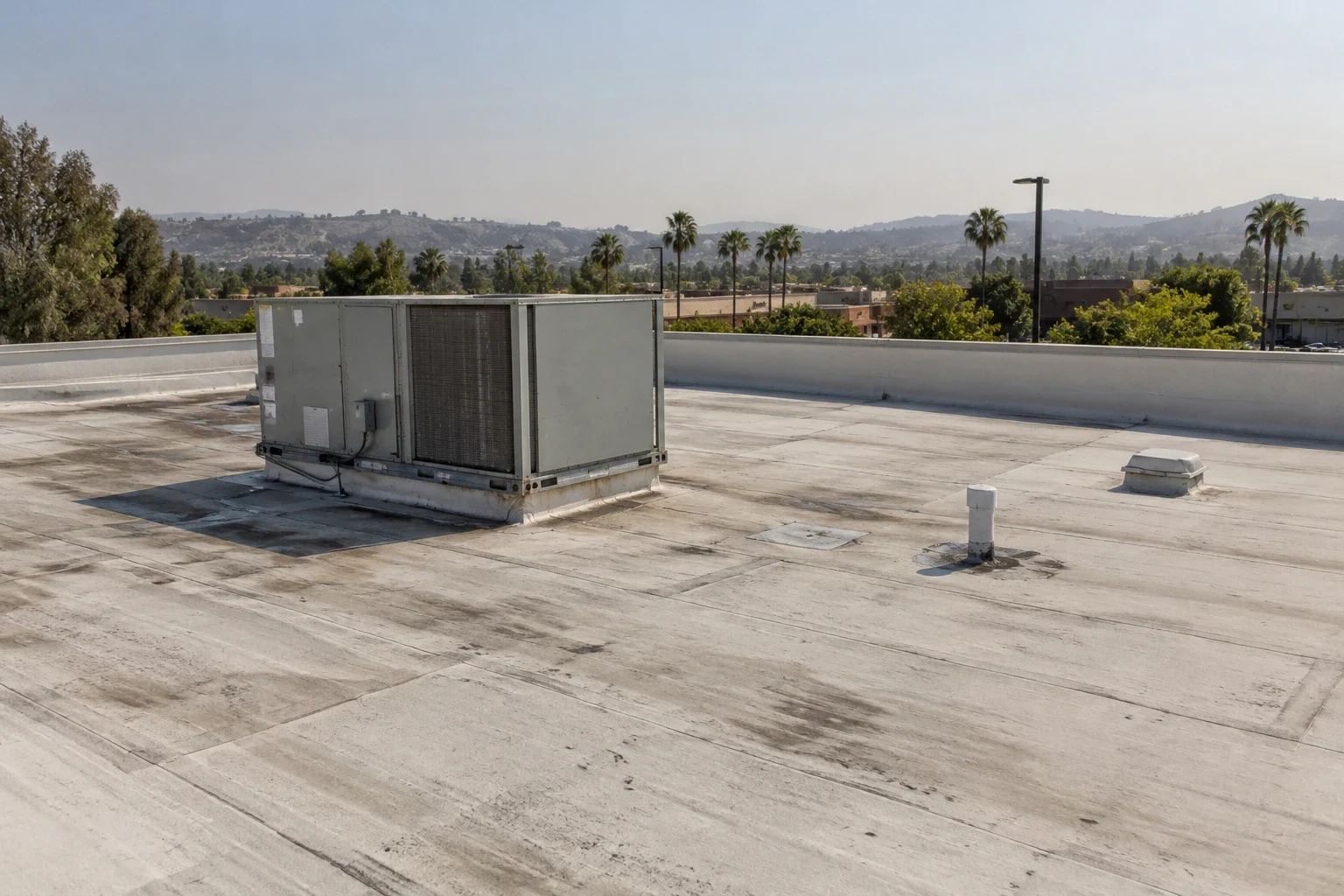

Which stock protection and equipment responsibilities should enter a Fairfield, CA grocery roofing bid before the repair is priced? The roof assembly and the activity below need separate review, because a leak can involve the covering, a curb or equipment water that requires another trade. We examine the exterior details and discuss affected rooms with the operator, then explain the roofing preparation supported by the findings. The contractor can assign interior protection and mechanical coordination alongside removal and closure instead of carrying one undefined leak repair allowance.
An active water event may need temporary exterior work while the permanent diagnosis is refined. Our roofing calls are handled through overnight hours, weekends and holidays. We identify the affected area and access requirements, then describe protection appropriate to the condition found. The operator coordinates contents and qualified specialist attention below. We base the lasting scope on compatible surface preparation, supporting material and concealed moisture findings, with the identified water path determining which detail needs correction.
Equipment water needs separation
Condensate or another unit related water path can produce an interior symptom resembling a rain leak. We compare the timing with equipment operation and examine the roof connection around the unit. Roofing at grocery equipment curbs needs a sound flashing boundary and access to the complete interface. The contractor can assign mechanical assessment separately where equipment drainage remains unresolved, avoiding a roof repair price that appears to include correction of a unit problem without examination.
Working clearance affects the roofing method. A service panel, pipe or support can obstruct removal and preparation at the damaged detail. We identify whether adjustment, shutdown or lifting must occur before the new connection can be completed. The bid should include those dependencies and assign responsibility through the project team. A technically suitable repair material still needs usable support and access, so the equipment sequence should be reviewed before installation or servicing leaves the roofing trade unable to reach the planned boundary.
Conditioned storage changes the questions
Where the project includes a conditioned storage space, the roof interfaces need coordination with its enclosure requirements. Roof work above cold storage may involve air and vapor control questions requiring the appropriate design team. We identify these interfaces rather than treat a surface membrane repair as resolution of every moisture observation indoors. The contractor can separate roofing preparation from specialist enclosure direction while preserving both tasks before permanent closure.
Wet or deteriorated insulation can also affect whether the existing assembly is usable beneath repair or recover work. We examine available records and visible indicators, then explain further investigation where the result would change retention. Limited openings need protection and restoration compatible with the proposed scope. The contractor can price those tasks against a defined question and boundary, with stored contents addressed by the operator before layers are disturbed above the space.
Proposed food uses need their own scope
Fairfield includes food manufacturing and retail operations with different equipment and stock-protection needs. For a proposed grocery roofing project, provide the operator's access and equipment requirements with the drawings. We examine that property's assembly and identify the roof work needed for the proposed use. The contractor can then coordinate material handling and interior protection before fixing the repair or removal sequence.
Solano Town Center is a major retail destination east of I-80 in Fairfield. If a proposed retail scope in the Solano Town Center area includes grocery operations, identify the conditioned spaces and equipment interfaces during review. We describe the preparation and access needed at each affected detail. The bid can carry those tasks with the covering decision, allowing the operator and contractor to compare alternatives on the work required at the building rather than a general retail assumption.
Protection needs a defined period
Food stock and occupied passages can limit the area suitable for roof opening at one time. Roofing while grocery operations continue should describe the proposed exposure and the party responsible for protection underneath. We review those arrangements with the operator before setting the removal boundary. The contractor can include additional handling or temporary closure labor where a restricted work area changes the sequence, with access conditions retained alongside the price.
The permanent material needs preparation that matches the actual assembly. Wet support or unsuitable surface condition can require further work before a durable connection is possible. We explain the condition and temporary protection necessary through that stage. If investigation expands the boundary, the contractor revisits the affected stock and room controls before additional removal. This keeps the protection plan connected to the real roof exposure rather than only to a preferred completion date.
Related food uses remain distinct
Restaurant roof work can involve exhaust and kitchen interfaces different from grocery equipment. Big box roof construction can require another sales floor arrangement. We identify these uses where they occur and define the affected areas before comparing material options. The contractor can coordinate procurement without allowing one retail label to conceal different interior protection or equipment tasks beneath the proposed work.
Insulation correction for the retained roof should state removal and usable support requirements rather than assume all existing material can stay. We explain confirmed findings and unresolved concealed questions, then document the completed boundaries at closeout. The operator receives the repair locations and adjacent conditions worth observing. Later equipment or enclosure changes can then be reviewed against the present assembly and the record of work, with each new interface receiving its own preparation decision.
Grocery work requires coordination around refrigeration, food handling, deliveries and occupied sales areas. Identify which cold rooms or cases depend on rooftop equipment and have the store contact confirm any required backup or isolation before work begins. Protect receiving and food-preparation routes from overhead work, and stage roof materials away from ventilation intakes where practical. The daily plan should define a weather-tight stopping point, the person who checks interior conditions and the process for escalating a temperature or water event while roofing is underway.
Commercial Roofing Questions
Does a drip during refrigeration operation establish a roof leak?
Compare operation and rainfall with the exterior findings. We examine the curb and adjacent roof details, then identify mechanical or enclosure questions needing specialist attention. The contractor should assign those responsibilities before a membrane repair is treated as completion of every water issue.
Can conditioned stock remain below an investigation opening?
Obtain the operator's requirements and define protection before layers are disturbed. We explain the opening and restoration tasks. Include specialist enclosure coordination where the interface affects the conditioned space, so the investigation allowance describes the work needed around the measurement.
What should a grocery recover alternate include?
State the retained assembly conditions, moisture investigation and occupied protections. We assess whether insulation and supporting material can remain. The contractor can compare that complete scope with replacement rather than assume avoiding broad removal eliminates every interior coordination task.
Who resolves a restricted equipment access detail?
Coordinate through the contractor with the operator and mechanical trade. We identify the preparation blocked by the equipment and the clearance required. Put any lifting or adjustment ahead of permanent closure instead of leaving an inaccessible connection to the final roof visit.
How should food related roof work be handed over?
Keep repaired locations and assembly information separate from operating or equipment acceptance. We identify the exterior work completed and any deferred findings. The operator can use those details during maintenance without assuming roofing closeout resolves specialist enclosure or mechanical requirements.
Related Roofing Work
Send the stock and equipment requirements
Send drawings, conditioned space information and operator access controls. We define roofing preparation and trade dependencies before your grocery work allowance and sequence are fixed.