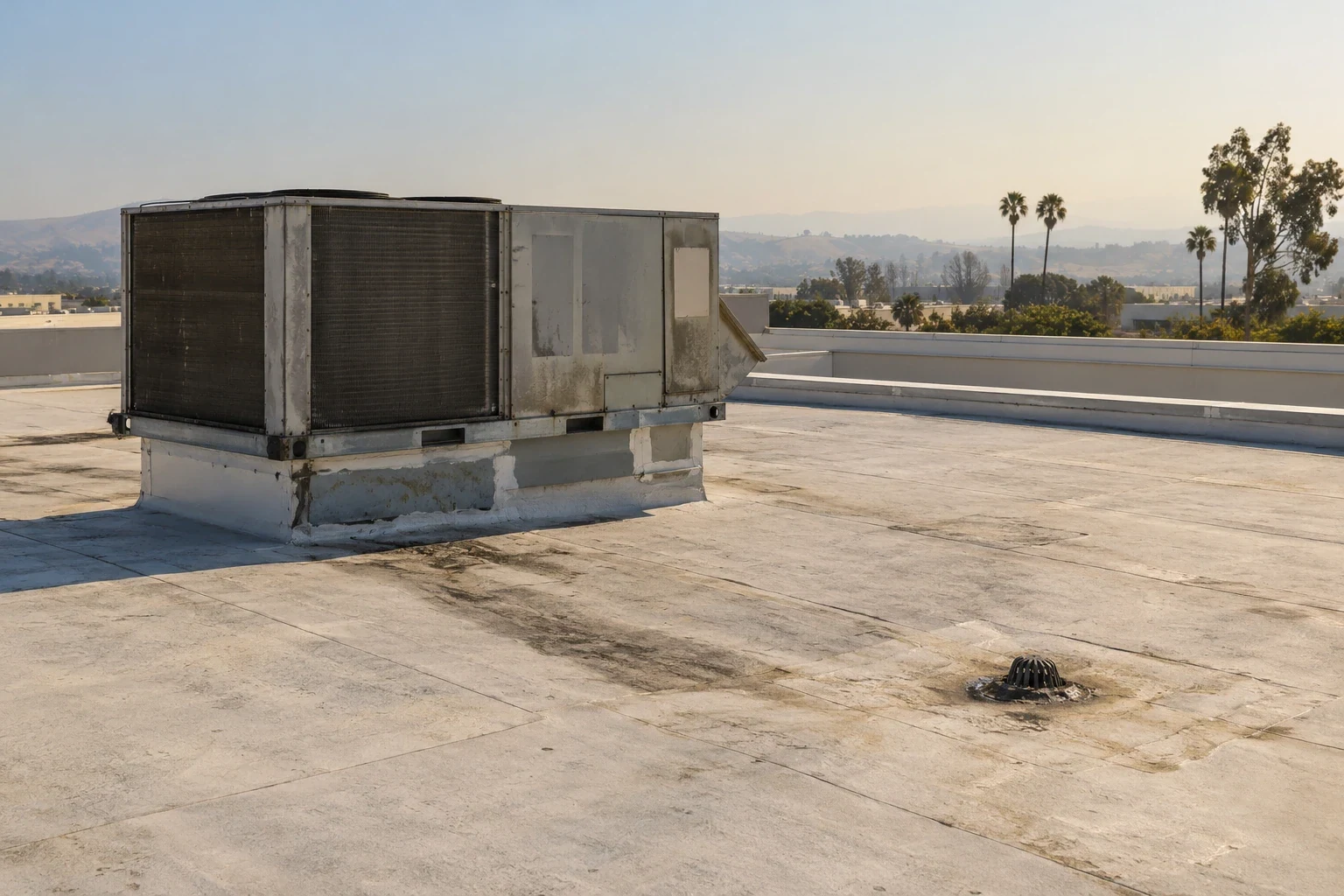

Which water exposure and access requirements belong in a Fairfield, CA data center roofing allowance before a contractor selects the repair method? The work can affect sensitive spaces below and equipment interfaces above, so the sequence needs operator input as well as an assembly examination. We identify the proposed roof opening, the materials supporting the repair and the coordination needed to reach them. The bid should show these tasks explicitly rather than assume a technically suitable covering can be installed without operational preparation.
An active leak may need temporary exterior protection while the permanent decision remains open. Our roofing call response operates overnight, on weekends and during holidays. We discuss the affected space and access with the responsible contact, then examine the discovered entry path. The operator coordinates appropriate attention to equipment and electrical exposure indoors. The lasting roofing scope addresses compatible preparation, concealed moisture where relevant and the conditions needed to make a continuous connection to usable material.
The protected space defines exposure
Water can travel within a roof assembly before appearing near the equipment below. We compare the interior observation with roof geometry and accessible details, avoiding a repair boundary based solely on the ceiling location. Investigation of the reported roof leak identifies actual entry and explains what remains uncertain. The contractor should include the examination and protection of investigation openings where those tasks are needed to establish the permanent scope.
The operator needs to define the areas that can be accessed and the controls applying above them. We describe the proposed exterior work so the team can assign room protection and specialist responsibilities. A sensitive space may require a smaller removal boundary or additional coordination before it is opened, changing labor and duration. The bid can reflect those conditions once they are identified; it should not treat uninterrupted operation as an assumed outcome independent of the operator's controls and the assembly found.
Equipment interfaces need review
New equipment can introduce curbs, penetrations and supports that affect the roofing connection. We review their locations and the clearance required for preparation before installation proceeds. Details at rooftop equipment interfaces need roofing and mechanical responsibilities coordinated through the contractor. A unit that blocks access to the damaged connection can require lifting or adjustment, and that dependency should be identified while the installation sequence can still accommodate it.
The proposed support or load may also require structural direction outside the roofing examination. We identify where that decision affects the interface so the contractor can assign it to the appropriate discipline. Roof material compatibility and usable support remain our scope questions, with the resulting preparation stated in the bid. This prevents a fully specified equipment package from being mistaken for a complete roofing detail when attachment, flashing or the retained assembly still requires review.
Technical projects need building information
Green Valley Corporate Park has marketed technical support and research uses, with its location at the junction where I-80 meets I-680. If a proposed technical project in Green Valley Corporate Park includes data equipment, send the building's roof records and access controls with the drawings. We examine the subject assembly and identify the protection and interface questions its proposed work creates. The contractor can include those tasks before the material decision is finalized.
Fairfield's temperature reached 117 degrees Fahrenheit on September 5, 2022. For an exposed roof serving a proposed data operation, historical local heat supports attention to material condition and preparation. We inspect flexibility, adhesion and relevant transitions directly rather than infer a defect from air temperature. The bid can then describe the surface work needed for a usable connection, with the chosen materials applied under their actual requirements and the operator's access conditions carried into the sequence.
Temporary closure needs a limit
A temporary covering should identify the defect it protects and the conditions that still need correction. We photograph the discovered opening and describe the protection before further work obscures it. Urgent exterior loss protection can therefore remain a distinct line item from permanent removal and closure. The contractor and operator need to know when another examination or protection adjustment is required while investigation or specialist review continues.
Permanent work can require opening wet or damaged areas beyond the initial defect. We explain the boundary supported by the findings and identify any remaining uncertainty. The contractor can coordinate that larger exposure with the room controls before removal proceeds. Surface preparation and material application conditions also belong in the sequence, with suitable temporary protection planned if closure must wait. A defined work stage is easier to coordinate with sensitive activity than a broad repair date that leaves the actual opening and completion conditions unstated.
The handoff keeps responsibilities separate
Office building roof work can occur alongside a data space while needing different interior access controls. Manufacturing roofing may share equipment coordination but introduce separate production requirements. We ask the project team to identify those uses where they occur and define each affected work area. The contractor can coordinate material procurement without assuming the same exposure or operating arrangement applies everywhere under the roof.
A roof condition account for the project preserves findings, repaired locations and the limits of examination. Closeout should show what was corrected and which adjacent questions remain outside that scope. We distinguish roofing completion from specialist interior or equipment decisions, giving the operator an understandable maintenance record. Later alterations can then be reviewed against the constructed details and the present assembly, with the contractor retaining a clear account of the work its allowance actually delivered.
Before roofing starts above a data center, identify the critical loads, redundant equipment paths and any ceiling or service corridor that cannot be exposed. Coordinate access with the operator's facilities lead and record the allowed work window, alarm protocol and escalation contact. The roofer should define protection against dust, water and vibration for each released zone, while the electrical and mechanical teams control their own live equipment. Tie the daily closure to a named sign-off so production is not assumed to resume solely because the roof membrane is in place.
Commercial Roofing Questions
How should data operations be coordinated during roof repair?
Define the operator's required controls and the proposed exposure before work is priced. We explain the roofing sequence and coordinate its interfaces, while the project team assigns operational and specialist responsibilities. The bid should describe that arrangement rather than assume a repair method establishes every operating outcome.
Should the interior mark define the roof opening?
Trace the entry path and examine the assembly before setting removal. Water can move through layers before appearing below. We identify the findings that support the repair boundary and discuss further investigation where concealed moisture or support condition can change the scope.
What should accompany new equipment drawings?
Provide roof assembly information, access controls and the proposed support details. We review the roofing interface and identify mechanical or structural decisions needing coordination. The contractor should resolve clearance and preparation requirements before equipment installation limits access to the connection.
How should temporary protection be documented?
Record the discovered defect, the covering applied and the remaining questions. We explain what the measure addresses and the conditions requiring follow up. Keep that account separate from the permanent repair scope so the operator can coordinate protection during investigation or review.
Does a completed roof detail close every equipment issue?
Maintain separate responsibilities for roofing, mechanical, electrical and operational work. We document the exterior connection completed and identify interfaces that still need another discipline. The contractor can coordinate the handoff without treating a dry roof surface as acceptance of equipment performance.
Related Roofing Work
Send the access and exposure requirements
Send the drawings, proposed equipment interfaces and operator controls. We define the roof investigation and work boundaries early so your data center allowance includes preparation and coordination.