
Which campus access and investigation tasks should a Fairfield, CA contractor resolve before a college roofing alternate is priced? The proposed work may involve several roof areas with different entrances, equipment interfaces and rooms below. We examine the relevant assemblies and explain where those conditions affect preparation and duration. The bid should distinguish the work supported by current findings from questions that still require testing, operator direction or another discipline's decision before permanent construction can proceed.
A campus project can combine a localized repair with a later replacement decision. We describe the purpose and boundary of each task rather than treat an urgent leak as evidence that every adjacent assembly needs the same work. Emergency roofing calls are handled overnight, during weekends and on holidays. Temporary protection addresses discovered entry where suitable, while the contractor coordinates the occupied space beneath and the records needed to define the lasting correction.
Campus access begins with the operator
Solano Community College's Fairfield campus is along Suisun Valley Road. For proposed roof work there, obtain the responsible campus contact and the building or roof area involved before arranging inspection. We identify the entry route, accessible details and rooms requiring interior observation, then explain any access limit that leaves part of the assembly unresolved. The contractor can schedule the necessary follow up before treating the initial condition account as a complete basis for permanent material release.
Vacaville Cultural Center Library is a public library in central Vacaville. For a proposed educational building scope in Vacaville, the subject operator needs to define its own access restrictions and work arrangements. We assess that property's assembly and use the proposed construction decision to guide the examination. The contractor can coordinate related visits while retaining separate findings, with repair boundaries and protection requirements attached to the particular building instead of carried between educational uses without review.
Several areas need separate findings
A project containing more than one roof area may include different covering materials, layers and attachment conditions. We examine the affected assemblies and describe the observations by location. Inspection of the campus roof areas records defects and examination limits, allowing the contractor to distinguish a repairable detail from a broader retained assembly question. A common bid format can preserve these differences without assuming every roof requires identical removal or preparation.
Transitions between areas also need assessment. A new covering connecting to retained material must reach a usable boundary, and drainage relationships can affect how the work is phased. We identify those interfaces before the contractor divides the sequence solely by convenient calendar periods. Where concealed moisture may change the boundary, we recommend the investigation needed to resolve it. The bid can then state a defined allowance tied to the question and its restoration tasks, rather than leave campus wide concealed conditions under one unqualified roofing rate.
Equipment alterations need usable clearance
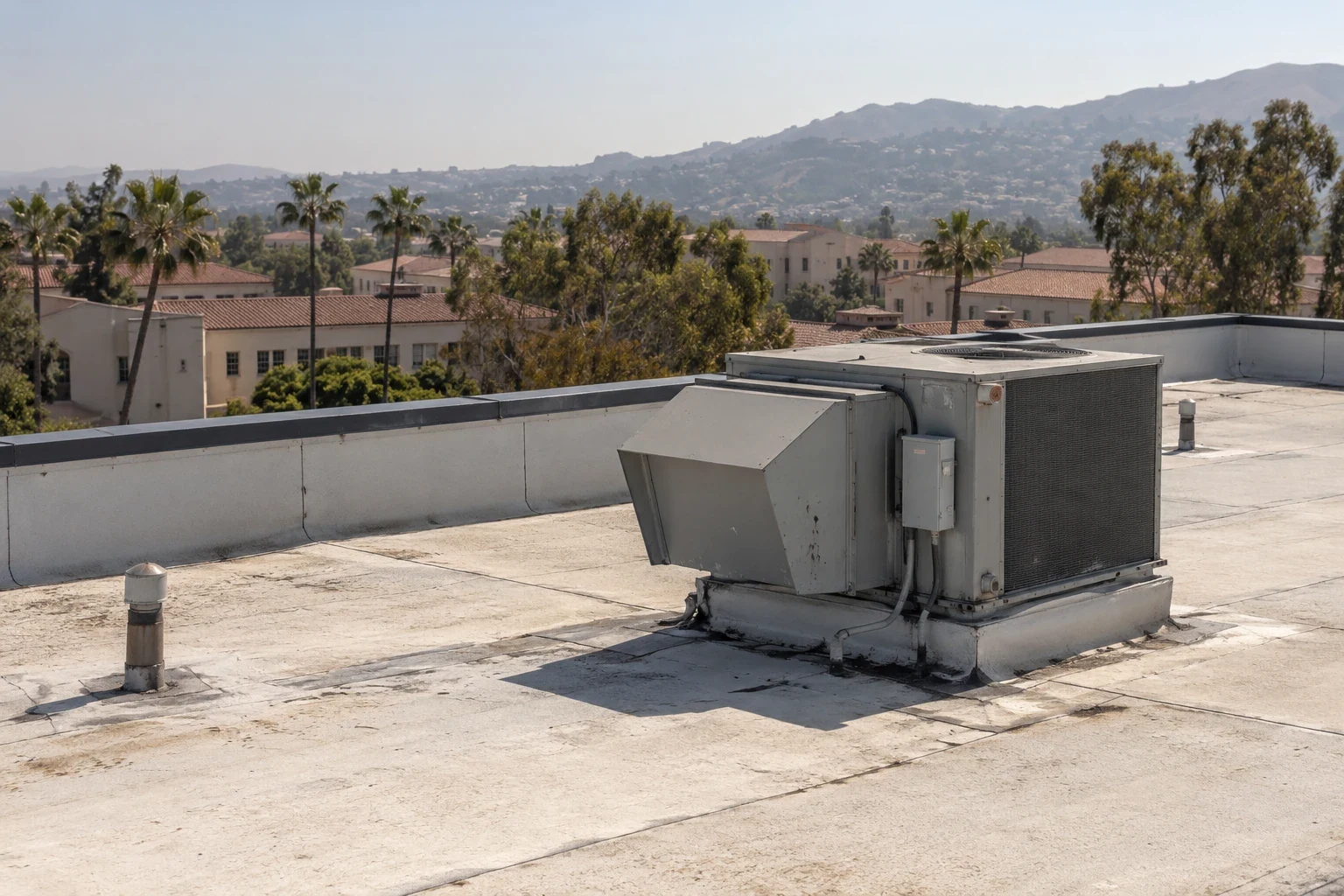
A new unit, support or penetration can change the roofing scope even when the field covering remains. Campus equipment curb and support work needs the proposed interface reviewed before installation restricts access. We identify the surface preparation and working clearance required, with lifting or adjustment coordinated where necessary. The contractor should place those dependencies in the mechanical and roofing sequence before procurement assumes the connection can be completed afterward.
The retained assembly may also have warranty obligations affecting notice or alteration review. We examine the documents available and identify relevant coordination questions without treating coverage as proof of current condition. Structural loading and other specialist decisions remain separately assigned through the project team. The bid can show the roofing connection supported by the findings while preserving the responsibility and timing for each external decision that affects when the detail can be opened or permanently closed.
Occupied activity limits the opening
An approved access date may still involve restrictions on rooms or pedestrian routes beneath the work. Roofing around continued campus activity needs those controls agreed before removal. We describe the proposed opening, temporary closure and material handling route so the operator can coordinate affected spaces. The contractor can then price the work areas that are practical under those requirements rather than assume unrestricted access across the campus for an entire construction period.
Actual material preparation remains a separate timing condition. A retained surface must be suitable for the selected connection, and wet or deteriorated support can require additional work. We explain that dependency and maintain appropriate temporary protection when permanent closure needs further preparation. A changed removal boundary also requires revised operator coordination before it proceeds. This keeps the schedule connected to the assembly found while giving the contractor a clear way to explain the added tasks and affected space.
Alternates retain their obligations
School roofing can share educational planning questions while requiring its own access and room arrangements. Office building roofing may occur within a campus related project with another set of occupied controls. We identify the actual uses and areas affected before comparing assemblies, so the contractor can carry their preparation and protection obligations in each alternate. Similar covering materials do not eliminate those separate construction requirements.
A roof survey for renovation decisions can help define the work needed before the permanent campus scope is fixed. We explain what was examined, which findings support retention and what remains concealed. Closeout then preserves repaired locations and the completed assembly information for future changes. The operator can use that record for maintenance, while the contractor retains a clear account of which roofs and interfaces were included instead of relying on a general statement that campus roofing was addressed.
A campus scope needs a building-by-building release plan because instruction, research, housing and public events may follow different calendars. Confirm the path for lifts and material deliveries, restricted areas below the work and the office that can authorize an outage. Rooftop controls and laboratory exhaust may need their own mechanical or electrical lead time. The contractor can phase noisy or disruptive work around the campus schedule, while each day's roof opening, protection and closeout is tied to a named facilities contact rather than a general academic break.
Commercial Roofing Questions
Can one alternate apply to several campus roofs?
Record the assembly findings and work boundaries separately before combining the price. We identify material and access differences that affect preparation. The contractor can coordinate procurement while keeping each roof's retained conditions and operating requirements visible in the alternate.
Does a campus address provide the necessary roof access?
Obtain the authorized contact and the building area involved before scheduling the examination. We identify the route and details that need to be reached. The contractor should preserve any access limits as follow up tasks rather than assume the whole campus was examined.
What should be resolved before a new rooftop unit is installed?
Review working clearance and the roofing interface with the equipment drawings. We identify preparation and any lifting dependency. Assign structural and mechanical decisions separately so the contractor can sequence the complete connection instead of leaving inaccessible flashing for later.
How should a limited investigation allowance be described?
State the roof area, concealed question and restoration needed after examination. We explain what the result would change in the permanent scope. The contractor can then refine the allowance from supported findings rather than a campus wide assumption.
What records support a later campus alteration?
Keep completed locations, material information and remaining examination limits together. We compare those records with current condition when new work is proposed. This gives the contractor a basis for compatible preparation while keeping prior completion separate from permission for a new roof opening.
Related Roofing Work
Send the campus work areas
Send drawings, the roof areas involved and the authorized access contact. We define examination and interface dependencies before your campus roofing alternates enter procurement.