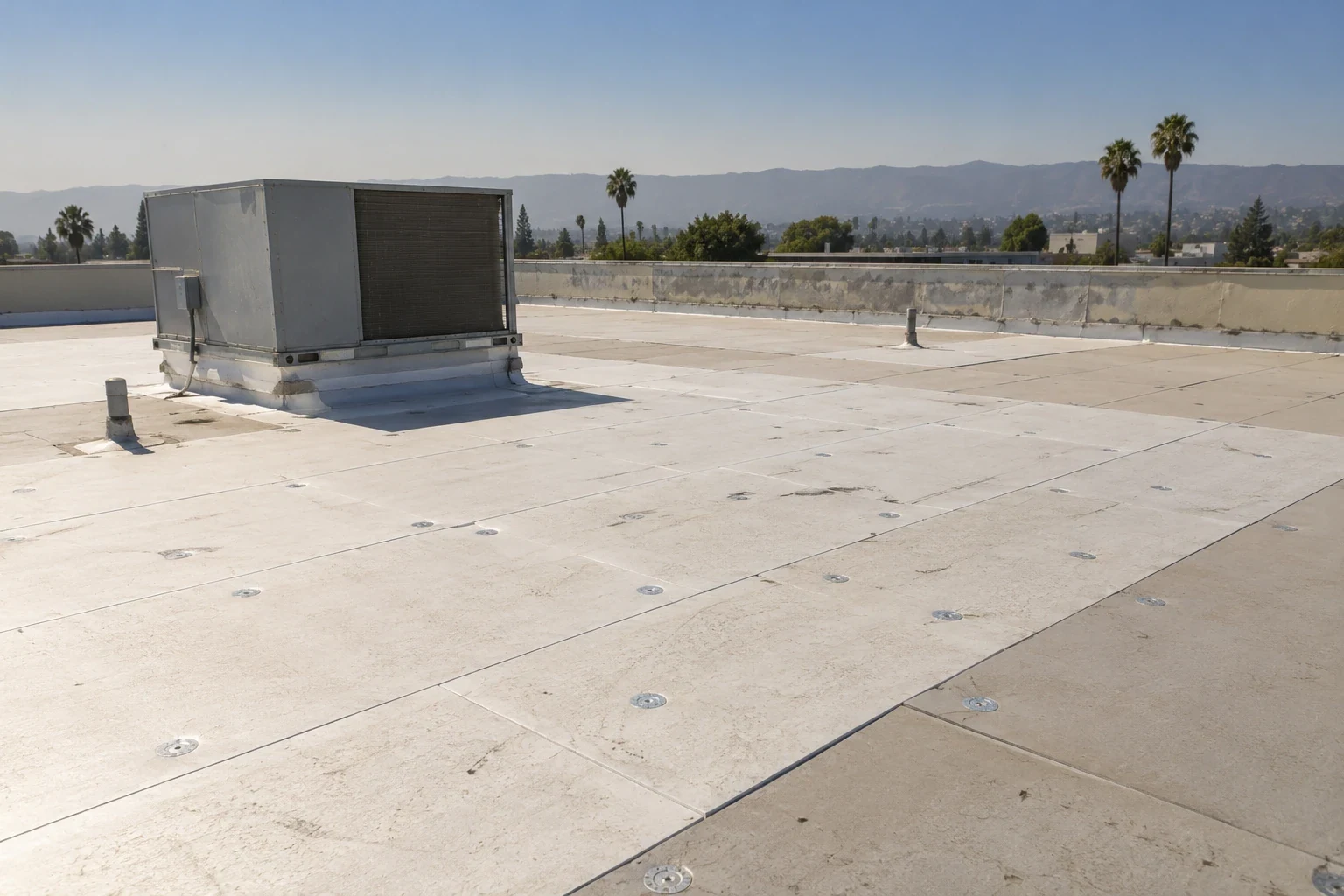

The insulation line item on a Fairfield, CA roof bid moves when the existing layers cannot provide a suitable base for new work. Wet insulation, damaged cover board and uncertain attachment each require a different investigation and correction. We examine the assembly, identify removal needs and define the replacement layers before the weather surface is selected. The general contractor can then coordinate the roofing sequence with deck access and any interior protection required beneath an opening.
Fairfield recorded 117 F on September 5, 2022, a historical local heat event relevant to discussing roof exposure without supplying an insulation design value. Healthcare coordination has a local reference in NorthBay Health Medical Center: its Fairfield location is identified in Fairfield, while assigned roof construction must still be established. Neither fact establishes a particular roof assembly. The assigned property's drawings, actual construction and measured condition determine the supporting layers, removal boundary and attachment method carried in the bid.
Investigate before covering
A serviceable-looking membrane can conceal insulation that has lost useful strength after wetting. We examine suspect areas and use suitable survey methods to direct further investigation. Surface observations cannot establish every hidden layer, especially where earlier overlays changed the assembly. The report should state what was checked and where a controlled opening is needed, allowing the GC to distinguish measured removal from an allowance for construction that remains uncertain.
Our moisture investigation before layer replacement interprets thermal patterns against the roof construction and conditions. Confirmation may be necessary before those patterns become removal dimensions. A project in the NorthBay medical district also needs the actual property's interior access and protection requirements. The GC can arrange those tasks early so the roof bid does not depend on a uniform dry-layer assumption that subsequent opening could invalidate.
Define the replacement layers
Insulation and cover board perform related but different roles within the roof. Insulation contributes thermal performance, while the selected cover board can provide a suitable working surface and protection appropriate to the assembly. Material choice depends on the specified construction, attachment and exposure rather than a generic thickness added to every roof. We review those requirements and identify the proposed layers clearly enough for the submittal and bid to be compared.
With a complete commercial roof replacement, the supporting layers must coordinate with the weather surface and the deck. A substitution can change handling, fastening and tie-in requirements, so the GC should review more than the purchase price. We describe the impact on installation and any testing or design coordination needed. The resulting line item covers the intended assembly rather than a loosely described board allowance that conceals a different construction approach.
Check the attachment base
The deck controls how a replacement layer can be secured. We examine the accessible substrate and identify deterioration or construction differences that affect fastening or bonding. A new board cannot restore a damaged deck underneath it, and adding attachment without understanding the base can create an unsuitable connection. The scope should separate roofing layer replacement from deck repair or structural evaluation where those additional tasks are required.
For a TPO roofing assembly, the selected insulation, cover board and membrane attachment need to work together as specified for the project. We review existing conditions before recommending the method. In roof work over medical offices, deck access can also affect interior protection and timing. The GC should resolve those dependencies before removal begins, preventing a roofing opening from waiting on another trade or an unplanned evaluation of the supporting structure.
Plan selective removal
A localized wet area can sometimes be reconstructed while surrounding sound layers remain useful. We identify the boundary and the connection needed between new and existing components, including height and drainage effects. Where damage extends farther after opening, the additional findings are documented before the removal area expands. A unit price can help manage comparable selective work, but it needs a stated assembly and a review method for conditions that differ from that basis.
Our evaluation of roof recover options considers whether retained layers are sound and suitable, rather than treating another surface as a remedy for wet insulation. We explain when selective removal can prepare the base and when broader damage changes the recommendation. Material delivery and temporary closure should be arranged around that decision, so the GC can sequence the work with a secure stopping boundary and protect the interior if investigation reveals a wider problem.
Protect stored and installed material
Replacement boards need handling and storage appropriate to their material requirements. Exposure before installation can undermine the usefulness of a new layer, so delivery, staging and daily closure belong in the schedule. We coordinate the accessible roof area and identify how the installation will be protected before the membrane is complete. The GC should account for those tasks rather than assume delivered material is ready to remain exposed until another trade finishes.
Our sequencing above occupied building interiors connects removal, layer installation and weather closure with the rooms below. Surface temperature, moisture and the selected attachment method can affect readiness during the day. Roof emergencies can receive assistance outside ordinary working hours, including holiday and weekend periods; we confirm the response time against access and conditions at the building. Closeout describes the replacement boundary and any retained conditions needing attention, giving the owner a usable record of the assembly rather than only a material delivery quantity.
An insulation replacement scope should show the layer count and thickness found, the proposed thermal build-up and the attachment method at each substrate. Tapered pieces may change drain elevations or the height at a door and equipment curb, so those transitions belong in the reviewed detail set. If existing layers remain, state what the attachment can reach and how concealed conditions will be handled. A board quantity without those interfaces is not enough to coordinate the membrane, edge conditions and finished drainage plane.
For insulation work at Fairfield Corporate Commons, identify the actual building and roof assembly before comparing thickness, attachment and perimeter transitions.
Commercial Roofing Questions
Can dry-looking membrane prove the insulation can remain?
Use appropriate investigation to assess the hidden layers. Surface appearance can conceal retained moisture or damaged insulation, particularly beneath older overlays. We recommend defining suspect areas and confirming their condition before the GC prices recover or restoration on the assumption that the whole assembly is sound.
Should cover board be selected only by thickness?
Review its role within the specified assembly, including attachment, compatibility and the working surface needed above it. Different products can change handling and detail requirements. We can explain the installation implications so the GC compares proposed substitutions against the project construction rather than thickness alone.
How is damaged decking handled during layer removal?
Document the condition and coordinate the appropriate repair or evaluation before securing replacement layers. Roofing boards cannot restore an unsound structural base. We recommend defining that responsibility and the approval route in advance, so additional findings do not leave an opening while the project team decides who controls the correction.
How should selective insulation replacement be unit priced?
State the assumed layers, removal depth, attachment and tie-in detail. Comparable areas can then be measured against a useful basis, with differing concealed conditions reviewed separately. We recommend identifying moisture boundaries before bidding where practical, reducing the uncertainty carried into the unit-price item.
What schedule tasks belong with material delivery?
Include suitable storage, roof staging and protection before final weather closure. Delivered boards may still need handling and preparation before installation, and exposed new work needs a secure stopping plan. We coordinate those requirements with the GC so procurement does not appear complete while protection remains unassigned.
Related Roofing Work
Send the roof scope early
Send the Fairfield roof assembly, proposed layers and known moisture concerns before the bid closes. We will define investigation, removal and attachment so the supporting-layer scope fits the roofing sequence.