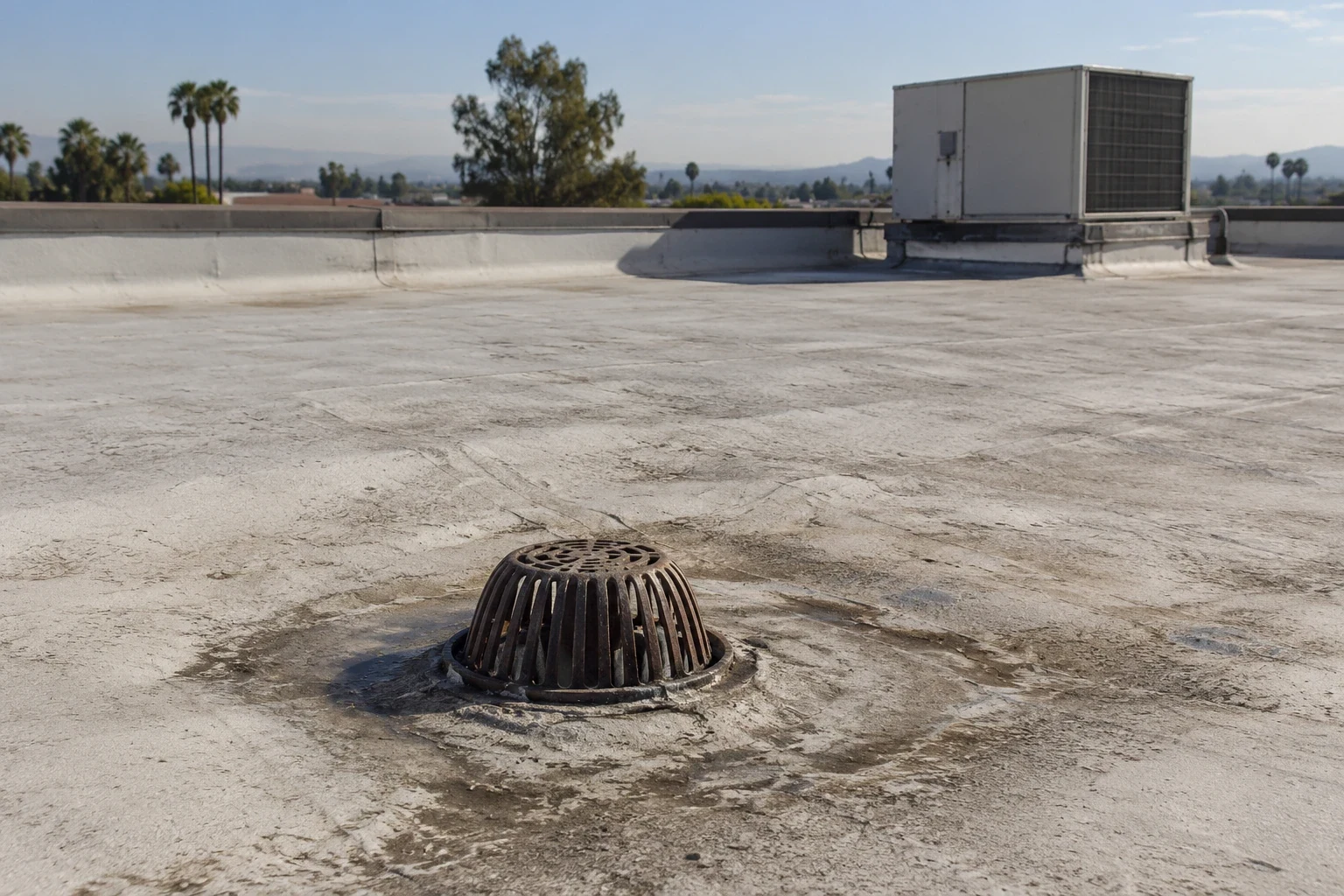

A drain repair allowance in Fairfield, CA needs to identify which part of the water route is failing. Clearing debris, rebuilding membrane flashing and correcting connected piping require different tasks and sometimes different trades. We inspect the roof outlet and surrounding assembly, then describe the work controlled by the roofing scope. That gives the general contractor a price with useful limits and a schedule that accounts for coordination before the final connection is closed.
Fairfield reached 117 F on September 5, 2022, providing historical local heat context for inspecting movement and existing details around outlets. The reading does not establish the condition of a particular drain. NorthBay Health Medical Center provides a local hospital context, but the assigned building’s drainage configuration and interior use need direct confirmation. At an assigned building, actual room use and drainage findings determine the repair sequence and protection plan.
Identify the responsible component
A wet area around a drain can come from debris, damaged flashing or a connection below the roof surface. We inspect the bowl or outlet, adjoining membrane and accessible drainage path, and distinguish what can be corrected from above from work requiring piping access. A rooftop patch cannot repair a leaking pipe joint beneath the deck. The bid should name the affected components and the trade coordination needed to reach them.
Our investigation of outlet-related roof leaks compares the interior symptom with the roof construction and the timing of retention. The GC can help by arranging access below the outlet where inspection requires it. Work in the NorthBay medical district still needs the actual property's room and service access instructions. That preparation reduces the chance of pricing a surface repair before the connected system has been examined enough to establish its responsibility.
Measure the retained area
Standing water can reflect an obstruction or a slope problem, and the corrective scope changes with that distinction. We examine sediment marks, outlet position and the adjoining assembly while checking whether a blocked route is limiting flow. Removing debris may reveal that the area drains adequately, or it may leave retention requiring further evaluation. The GC should avoid treating all water marks as a reason to rebuild slope before the accessible obstruction has been checked. Record the drain body, clamping or flange connection, adjacent membrane, strainer and visible outlet route separately. A roof-level inspection can document accessible conditions but does not establish the capacity or concealed state of downstream piping. Compare the drain rim with nearby finished elevations and note whether the overflow is separate, visible and accessible for maintenance. If the work changes slope or insulation height, show the resulting relationship to the drain and scupper before selecting a termination. The GC can then coordinate roofing and plumbing responsibilities while preserving the route that carries water away from the roof surface.
Through repair planning for retained roof water, we separate maintenance from reconstruction. Where a change to the assembly is necessary, the bid describes removal, replacement layers and tie-in to the existing field. Drain capacity and structural questions may require the project's design professionals or other trades. We identify those dependencies so a roofing line item does not silently absorb design work or connected plumbing that has not been established in the construction scope.
Rebuild the weather connection
A drain detail relies on compatible material and a sound base around the opening. We examine the adjoining membrane, insulation and any older patches before selecting the reconstruction method. Unsound layers may need selective removal to support the new connection. A clean exposed surface cannot make wet or crushed insulation suitable beneath a flashing, so the bid needs a defined allowance or investigation for concealed conditions that remain uncertain.
Our repairs to supporting roof layers can restore the local substrate before the outlet detail is completed. The GC should coordinate opening and closure so the drain area is not left exposed during an avoidable interruption. For roof work at a hospital assignment, access beneath the opening and protection of affected rooms can affect when that stage proceeds. Those requirements are confirmed with the operator before removal rather than assumed from the building label.
Keep a drainage route available
Removing an outlet can temporarily interrupt the route that carries water off the roof. We plan the opening, temporary protection and permanent reconnection against the actual conditions and project requirements. The work boundary should be small enough to secure at a planned stopping point, with materials and necessary trade access arranged before removal. A schedule that treats reconnection as a later minor task can leave the roof without the path it depends on during rain.
When the repair involves a TPO membrane connection, preparation and joining requirements govern the detail. Other systems need their own compatible methods, and a substitution must address those requirements before it changes the material line item. We also discuss whether connected piping testing must precede final roofing closure. The GC can protect the sequence by resolving responsibility and test access early, rather than discovering after the membrane is closed that another trade still needs to reach the connection.
Define care after completion
A repaired outlet should remain accessible for cleaning and inspection. We discuss the service route and identify nearby details that need protection from tools or debris handling. Routine cleaning can help maintain flow, but a recurring accumulation may require attention to the site conditions feeding it. The owner needs to understand which maintenance task is appropriate and which new symptom should prompt a separate repair investigation.
Our maintenance of roof drainage details records observed changes and completed cleaning without treating every visit as reconstruction. Emergency assistance is available through nights, weekends and holidays, with timing confirmed for the building and conditions. If another leak appears, the report helps direct the new inspection to the outlet and surrounding assembly. The permanent closeout should state the repaired components, any testing coordinated with other trades and the remaining conditions outside the agreed roofing scope.
The City of Fairfield describes Corporate Commons as a business park along I-80. For a project in that area, the drain review still follows the actual roof plan, overflow route and discharge point rather than the district name.
Commercial Roofing Questions
Does water around a drain mean its flashing failed?
Inspect the outlet and drainage route before selecting that repair. Debris or connected piping can retain water beside otherwise sound flashing, while a damaged membrane connection can leak without an obvious blockage. We recommend establishing the responsible component and pricing the corresponding work rather than using the puddle alone as the diagnosis.
Should plumbing be included in the roofing allowance?
State the division of responsibility clearly. Roofing can address the weather connection and supporting layers, while a pipe defect may require another trade and interior access. We identify the coordination needed during inspection so the GC can carry the appropriate tasks without overlap or a missing connection.
Can slope correction be priced as a small patch?
Removal and reconstruction need definition if the assembly must be changed. The scope may include replacement insulation, tie-in work and design coordination, beyond a membrane patch. We recommend examining the cause of retention first, then pricing the actual layers and connections that the proposed correction requires.
What must be ready before the outlet is removed?
Arrange the replacement detail, supporting materials, trade access and a secure stopping plan. The drain route may be interrupted during work, so temporary protection and reconnection belong in the sequence. We can describe those dependencies before the GC schedules removal or interior access beneath it.
How should recurring debris be handled after repair?
Set an accessible cleaning arrangement based on the actual accumulation and surrounding conditions. Record what was cleared and whether retention remained afterward. We recommend a separate investigation if repeated cleaning no longer restores drainage, because a changing component or slope issue may need corrective construction.
Related Roofing Work
Send the roof scope early
Send the Fairfield drainage detail, roof assembly information and piping responsibility early. We will define the roofing connection and coordination so the bid and schedule include the work necessary for permanent closure.