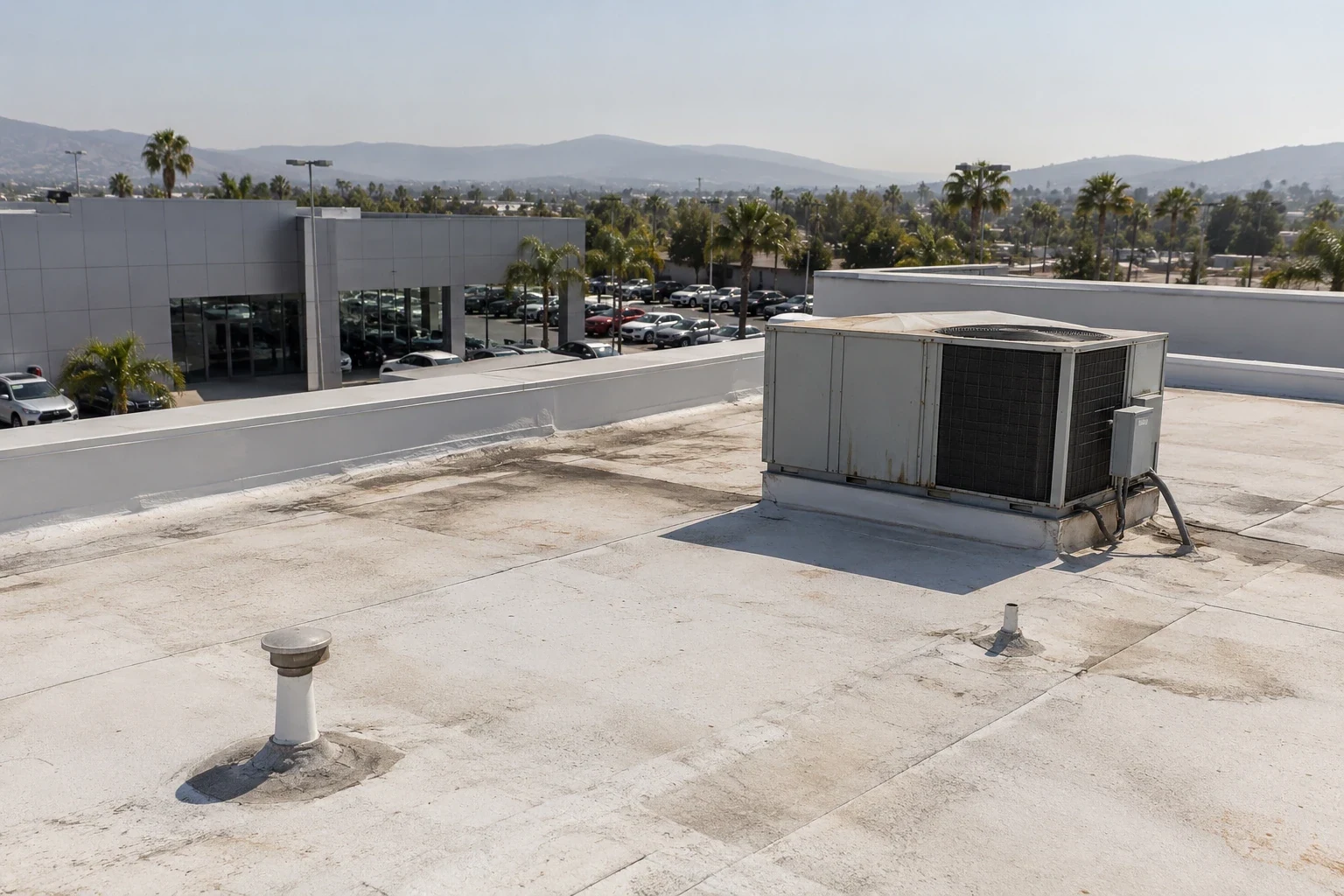

What vehicle and service bay arrangements should enter a Fairfield, CA auto dealership roof bid before material delivery is reserved? The proposed exterior work can affect an occupied floor, entrance or staging position used by the operator. We inspect the covering and the details needing correction, then explain removal, preparation and closure requirements. The contractor can assign protection and handling from that work boundary, with service activity and equipment dependencies coordinated before a simple roofing quantity becomes an incomplete construction allowance.
A water report over a service area needs diagnosis before its permanent correction is selected. We compare the symptom with accessible seams, drainage and equipment connections, identifying further examination where concealed layers affect the decision. Our roofing emergency call handling covers nighttime hours along with holiday and weekend periods. Temporary exterior measures address the discovered condition where suitable, while the operator coordinates vehicle movement, interior exposure and qualified electrical attention. The lasting scope follows usable material and support rather than the location of the first visible drip.
Vehicle routes affect material handling
A lifting position may interfere with vehicle movement even when the roof area itself is accessible. We describe the loading space and route needed for the proposed work, then ask the operator to identify restrictions around service activity. Dealership roofing with operations continuing can require smaller stages or extra handling when those routes are limited. The contractor should include that labor in the allowance and preserve the agreed arrangement before delivery assumes the closest ground position is available.
The area below removal also needs a defined protection plan. We explain the proposed exterior opening and its closure tasks so the project team can assign vehicle relocation and room controls where required. If investigation changes the boundary, additional affected bays or passages should receive another review. The work sequence remains linked to the exposure that can be coordinated with the operator, rather than a general statement that the dealership will remain in use throughout every part of construction.
Equipment details need usable clearance
A rooftop unit or service exhaust interface can obstruct the connection requiring repair. Dealership roof work at equipment supports needs the actual detail examined before a method is chosen. We identify whether lifting, adjustment or another trade task must precede roofing preparation. The contractor can assign that dependency through the project team, with the operator reviewing any effect on equipment use before the permanent work is scheduled around an assumed clearance.
Water associated with equipment may need separate mechanical assessment. We examine accessible roofing and distinguish its observed condition from a unit drainage or duct question requiring another discipline. A completed membrane connection should not be described as correction of an unresolved equipment issue. The bid can carry each responsibility with its own preparation and completion requirement, allowing the contractor to sequence a practical exterior detail while the appropriate specialist addresses the other source of exposure.
Proposed dealership work needs site direction
Solano Town Center is a shopping destination in Fairfield's east side near I-80. For a proposed dealership roofing scope near the Town Center district, identify the subject property and vehicle route restrictions with the drawings. We review its assembly and explain where access or staging affects the work. The contractor can coordinate material delivery and affected service areas from those requirements before the roof construction allowance is committed.
The Cordelia Library is a public facility in Fairfield's Cordelia area. A related proposed auto facility project in that area should include its own operator contact and available roof records. We identify the exterior examination route and permanent preparation needed at the subject building. The contractor can coordinate visits while keeping separate bay controls and assembly findings in each scope, making the proposed work practical at the actual property rather than applying one site's operating arrangement across unrelated roofs.
A puncture needs a sound perimeter
A visible membrane cut can allow water to reach support beneath an otherwise intact looking area. Correction of dealership roof punctures includes checking neighboring material and defining a compatible repair boundary. We explain cleaning, removal or further moisture examination where those tasks affect closure. The contractor can price preparation from the condition found instead of assuming the visible cut dimensions describe the full quantity of material requiring permanent correction.
Equipment servicing can also change how people cross the repaired area. We assess the access route and identify whether compatible traffic protection should accompany the repair. That protection must preserve drainage and access to panels or other serviced components. The bid should define the task separately from patching, with location and purpose recorded for the operator. Future access can then be coordinated against the repaired detail, while the physical defect is documented without an unsupported claim about which person or trade caused it.
Related uses retain their work boundaries
Flex industrial roof construction may combine service and office areas, while warehouse roofing can have another contents arrangement. We identify the uses involved before carrying a material alternate across a related project. The contractor can coordinate procurement while preserving the equipment clearance and vehicle protection that change dealership work. Each proposed assembly still needs its own preparation, supporting condition and practical closure boundary described.
The completed account should locate repaired details and distinguish adjoining observations from permanent correction. We explain the material used and any deferred investigation or maintenance need. The operator can compare a later water report with those locations, and a future equipment alteration can be reviewed against the present roof condition. The contractor retains a specific record of the work and access arrangement included, supporting another bid without treating earlier roofing closeout as resolution of every equipment or occupied service concern.
Dealership work should account for vehicle display, service-bay operations and parts delivery. Identify where lifts, exhaust systems and sensitive equipment sit below the proposed roof zone, then coordinate shutdown and restart with dealership personnel or their equipment contractor. The material path should avoid new inventory and active customer routes, with barriers arranged before a crane lift or removal phase begins. When a showroom must remain open, state the allowable noise period and daily closeout so the dealer can keep sales and service functions separate from the roofing operation.
Commercial Roofing Questions
Can vehicles remain beneath a localized roof repair?
Review the opening and the operator protection requirements before deciding. We explain exterior preparation and any investigation that disturbs supporting layers. The contractor can assign relocation or room controls where needed rather than choose the arrangement from patch size alone.
What should be resolved before a rooftop unit is moved?
Coordinate the equipment task and the usable roofing clearance together. We identify preparation needed around the interface. Assign mechanical responsibilities and operator requirements before lifting is scheduled so the complete permanent connection can follow the adjustment.
Does a membrane cut establish who caused the damage?
Record its location and physical condition without assuming a responsible trade. We assess the repair perimeter and related access route. The contractor can price correction and appropriate traffic protection from those findings while separate event evidence is reviewed where relevant.
Why might vehicle routing change the roofing allowance?
A restricted staging position can increase handling or require another delivery arrangement. We describe the space needed for materials and closure. Preserve the operator restrictions with the bid so the contractor can price the practical route before procurement.
How should new service equipment affect a repaired roof?
Review its proposed support and connection against the current assembly. We identify compatible preparation and working access. The contractor should include those new interface tasks even when the earlier repair remains sound outside the alteration area.
Related Roofing Work
Send the vehicle routes and equipment scope
Send drawings, service bay restrictions and the proposed equipment sequence. We define dealership roofing preparation and protection while the contractor can still coordinate the bid and work period.