
Which roof repair costs belong in the bid when a Fairfield, CA building still has a warranty? The answer begins with the actual agreement and the condition needing attention, because a warranty term does not by itself establish coverage for a new leak or permission to alter the roof. We review available roofing documents, examine the reported defect and identify the notice and repair coordination needed before permanent work proceeds. This keeps a contractor's allowance connected to a defined obligation rather than an assumption about who will pay.
The building owner, roofing contractor and manufacturer may have different responsibilities under the agreement. We separate them in the work discussion and identify documents still needed to resolve a coverage question. During an active leak, loss protection also needs a timely decision. Our emergency roofing calls are handled during nights, weekends and holidays, with temporary work coordinated against the condition found and any notice requirements that apply. The urgent action and the coverage determination remain distinct tasks.
The agreement defines the obligation
A warranty can address materials, workmanship or a specified system, and its exclusions and maintenance requirements affect how a repair should be handled. We read the relevant provisions instead of inferring them from a manufacturer name on an old drawing. The contractor can then identify which work is proposed, which party must be notified and whether an inspection or written response is required before an alteration. This information belongs in the schedule before procurement or removal creates a commitment that cannot easily be changed.
A repair allowance should also distinguish investigation from the corrective work. A written roof condition assessment records observed defects and the limits of access, giving the parties a common location reference. It does not substitute for the warranty issuer's coverage decision. We identify the physical problem and prepare a scope that can be reviewed, while the actual agreement controls what evidence and approvals are needed. The bid remains clearer when unresolved coverage is stated as an open responsibility rather than deducted from the roofing price without confirmation.
Alterations change the interface
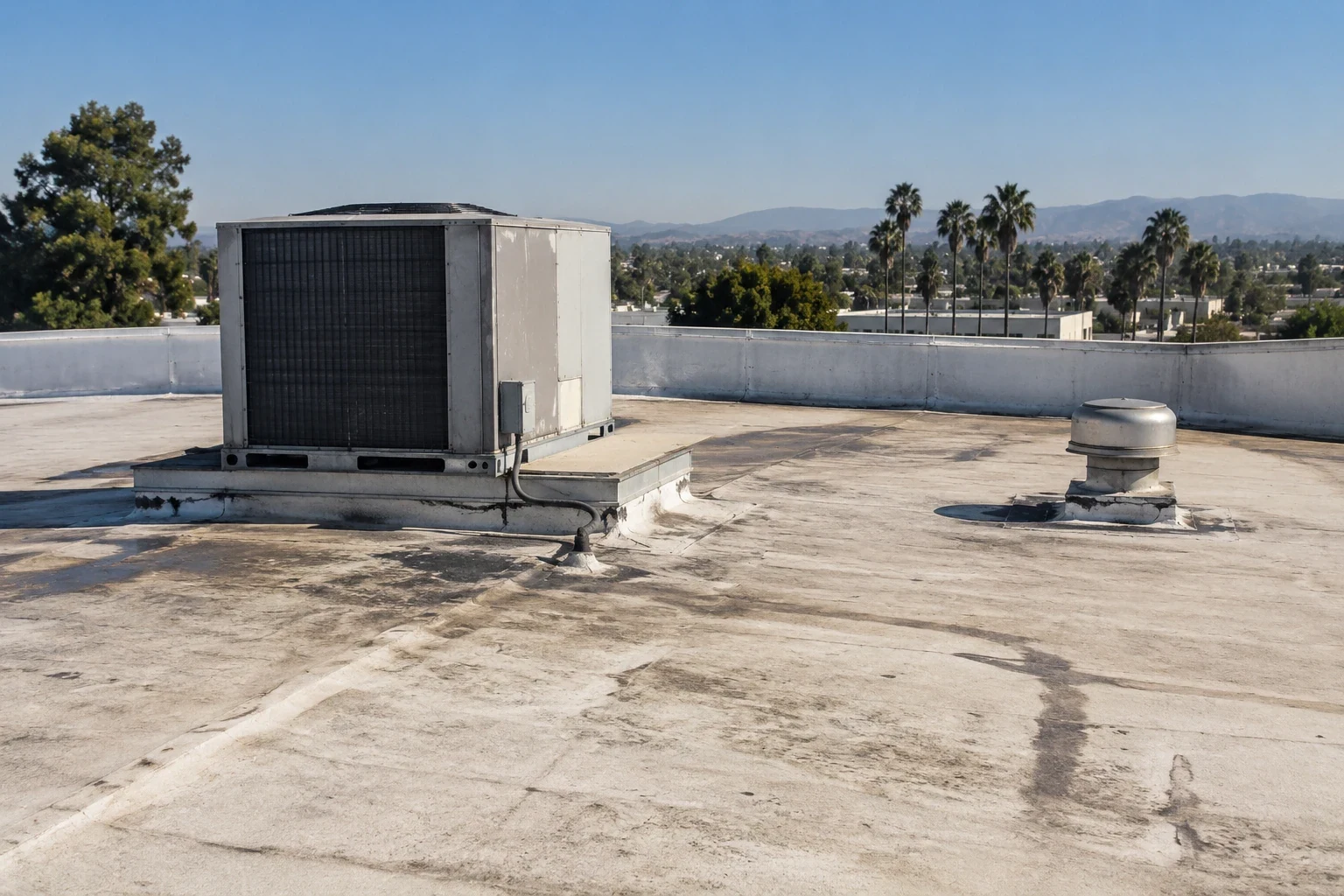
A new curb, pipe penetration or equipment support can introduce work at a roof that already has coverage. The cost driver is the interface between the alteration and the existing assembly, including preparation, compatible material and any inspection required by the agreement. We review the proposed detail before another trade cuts the roof. The contractor can put the required coordination into the submittal schedule and assign responsibility for both the equipment work and the roofing closure.
Roofing at equipment curbs and supports may require access that the new unit would otherwise obstruct. A detail review before installation can reveal a lifting dependency or a need for additional working clearance. Existing wet material is another possible cost outside a straightforward alteration allowance. We describe these conditions separately so that the contractor can price the known connection, carry a justified allowance for concealed work and avoid treating every later change as part of an undefined warranty repair.
Occupied sites need their own controls
A proposed healthcare roofing scope requires access instructions from its assigned operator before examination. For a project near NorthBay Health Medical Center in Fairfield, we obtain those instructions for the affected building. We review the available assembly information and the repair interface with those instructions in view. The contractor can coordinate occupied-space protection while the agreement is assessed, keeping the required roofing task separate from the issuer's coverage decision.
The Solano County Administrator office in Downtown Fairfield provides a downtown office reference where an owner may likewise need to coordinate access, document custody and responsibility for proposed alterations. Work in downtown Fairfield needs property specific staging and room protection. We identify who can provide the roof agreement and earlier closeout documents, then compare them with the current condition. The same review questions apply across different uses, but the repair recommendation follows each building's observed materials and operating constraints.
Notice belongs before material release
A waiting period for document review can affect the date on which permanent work starts, even where the repair itself is limited. We identify that dependency early and distinguish it from material lead time. The contractor can then reserve investigation time, arrange access and release only the work that has the necessary direction. An unresolved coverage question should not be disguised as spare schedule float that another trade can consume before the roof detail is ready.
Planning for roof expenditure can also account for work outside coverage, such as unrelated drainage correction or a wider replacement decision. We compare those items with the proposed repair rather than combining them into one warranty assumption. Temporary protection may need further attention during the review period. The contractor and owner should know its limits and the conditions that trigger another examination, allowing loss protection to continue while the permanent work and its financial responsibility are resolved.
Closeout preserves the next decision
Completion records should identify the location, material, preparation and scope of the repair, together with any required inspection or acknowledgment. Maintenance of the retained roof remains a separate obligation where the agreement requires it, and the record should show what was checked rather than merely state that a visit occurred. The contractor can collect these items before closeout while the work is still visible and the responsible parties can answer specific questions.
For a future buyer or construction team, a due diligence roof survey is easier to interpret when earlier alterations and warranty documents are available together. We keep the observed roof condition distinct from contractual coverage and identify any remaining uncertainty. This supports a better repair bid later: the next contractor can see where work happened and which documents govern it, while still examining the present assembly instead of assuming that a complete binder establishes current roof performance.
Commercial Roofing Questions
Can the repair be deducted from our bid because a warranty exists?
Confirm coverage and responsibility before reducing the allowance. We examine the defect and help assemble the documents needed for review, but the agreement and the responsible party govern the coverage decision. Carry unresolved investigation and protection separately so the bid does not depend on an unconfirmed payment.
What should be reviewed before a mechanical contractor adds a curb?
Obtain the existing warranty, assembly information and alteration requirements before the roof is cut. We review the proposed roofing interface and identify compatible preparation and access needs. The contractor should put any required inspection or acknowledgment into the submittal sequence, along with responsibility for closure.
Does urgent protection have to wait for every document?
Active loss requires a coordinated decision about temporary action and notice. We discuss the condition and available agreement information with the owner, preserve photographs and explain the proposed protection. The permanent repair and its coverage review can need additional documentation after the immediate exposure has been addressed.
Will a manufacturer name identify the applicable coverage?
Read the executed agreement rather than using the material brand as a substitute. Different agreements can address different obligations and conditions. We compare the available documents with the proposed repair and identify missing records before treating a product name as permission or coverage.
What belongs in closeout after a covered repair?
Collect location photographs, the completed scope, material information and any required acceptance record. We distinguish the repair from adjacent deferred conditions so later maintenance can identify the correct area. Keep the actual agreement with those records for the next alteration or ownership review.
Related Roofing Work
Send the agreement with the scope
Send the roof agreement, available closeout records and the proposed repair or alteration. We identify the roofing interfaces and review dependencies early so your allowance and schedule reflect the work that can actually proceed.