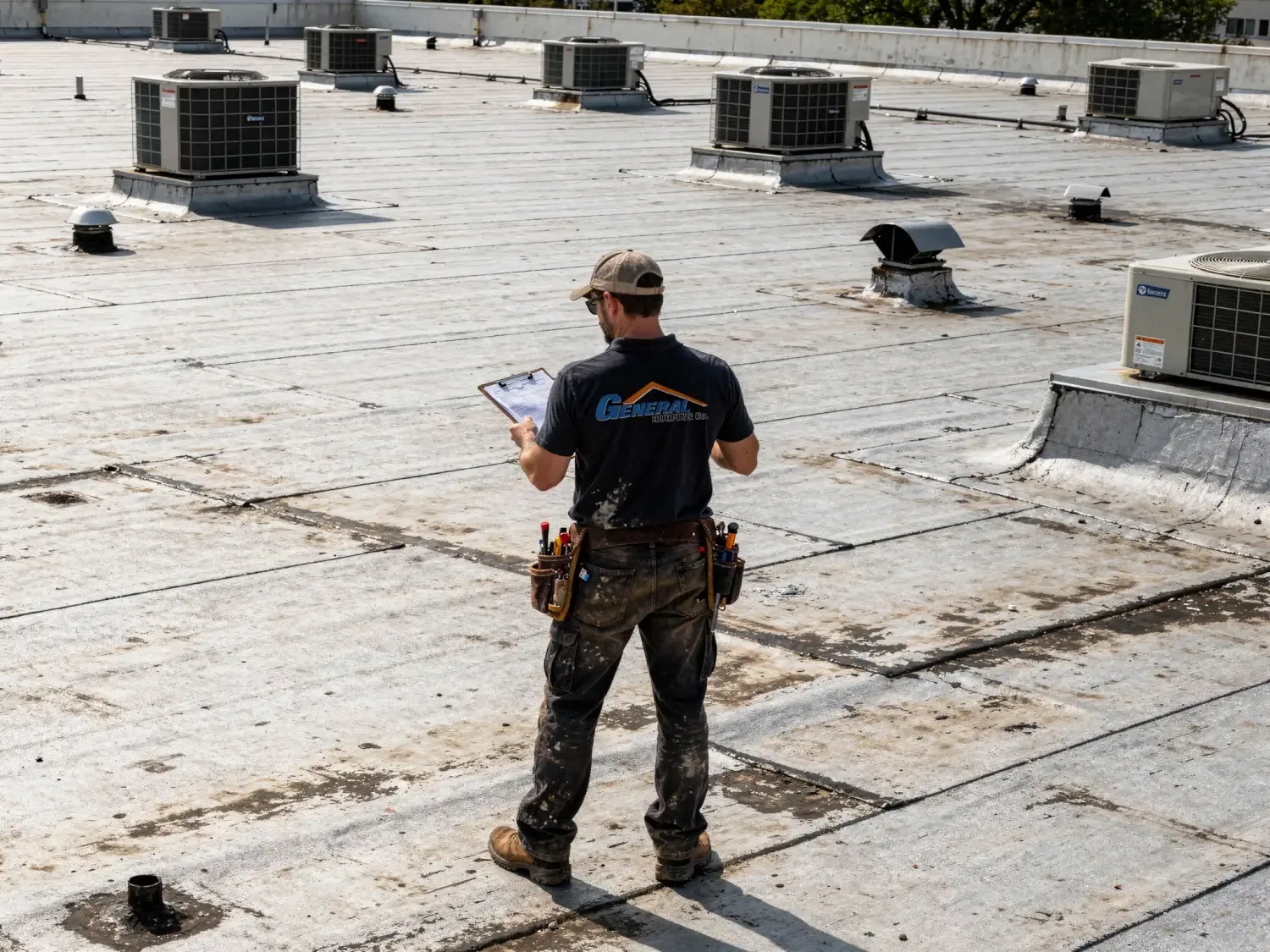

A roof allowance carried into next year can lose its meaning when the drawing, repair record and proposed quantity describe different areas. We provide commercial roof asset management in Fairfield, CA, so a general contractor can connect the owner's longer plan to the roof construction that must be priced now. The useful starting point is a marked roof area with an established condition, an intended action and the information still needed before that action becomes a firm scope.
Fairfield reached 117 F on September 5, 2022. That historical reading gives summer heat a place in the roofing sequence, including material handling and suitable application conditions. It does not establish the condition of a particular assembly. We keep the weather consideration beside the actual examination, so a local planning concern does not turn into an unsupported removal quantity.
Each area needs a clear identity
A building with several roof levels needs identifiers that remain useful after the immediate repair is finished. We mark the roof boundaries, access points and relevant equipment on a drawing, then connect the photographs and work descriptions to those locations. A later bidder should be able to find the same wall termination or drain without interpreting an unmarked photograph. This reduces time spent rebuilding the owner's record when another project reaches pricing.
Written findings tied to the examined roof areas distinguish visible defects from concealed conditions that still need investigation. We retain the inspection date and coverage limits with the findings. An earlier observation can inform a new scope, but its age and the work completed since then determine what needs another look before the general contractor carries it into a bid.
The scope identifies retained layers
A proposed recover needs more than the name of the top membrane. The retained layers, attachment and receiving surface affect both eligibility and price. We review available construction records, examine accessible details and identify any authorized openings needed to establish concealed layers. The resulting record keeps a confirmed material separate from an assumption that still requires investigation. An allowance can then identify the unresolved work rather than hide it inside a general roofing number.
A thermal survey used to target further investigation may help select roof areas for confirmation under suitable conditions. The record should include the screening limits and the evidence behind a wet-material finding. That distinction protects the bid from converting an image into a removal boundary that has not been established. Openings also require compatible closure and coordination with the owner's authorization.
The repair record preserves the decision
A paid repair invoice may identify an expenditure without showing which connection was corrected. We retain the location, repair method, receiving material and photographs needed to understand the completed work. A later complaint can then be compared with the repaired detail and adjoining construction. Repeated water entry does not establish that every earlier repair failed, and it should not automatically become a whole-roof replacement recommendation.
A defined correction to an examined roof defect belongs beside any remaining investigation. The owner and general contractor can see which tasks have been completed and which remain open. Where another trade changes a curb or adds equipment afterward, we record the resulting roof connection separately. That prevents an old repair description from being used to price a different construction condition.
Known scope differs from an allowance
A capital plan becomes easier to price when each roof area has a proposed intervention and a stated basis. We distinguish local repairs, further examination and a broader renewal assessment. Each requires different preparation and may reach the bid at a different time. The plan for later roof expenditure should preserve that difference so a provisional budget does not become an instruction to remove sound material.
Unresolved quantities need a clear treatment in the pricing discussion. An authorized investigation may establish them before bidding, while an allowance or agreed unit-price approach may address a defined remaining uncertainty. We explain the roofing work included in that treatment and the condition that would trigger it. This lets the general contractor coordinate the owner's authorization without presenting an estimated quantity as an observed fact.
Access belongs with the location
NorthBay Health Medical Center is in Fairfield. A healthcare project requires the actual facility contact to identify the affected spaces, permitted access and operational restrictions before roofing work is scheduled. We carry those project instructions into the roof-area record, rather than assume that a nearby healthcare address establishes requirements for another building. Material delivery, authorized investigation and daily protection can then be assigned to the relevant part of the scope.
For work near the NorthBay medical area, we need the building address and the owner's operating instructions with the drawings. The same discipline applies to a multi-building property: a restriction attached to one roof should remain attached to that roof. Accurate location records help avoid pricing an access arrangement that cannot serve the work being proposed.
The next bid needs usable records
A useful handoff includes the marked drawing, current findings, completed repairs and the decision still awaiting approval. We check those records against the proposed preparation and retained construction before pricing a larger intervention. Wall and curb flashing corrections need their own detail descriptions where their receiving surfaces differ from the field roof. A general description of membrane work should not conceal those separate connections.
We also identify the next update required after the project is finished. Record the final repair boundaries and any authorized changes to the scope, then retain the material information needed for later compatible work. The owner gains a record that can support maintenance and another bid. The general contractor gains a clearer closeout task and a reliable place to identify unfinished investigation.
An asset record for Green Valley Corporate Park, should identify the building, inspection date and open work items rather than assign park-wide roof conditions.
Commercial Roofing Questions
Can an existing roof schedule be used for a new bid?
Start by matching each scheduled area to the current drawing and its latest examination. We review completed work and the age of the findings, then identify areas that need another visit. A schedule can organize the estimate, but outdated condition entries need confirmation before they support a removal or repair quantity.
How should an unconfirmed wet area appear in the estimate?
Carry the investigation separately until the material condition and boundary are established. We describe the authorized examination, its closure and any access coordination. Where a defined allowance is appropriate, it should explain the work covered and the condition that changes the quantity, so the general contractor can present a clear authorization decision.
What makes a repair record useful after closeout?
Include the marked location, preparation, compatible materials and photographs of the completed connection. We retain any remaining investigation beside the repair description. Those details help distinguish a later equipment change or adjoining defect from the earlier correction, which matters when the owner asks for the next roofing number.
Does one building restriction apply across the whole property?
Confirm the operating instructions for each affected roof and space. We attach access and protection requirements to their actual locations, then use that information to plan the work. A restriction from one building should not be carried into another bid without checking that it applies there.
When should the roof-area record be updated?
Update it when an examination changes a finding, a repair is completed or authorized work alters the assembly. We recommend retaining the dated change with the drawing and material information. The next estimate can then use the new construction record while recognizing any areas that still have limited inspection coverage.
Related Roofing Work
Send the roof drawing and the next pricing question
Share the marked areas, available repair records and proposed work dates. We will identify the roofing information needed to price the scope and coordinate the next examination.