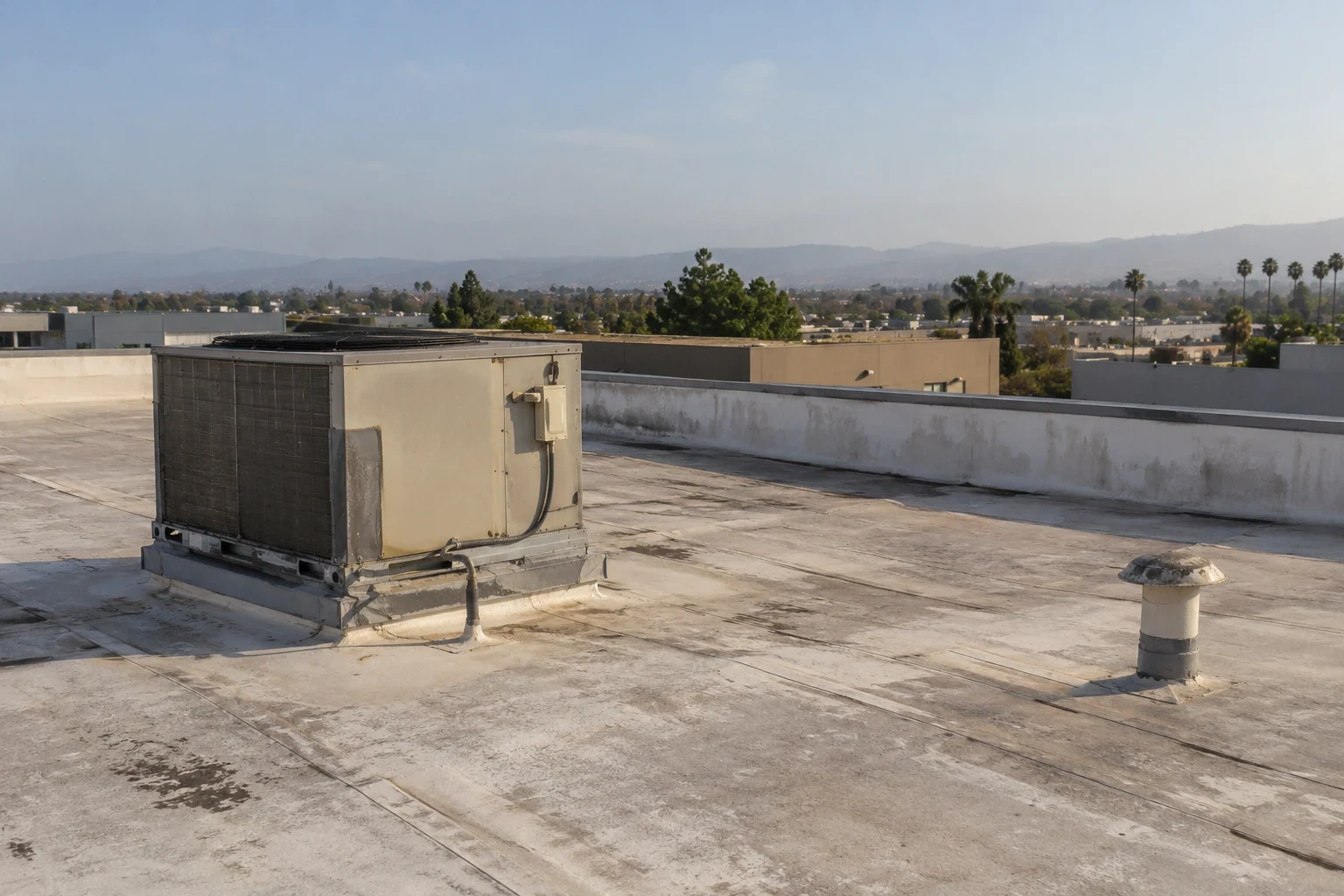

Roofing scopes at separate addresses may share a purchasing discussion while requiring different investigation and installation dates. We manage multi-site roof programs from Fairfield, CA, by keeping each building's construction decision clear within the wider work sequence. A general contractor needs to know which areas are ready for pricing, which still require examination and which operating restrictions affect delivery. A common program should make those differences visible before a combined bid is presented.
The Solano County Government Center in Downtown Fairfield and NorthBay Health Medical Center represent distinct local operating settings. For work at either kind of property, the actual operator must establish access and protection instructions. We coordinate those project requirements with the roof scope at the relevant address, rather than carry one building's arrangement into another building's schedule.
Findings belong with their address
A repair boundary should remain connected to its building and marked roof area throughout estimating and closeout. We establish a distinct location record for each examined property, identifying the current roof information and the decision it supports. Similar interior symptoms can involve different membranes, curbs or concealed conditions. The program needs those differences retained, so an effective correction at one address does not become an assumed method for another assembly.
Condition reporting for each examined location identifies the findings and the coverage limits. We separate operator-reported symptoms from the construction observed during the visit. A general contractor can then see which proposed tasks are supported and which require further authorization or examination before a firm quantity is carried into the combined pricing discussion.
Unresolved decisions affect the sequence
An active leak and a planned renewal may need different actions even when they belong to the same owner's program. We identify immediate protection separately from permanent repair and broader replacement assessment. The general contractor can schedule the investigation or authorization that each action requires. Combining the properties for administration should not delay a feasible holding measure while another address waits for a capital decision.
Loss-reduction work at an active entry point still requires suitable access and material conditions. We explain the discovered defect, the purpose of any temporary covering and the condition that remains unresolved. That description belongs with its own roof record. The program can then retain urgency where needed without treating temporary protection as a completed diagnosis of the wider assembly.
Construction determines purchasing groups
A common membrane name does not establish that different properties need identical preparation or attachment. We examine the retained layers, receiving surfaces and connection details at the relevant addresses before proposing a purchasing group. Materials may be coordinated where the identified assemblies and accepted details support it. That coordination needs to follow the construction decision, rather than determine it through an assumed economy in ordering.
For removal and replacement across selected roof areas, the bid must retain each area's transitions, protection and support requirements. Submittal decisions and current product availability affect the purchasing sequence. We identify these dependencies so the general contractor can coordinate deliveries without confusing a shared material order with a uniform installation method.
Access instructions apply to specific work
A delivery route suitable for an office property may be unsuitable for an occupied healthcare building. We obtain the relevant operator's instructions before assigning the material lifting path or planned access period. The program record identifies which property the restriction serves and which roofing task it affects. That lets the general contractor coordinate the separate work periods while keeping the underlying construction requirements intact.
For properties near the medical district in Fairfield, the responsible facility contact must identify the affected spaces and protection requirements. Other addresses need their own instructions. We establish the work-area exposure and daily closure plan with those directions, so a scheduling convenience does not leave an opened assembly without an appropriate stopping point.
Each quantity retains its own basis
A combined roofing total can conceal where one location still has an unresolved removal boundary. We retain the defined scope and remaining uncertainty for each roof area, identifying further investigation or a stated allowance treatment where appropriate. An owner can then understand which decision changes that part of the program. A quantity established at one building should not be applied to another merely because the roofs appear similar from above.
Planning later expenditure by the proposed intervention helps distinguish repairs from renewal work still under assessment. We explain what evidence supports the action and what must happen before pricing becomes firm. This gives the general contractor a workable basis for sequencing approvals instead of presenting every address as equally ready for installation.
Individual roof closeout completes the program
A program completion date needs the individual roofing tasks behind it. We record the installed repair boundaries and authorized changes at each address, retaining material information and photographs that can support later compatible work. A completed phase should identify the weather-resistant termination left for the next phase. Any unresolved investigation remains a separate item, with its location and the decision still required.
The ongoing construction and repair record receives those completed findings. The owner can use it to plan the next examination, while the general contractor can distinguish finished scope from an area awaiting authorization. Later equipment changes should also remain attached to their own roof locations. Accurate individual closeout makes a wider program understandable after the combined purchasing and installation discussion is over.
A multi-site program benefits from a common record format, but the underlying observations should remain specific to each building. Track site contact, assembly, last inspection, known repairs, access restrictions and open investigations in separate entries. Set common severity definitions so facilities teams can prioritize without treating a score as an engineering conclusion. The owner can then group compatible procurement or mobilization while retaining each roof's scope, evidence and approval history. When a new site joins, record its baseline before comparing it with properties that have a different inspection date or method.
Commercial Roofing Questions
Can several addresses be priced before every roof is inspected?
An early program budget can retain different levels of certainty when those differences are stated. We recommend identifying the examined scope at each address and the investigation still required elsewhere. A firm construction proposal needs the relevant material, quantity and access information, so a combined total should preserve unresolved decisions rather than conceal them.
Should one repair method be used wherever the symptoms match?
Examine the roof construction and defect at each location before selecting the correction. Similar drip patterns can involve different materials or transitions. We define the receiving surface and preparation for the actual assembly, allowing coordinated purchasing only where the identified construction supports it.
How do urgent repairs fit a longer replacement program?
Keep immediate protection and permanent correction distinct from the later renewal decision. We explain the active defect and feasible response at the affected address while retaining any remaining investigation. The wider approval process can then continue without assuming that a temporary measure has settled the final assembly scope.
What information belongs with a shared delivery plan?
Identify the address, authorized route, accepted materials and roofing task served by each delivery. We review the operator instructions and current purchasing information for those tasks. A common order may simplify coordination, but the unloading and lifting arrangement still has to work at the building receiving it.
Which closeout items should remain separate by property?
Retain marked repair boundaries, installed materials and authorized scope changes with the relevant roof drawing. We also identify incomplete investigation or later phases at that address. This gives the general contractor and owner a clear account of completed work without having to infer individual status from a program completion date.
Related Roofing Work
Share the addresses and the roofing decisions at each one
Send the available drawings, reported concerns and proposed work periods for the properties involved. We will identify the examinations and scope decisions needed for coordinated roofing bids.