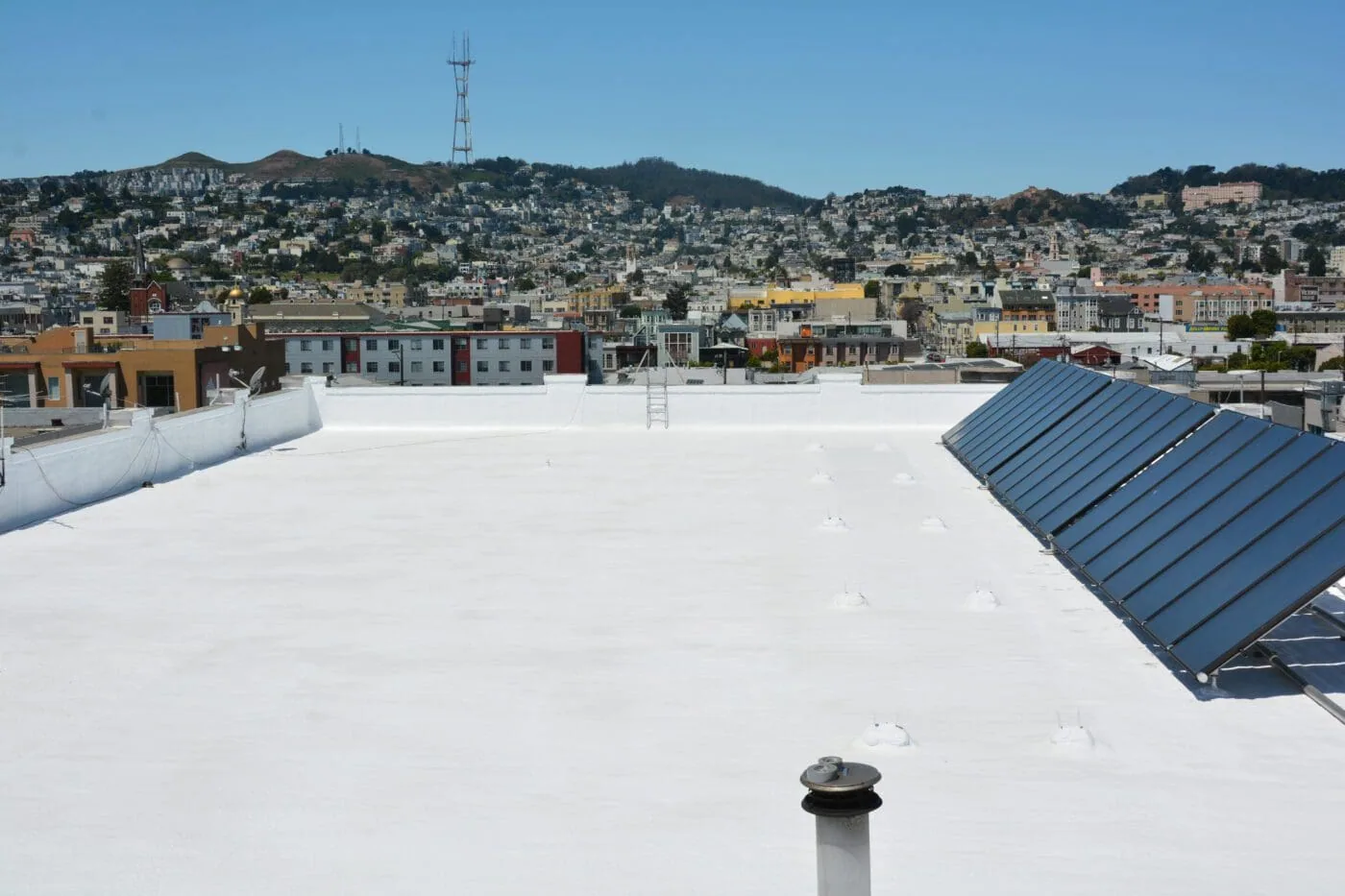

A spray foam roofing bid in Fairfield, CA needs the substrate and protective coating defined along with the foam application. Preparation, thickness requirements and detail reconstruction can change labor independently of field area. We inspect the existing roof and review the specified assembly, then describe the work needed before spraying begins. The general contractor receives a sequence that accounts for suitable application conditions and protection rather than treating foam delivery as readiness to start.
The Solano County Administrator's office is a local institutional reference in Downtown Fairfield. The healthcare identity of NorthBay Health Medical Center places it in Fairfield in the same city. Their addresses ground the discussion of occupied-property coordination without describing their roof assemblies. Actual spray foam work needs the assigned building's substrate, equipment exposure and protection requirements established before removal or surface preparation is scheduled.
Confirm substrate suitability
Sprayed foam needs a prepared base suitable for the specified application. We examine moisture, contamination and material condition before deciding what can remain. Unsound layers or continuing leaks can require correction rather than concealment beneath foam. The scope states those repairs and the investigation needed where the existing assembly remains uncertain, so the GC does not compare a uniform application allowance with a bid that includes substantial substrate work.
Our assessment before foam roof application identifies accessible findings and preparation limits. At an assignment in downtown Fairfield, the actual property's access and adjacent exposure need coordination before testing or cleaning proceeds. We review those requirements with the GC early. A retained surface must be established as suitable for the proposed construction; a cleaner appearance alone does not settle adhesion, hidden moisture or the condition of layers that will remain enclosed.
Define thickness and drainage
Foam thickness follows the project design and selected assembly rather than a universal amount assigned to every roof. Geometry and drainage details can affect the application and the connection to curbs, edges and outlets. We review those interfaces before pricing, identifying where existing components require adjustment or reconstruction. A material quantity without a stated design and detail basis can leave the GC with an incomplete construction scope.
Our coordination at roof drainage outlets connects the proposed surface to the actual discharge route. A comparison with a TPO roofing option should show the full base, attachment and details under each proposal. Foam cannot be treated as an automatic correction for every slope or structural question. We identify design or other trade dependencies so the GC resolves them before the application sequence reaches an outlet that remains unsuitable for the new geometry.
Include the protective surface
Roofing foam requires the specified protective coating or surfacing as part of the assembly. Exposed foam and a completed weather surface are different completion stages. We review the compatible coating, application requirements and detail treatment together, including the time and conditions needed before the next stage proceeds. The bid should show those tasks so a foam quantity is not mistaken for the entire finished system.
With a specified silicone protective coating, the product requirements and foam condition govern preparation and application. We assess the actual proposed construction rather than assume any coating can be substituted without changing the sequence. Our roof coating preparation work can address later repairs where the existing assembly supports restoration. The GC should resolve compatibility and curing requirements early, allowing the application stages to be scheduled as a complete roof rather than a field left waiting for an undefined protective layer.
Control the application area
Spray application needs attention to adjacent property, equipment and the actual operating conditions. We establish the protection and permitted work boundary with the building contact, following the selected system requirements and site safety arrangements. Conditions can limit application, so the daily sequence needs a defined stopping point and a way to protect prepared areas. The GC should carry those controls in the plan rather than assume all accessible roof area can be sprayed continuously.
For foam roof work above office areas, entrances, ventilation coordination and equipment access can affect the application boundary. The assigned property's use is confirmed before those arrangements are finalized. Substrate moisture and temperature are assessed at the work area, not inferred from the day being rain-free. We explain readiness and any hold so the GC can coordinate adjacent work without assigning a fixed production rate that ignores the actual system and application conditions.
Keep the assembly inspectable
A protective coating needs inspection as the roof is used, especially around traffic, equipment and repaired details. We record the completed construction and identify any condition outside the agreed scope. The operator needs access information that helps service personnel avoid damaging the surface, while later maintenance should distinguish a coating defect from damage within the foam or supporting roof. That diagnosis influences the depth and method of repair.
Urgent support for roof problems can be requested overnight and during weekend or holiday periods, with timing confirmed for access and conditions. A temporary measure does not settle whether damaged foam or hidden layers need removal. We investigate the affected assembly before selecting a permanent correction. The GC can use the closeout and current findings to coordinate repair without assuming another coating pass resolves every symptom, keeping the weather surface and the construction beneath it part of the same reviewable decision.
Foam thickness and surface preparation both affect whether a restoration can meet its intended service. The proposal should map the target thickness and note where drains, curbs or uneven substrate require additional build-up or a different correction. Before coating, confirm that the foam is dry, sound and free of exposed damaged cells; repairs should restore a stable surface before the protective coating is applied. Record coating coverage and termination details by roof zone, and identify any area held out for cure, weather or a separate trade so it is not represented as completed.
Commercial Roofing Questions
Does the foam quantity include a completed roof?
Include the specified protective coating or surfacing and the details needed for the assembly. Foam application is one construction stage, not the whole scope. We recommend defining preparation and the following protective work so the GC compares complete systems and schedules every necessary closure task.
Can foam be applied over wet insulation?
Investigate the retained layers and correct unsound conditions before selecting the application. A new surface does not remove trapped moisture or restore damaged material beneath it. We identify selective removal and further confirmation where necessary, keeping the substrate condition explicit in the bid.
Will foam automatically correct every drainage problem?
Review the design, geometry and outlet condition for the actual roof. Thickness and detail changes need a defined basis, and some questions require another trade or design evaluation. We recommend resolving those dependencies before application rather than assigning foam an unexamined slope correction task.
What controls daily spray production?
The prepared substrate, material requirements and adjacent exposure affect readiness. Protection and operating conditions can limit the permitted area. We coordinate those controls with the GC and define a stopping boundary so the schedule reflects the actual application task instead of an assumed uninterrupted field rate.
How should a later damaged area be repaired?
Investigate whether the defect lies in the coating, foam or underlying assembly. The repair depth and preparation follow that condition. We recommend recording service traffic and previous work, then defining the permanent correction rather than assuming another surface coat addresses damage throughout the layers.
Related Roofing Work
Send the roof scope early
Send the Fairfield foam assembly, thickness design and adjacent protection requirements early. We will define substrate and coating stages so the bid and schedule include a completed roofing system.