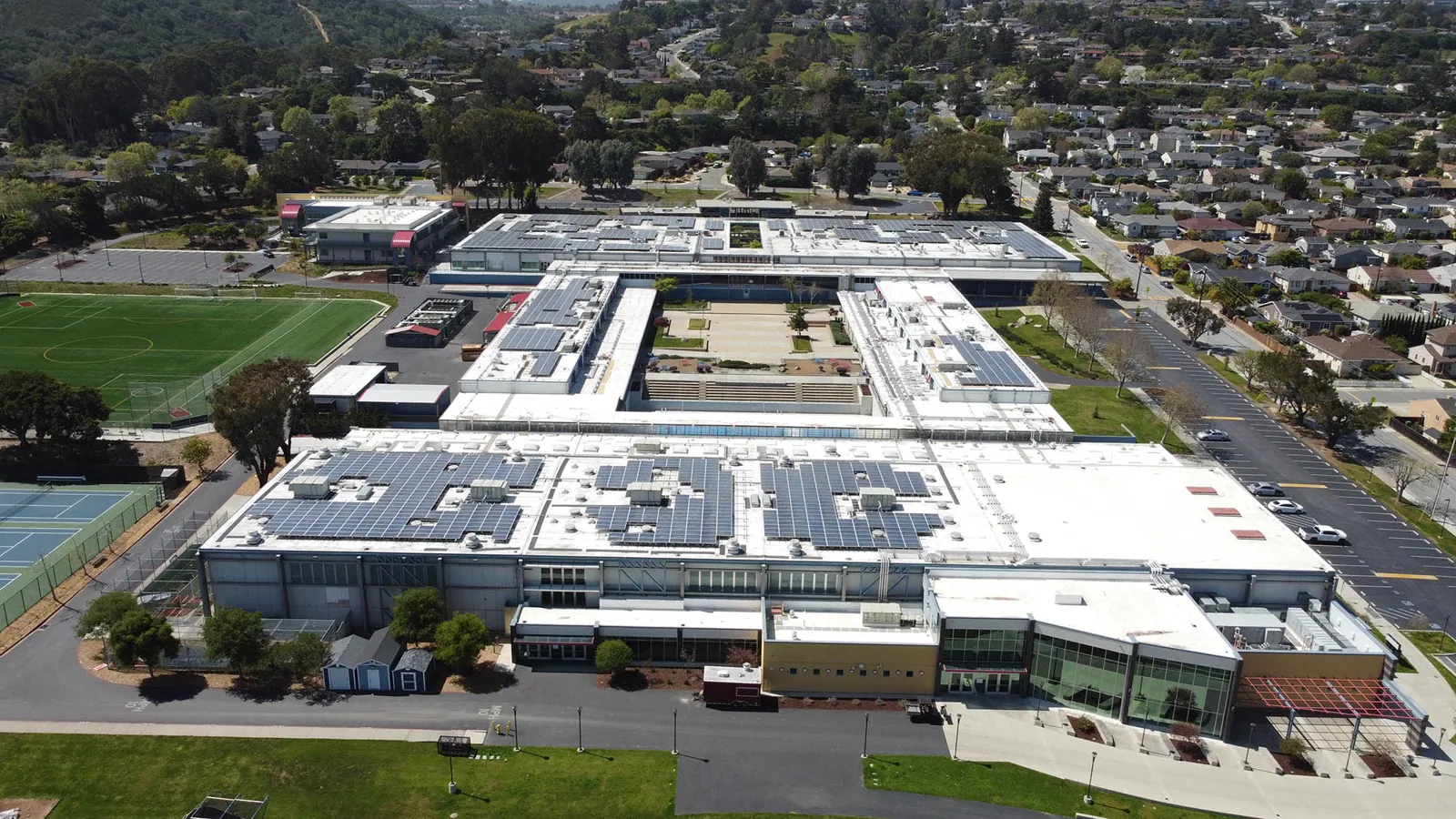

A school district roofing allowance in Fairfield, CA needs campus access decisions beside its measured repair quantity. A leak above a classroom may require protection immediately while moisture extent and the permanent detail are investigated. We inspect commercial membrane and metal assemblies, prepare written findings and develop repair, restoration or replacement scopes. The bid describes the supporting construction and practical opening limits so the GC can coordinate roofing with the actual campus arrangement instead of treating field area as the entire project.
Fairfield-Suisun Unified School District is a local public-school organization serving the area. Solano Community College's main campus is along Suisun Valley Road in Fairfield. These separate educational identities place the local discussion without establishing a roof inventory or an assigned work period. For a school district project, we confirm the subject building, responsible contact and relevant access instructions before the GC makes an installation commitment from a material delivery date alone.
Campus instructions affect the sequence
Student routes, occupied rooms and equipment access can influence an assigned school's practical work boundary. We confirm relevant instructions with the district contact rather than assume a standard closure period. The GC should identify who authorizes changes and which interior or equipment personnel must participate. Those responsibilities belong in planning before removal, so an opened roof does not wait while a room restriction or unit isolation decision is still unresolved.
Our roof sequencing for protected school interiors defines temporary closure and a secure stopping point. An assignment near Vanden Road needs its own permission and actual operating arrangement. We connect the protected handling route to the construction boundary, including tools and disposal. The GC coordinating the school roof scope can then price practical protection alongside the roof work instead of assuming a short repair has no effect on the people or spaces beneath it.
Moisture evidence sets the quantity basis
Water can spread within insulation beyond a visible membrane opening. We investigate suspect areas and explain where survey observations need confirmation against the assembly. A thermal difference can direct checks where conditions suit the method, but equipment and construction changes affect interpretation. The GC should resolve the distinction between evidence and measured removal before fixing quantities so the bid does not treat every interpreted area as confirmed reconstruction.
Our moisture investigation ahead of school roof pricing identifies accessible findings and remaining limits. For roof work at a school assignment, room coordination can also affect confirmation access. We measure established damage by the supporting layer and removal depth needed. Concealed uncertainty receives a defined component and approval route, allowing additional removal to follow photographed findings. That gives the GC a useful allowance while keeping investigation and permanent quantity decisions visible as separate tasks.
The roof connection includes its support
A flashing split may need replacement insulation or cover board before the new membrane can connect to sound material. We examine support and attachment around the opening rather than price the exterior outline alone. Two repairs with equal surface areas can involve different disposal and reconstruction below them. The GC should compare those tasks before selecting a repair allowance, with each option describing a useful installed detail rather than only a purchased sheet.
Our replacement of damaged layers beneath school roof details prepares the local base where surrounding construction remains repairable. Through findings that explain a district roof scope, we relate photographs to proposed limits and any further investigation. A broader recommendation follows distributed defects and repairability, not the educational identity. We explain that basis so the district and GC can distinguish a permanent localized correction from wider work that requires a different procurement and construction sequence.
Procurement follows interface decisions
A field material order is incomplete when curbs, outlets and edge components still need compatible details. We inspect those interfaces and identify support, geometry and equipment responsibilities before procurement where practical. Substitution may change accessories and preparation along with purchase cost. The GC should review those effects early so delivered material does not wait beside an unresolved connection while the roof opening needs continuing protection.
Work for public facility roofing assignments also benefits from a clear construction basis and stated responsibility for separate tasks. We assess moisture and temperature directly at the joining or application zone before proceeding. Shaded details and retained wet layers can differ from the exposed field, so readiness comes from the actual condition and selected material requirements. A hold is explained with secure protection and the remaining preparation, allowing adjacent trades to coordinate against a defined dependency rather than an unexplained roofing delay.
Closeout supports the next school decision
The completed record locates corrected details and distinguishes retained conditions from separate equipment or interior work. We provide practical service access guidance so later unit visits can avoid damaging the new connection. The GC coordinates finishes through personnel assessing moisture and safety below. A dry classroom supplies useful protection information, but it does not establish readiness of every affected ceiling or concealed layer without the appropriate assessment.
Urgent roof assistance remains available through school holidays, weekends and overnight periods, with response timing confirmed for the address and access. Temporary protection can reduce exposure while the permanent correction or materials are prepared. Preventive recommendations follow current drainage, traffic and defect observations on the assigned roof. A later symptom receives fresh investigation rather than automatically changing the previous repair. The district can use the location record to understand that earlier boundary while the GC prices the next task against the construction actually found.
District work should be grouped by campus only after the facilities team confirms calendars, access and the rooms below each roof. A summer break may still include maintenance, meal service or community programs that affect staging. The roof plan should identify occupied areas, required interior protection, noise limits and the person who can approve a change. Keep urgent leak protection separate from the larger capital scope, and document the release and closeout at each school so one campus's schedule is not assumed to fit another.
Commercial Roofing Questions
What should the GC resolve before a school roof opening?
Establish district access authority, protected routes, affected-room requirements and any unit isolation task. Those arrangements determine whether the work boundary is ready. We recommend confirming them with the material and supporting trade sequence so removal begins over a prepared area with a usable stopping arrangement.
Can a thermal school roof result establish final removal immediately?
Interpret the pattern against equipment and known construction, then confirm uncertainty through suitable checks. The observation can guide investigation without fixing every supporting quantity. We explain the limits so the GC distinguishes established replacement work from a controlled concealed allowance in the bid.
How should a district compare repairs with similar patch outlines?
Review removal depth, replacement layers, attachment and the tie-in to retained material. Equal field areas can conceal different construction underneath. We identify those tasks before pricing so the GC and district compare permanent connections that address the actual damage rather than only exterior dimensions.
Which interface decisions should precede material approval?
Resolve compatible accessories, supporting preparation and separate equipment responsibility at penetrations or edges. A sheet selection alone cannot finish an undefined boundary. We recommend including those decisions in the scope review so procurement supports the complete assembly and the GC can coordinate necessary fabrication early.
What should the district keep after a permanent correction?
Retain the corrected locations, construction limits and service access guidance with separate remaining tasks identified. That supports maintenance and later investigation. We recommend checking a new symptom against current findings and the previous boundary before extending removal, avoiding an automatic assumption that nearby water follows the earlier defect.
Related Roofing Work
Send the roof scope early
Send the school district drawings, campus requirements and observed roof conditions early. We will define investigation and closure so the GC carries a practical permanent scope and installation sequence.