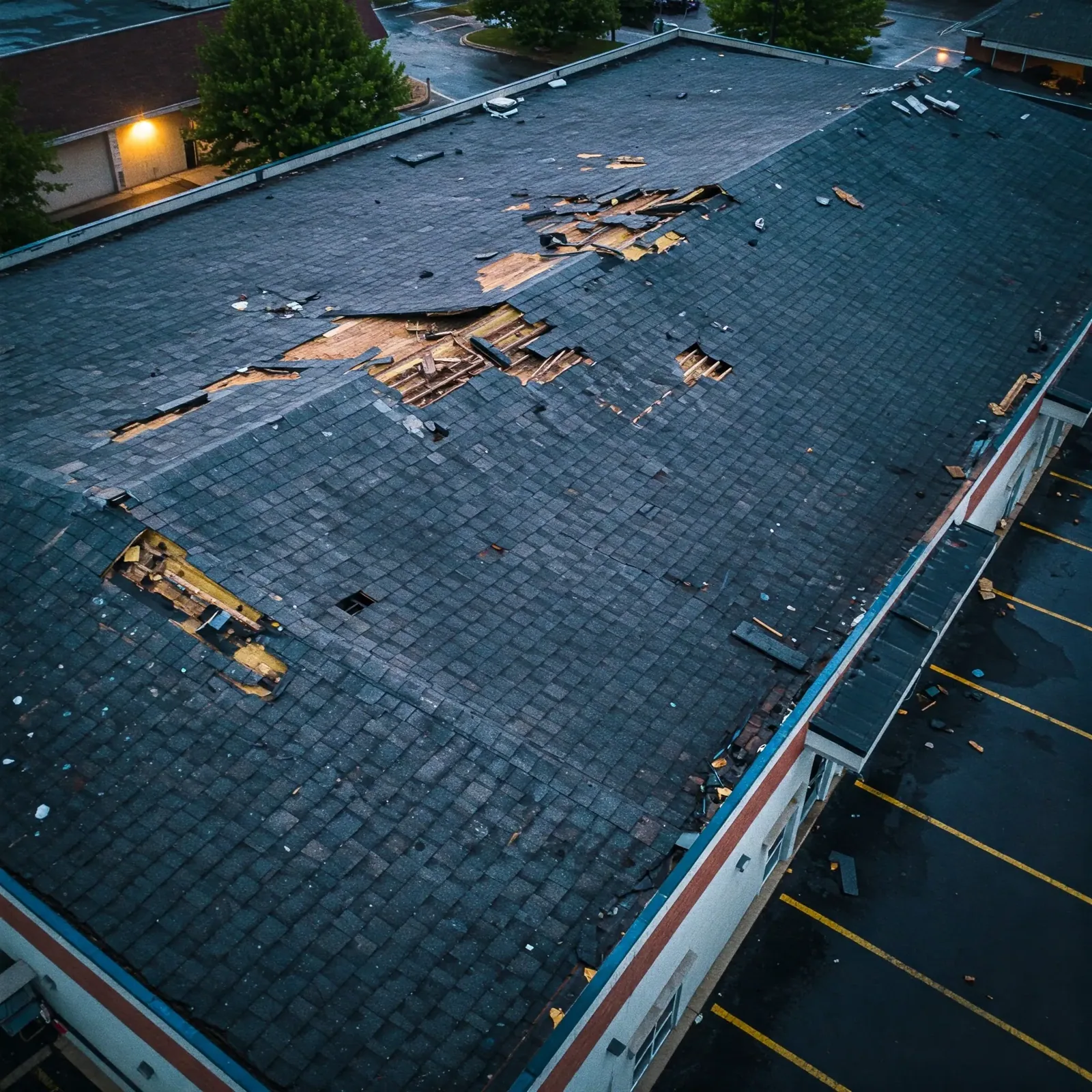

An insurance-related roofing bid in Fairfield, CA needs construction findings that remain understandable when the project moves between reviewers. A roof opening, a temporary patch and interior finish damage are related issues, but each has a different scope and completion point. We inspect the roof, document what can be observed and describe the repair needed. The general contractor can then build a roofing line item with stated removal limits and coordinate the separate work below.
The historical LNU Lightning Complex affected Solano County among other counties in 2020. That regional incident provides context without establishing damage at the subject property. Fairfield also recorded 117 F on September 5, 2022, a local heat event that can inform discussion of material exposure without settling the cause of a specific defect. Our construction record separates those histories from the roof observations, and claim coverage or settlement remains a decision for the insurer and the relevant policy process.
NorthBay Health Medical Center provides a local healthcare reference, where roof exposure and interior restoration remain separate project questions. A clear division between the roof exposure and room restoration gives the GC a practical basis for scheduling inspections, protection and final finishes at the assigned building.
Record the observed condition
A condition description is useful when it identifies the detail, location and extent that were actually inspected. We document open laps, displaced components, damaged flashing and visible moisture concerns, with photographs connected to roof references. Where concealed layers remain uncertain, the report states the additional investigation required. A label such as storm damage does not replace those observations or establish the entire removal boundary.
Our roof inspection for a claim-related scope supports the construction decision with hands-on findings. The GC should supply previous repair information, available roof drawings and the reported leak timing before the visit. For a project in downtown Fairfield, access and affected interior rooms are still confirmed at the actual address. A complete account of inspection limits helps a later reviewer understand why some quantities are settled while others remain subject to opening the assembly.
Keep protection distinct
A temporary repair addresses immediate exposure, while the permanent work restores the failed connection and any unsound layers beneath it. We describe both tasks so the record does not imply that the first visit completed the entire repair. Conditions and access can limit the immediate work, and a later investigation may reveal moisture beyond the opening. Those findings belong in the permanent scope rather than being hidden within a broad emergency invoice description.
Our urgent roof protection work is available at night and throughout weekends and holidays, with the timing confirmed for the property. The GC can coordinate interior restrictions using our explanation of the remaining exposure. Photographs taken before and after the temporary task help show what changed, but the record also needs a written description of the work and its limits. That combination makes the sequence understandable without treating a dry room as proof that the roof assembly has been fully restored.
Support the removal quantity
The permanent bid should explain why material needs removal and how the boundary was established. An open flashing can involve sound surrounding insulation, while another apparently small entry can leave a broader wet area. We investigate the assembly and identify uncertainty where the construction prevents a complete check. Pricing a uniform replacement area without that basis can make later changes difficult to review, even when the additional work is necessary. A reviewable estimate should keep confirmed construction separate from a conditional amount for concealed layers. For each line, identify the roof zone, measured quantity, preparation, product family and receiving detail. If a supplement becomes necessary after opening, retain the original boundary and show the newly observed condition beside the proposed change. The owner can compare that evidence with the contractor’s scope and the carrier’s request without blending roof work with interior finishes or equipment service. We can organize the construction record and answer questions about the roofing method; coverage, causation and payment remain with the applicable policy participants.
With written roof findings for repair review, we connect removal recommendations to the inspected condition. A moisture survey suited to the assembly may help direct investigation, but thermal patterns need interpretation and appropriate confirmation. The GC can then distinguish a measured repair area from an allowance for concealed damage. Each allowance should describe the assumed condition and how additional findings will be documented before the work expands.
Separate the trade scopes
Roofing and interior restoration can have different readiness conditions. The roof entry may be protected while ceiling materials remain wet or electrical equipment requires assessment. We provide the roofing status to the GC, who can coordinate the appropriate building trades and interior restrictions. New finishes should follow the actual repair and moisture condition, rather than a schedule based only on the disappearance of visible water.
For coordination on insurance restoration projects, a clear division of tasks helps avoid overlapping quantities and missing work. Roofing removal, insulation replacement, equipment isolation and interior repair need descriptions that show where each trade's responsibility begins. We can explain the construction sequence and practical access needs, while the insurer evaluates policy coverage. Documentation supports review; approval of a material, quantity or invoice remains with the relevant reviewer.
Revise the record after opening
Hidden damage may change a repair after removal begins. We photograph the newly exposed condition, relate it to the original roof reference and explain the additional work needed before proceeding beyond the agreed scope. A changed quantity should be accompanied by the construction reason for the change, not merely a larger number. This gives the GC a reviewable basis for the project approval process and the later closeout record.
Our permanent storm-related roof repair follows the inspected findings and authorized work. Material compatibility, attachment, access and procurement influence the cost and timing regardless of the claim status. We recommend resolving those requirements early so the construction schedule can proceed from a defined scope when authorization is received. The final record distinguishes completed permanent work, temporary measures and remaining conditions, allowing the GC and owner to understand exactly what the roofing assignment accomplished.
The Solano County Government Center is an infill civic campus in Downtown Fairfield, near Main Street and the multimodal transportation center. A claim review for another downtown building remains tied to its own roof findings and policy documents.
Commercial Roofing Questions
Can you state whether a roof repair is covered?
Coverage belongs to the insurer under the policy and claim process. We provide roof observations, repair recommendations and construction documentation for review. The GC should keep those findings distinct from a payment assumption, so procurement and scheduling decisions are made against the actual authorization received.
What makes the roof photographs useful to another reviewer?
Give each photograph a location and a description of the condition it shows. The report should explain the inspected boundary and connect the image to proposed work. We recommend retaining before-and-after records for temporary tasks and adding concealed findings when removal reveals a condition that was not initially visible.
Should the entire wet ceiling area become a roof removal quantity?
Investigate the roof assembly before making that conversion. Water can travel before reaching the ceiling, and roof moisture can spread differently from interior damage. We recommend establishing roofing removal through suitable inspection and confirmation, with interior quantities assessed separately by the responsible trades.
How should a new concealed condition be submitted?
Document its location, extent and effect on the proposed repair, then describe the additional construction needed. We can supply photographs and an explanation tied to the original scope. That makes the requested change understandable through the project authorization procedure before work expands beyond the agreed boundary.
Can construction planning proceed while the claim is reviewed?
Submittals, access planning and investigation can often be developed within the authorized preparation scope. Procurement or construction commitments need the actual owner approval. We recommend separating those stages so the GC can reduce avoidable delay without treating a pending claim as permission to begin the whole repair.
Related Roofing Work
Send the roof scope early
Send the Fairfield roof information, inspection request and authorized preparation scope. We will document the construction findings and repair sequence so the roofing bid can be reviewed with clear limits.