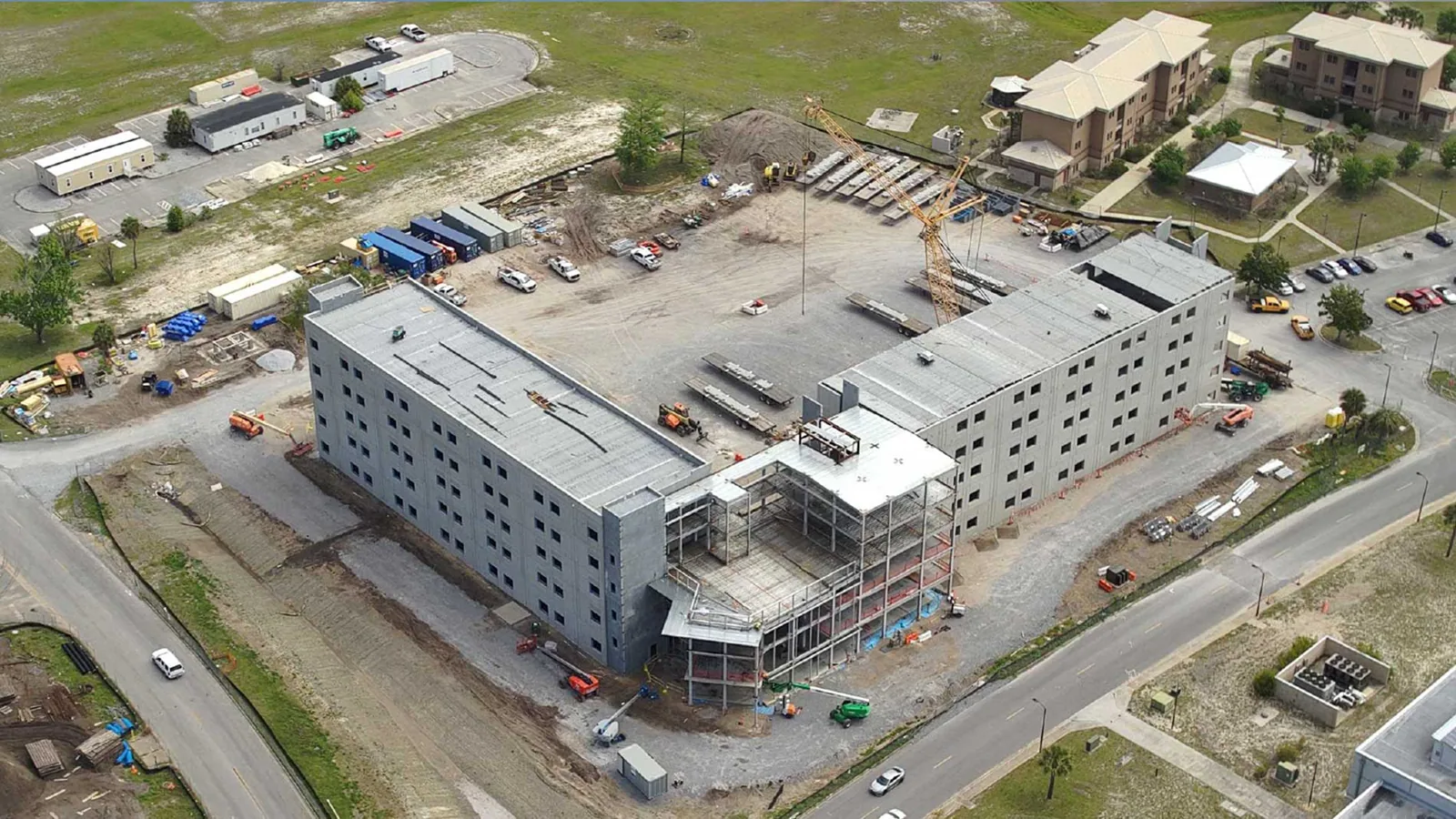

Controlled access can consume roofing schedule time before material installation starts. Military installation roofing in Fairfield, CA, begins by defining the authorized assignment, required project review and access release for the specific structure. We assess the roofing work and identify coordination that must precede the proposed opening. The pricing request needs the assigned facility, contract requirements and roofing section, including the actual entry and closure tasks. That lets the contractor coordinate the released building with a defined construction scope.
Travis Air Force Base provides a local military reference through its historical account of a C-17 hangar opening on January 15, 2010, published later that month. A roofing assignment there needs the actual facility, responsible project contact and current work requirements before its assembly or access is assessed. Include those details with the proposed task. The roofing sequence then follows the released structure and operation, including temporary closure and equipment coordination needed for the assigned task.
The assignment controls the route
Entry arrangements can add lead time through the facility’s actual authorization and coordination process. We identify the information needed for the assigned visit and discuss any constraints on people, vehicles or material movement. The responsible project contact releases the work area. Put those requirements beside the construction schedule instead of treating site entry as incidental mobilization. The contractor can then distinguish the time needed to establish access from the time required to investigate or install the roofing assembly after that access is available.
Material routes need assessment where delivery and handling are restricted. A proposed lift or staging location may require coordination before roofing can advance, even when the assigned roof itself is accessible. We discuss the handling task and its effect on setup and daily production. Identify the route, released area and responsible approval contact in the bid request. That allows the price to reflect the actual construction arrangement rather than assume that materials can be placed anywhere convenient once a vehicle enters the installation.
Project requirements guide the assembly
Project specifications and applicable design requirements need resolution before the roof assembly is committed. A facility assignment can carry requirements that must be reviewed for that particular task, rather than inferred from its military use. We identify the roofing information needed for the project’s submittal review and flag missing connection details. Include that review period before procurement. The contractor should compare alternates against the assigned requirements and complete construction, rather than treat a familiar commercial membrane as an automatically accepted substitute for the specified assembly.
Supporting construction and attachment can require investigation where existing records are incomplete. We examine accessible roof condition and identify checks needed to establish the interface. A defined commercial roof inspection can support that preconstruction task. Provide available drawings and the authorized investigation limits so the findings address the actual roof assigned. The bid should distinguish observed conditions from unresolved structural or design questions, with the appropriate responsible review placed before installation instead of hidden inside a general roofing allowance.
Operational release sets the phase
Facility activity can control the available period for overhead work. The operator needs the proposed exposure, protection and routes before releasing a construction phase. We discuss the roofing task at an assigned hangar or maintenance building, including the closure needed when work ends. Put the actual operational release in the schedule. Confirm the current work period before pricing repeated setup or a restricted daily opening, including the time needed to close the connection before operations resume.
Interior use affects how protection is arranged below removal. A storage area, work bay or office can require a different release at its actual building. We identify the proposed roof zone and debris route so the responsible manager can coordinate the space. Reroofing above occupied areas should describe that boundary and the permanent tie-in. The contractor can then assign protection and any equipment relocation before the opening begins, rather than assume a mission-related building can continue all activity immediately beside roofing removal.
The details carry trade dependencies
Equipment interfaces can delay permanent closure if another trade’s release is missing. Roofing at curbs and supports needs the supporting detail and the responsibility for equipment handling before the connection is opened. We identify the roofing exposure and tie-in to the remaining assembly. Include those tasks in the bid and construction sequence so a completed field does not leave a penetration awaiting an unassigned lifting or disconnection operation before its permanent flashing can be finished.
Membrane selection needs the complete supporting assembly and project-reviewed details. A TPO roof option and standing seam metal construction carry different joining, attachment and connection tasks. We price the specified system with the interfaces identified. If an alternate is proposed, place its technical review before procurement and compare the same permanent endpoints. The field material’s availability cannot answer the assigned facility’s supporting-construction or detail requirements by itself.
The working plan needs conditions
Site conditions affect the daily task alongside access release. The Fairfield city reading on September 5, 2022 reached 117 F, a historical indication of heat relevant to work planning. We examine actual conditions for the proposed material and discuss application or handling limits. Carry preparation and permanent connection work distinctly on the day plan where needed. The contractor can then coordinate the released operation against assessed roofing tasks rather than use a historical regional temperature as a measured condition for the facility roof.
Coordination across separate local projects needs clear assignment records. Green Valley Corporate Park is identified by Fairfield at the I-80/I-680 intersection; a separate task in Green Valley Corporate Park would have its own operator and project requirements. Keep those records distinct from a military facility release. We document the assigned roofing findings and completed work for the appropriate project handoff, so a contractor coordinating both jobs does not transfer an access assumption, assembly conclusion or operational limit from one unexamined property to another.
Commercial Roofing Questions
What should the access allowance include on a military roofing bid?
Identify the assigned entry arrangements, material routes and released work periods with the responsible project contact. We discuss their effect on setup and installation. The contractor should separate those tasks from ordinary roof quantities so a restricted operation is not priced as unlimited access after initial entry.
Does a base address identify the roof assembly to price?
Provide the assigned structure, roof section and available construction records. We assess accessible condition and identify further checks before the assembly is committed. A local installation or historical building identity supplies context but cannot establish the current supporting layers and detail work at the facility named in the contract.
How should operational shutdowns affect the roof phases?
Match the released period with preparation, removal and a suitable daily tie-in. We describe the opening and closure needed for the assigned task. The contractor should coordinate the actual operational release before treating a short access period as enough time to complete an arbitrary roof area.
Can a commercial membrane substitute be ordered immediately?
Resolve the relevant project review and supporting assembly before procurement. We identify roofing information and changed details needed for the proposed alternate. Availability alone does not establish acceptance, and the contractor should preserve review time instead of relying on a substitution that remains unmatched to the assigned requirements.
Who should carry equipment release before flashing reconstruction?
Assign handling, disconnection and return-to-service tasks explicitly with the responsible trades and operator. We identify the roofing exposure and permanent connection. Include temporary closure where the tasks occur separately so the finished detail is not left between equipment work and the roofing scope.
Related Roofing Work
Send the assigned facility requirements
Send the facility assignment, roof section, project specifications and access releases. We will define the roofing assembly, handling and closure tasks for the construction schedule.